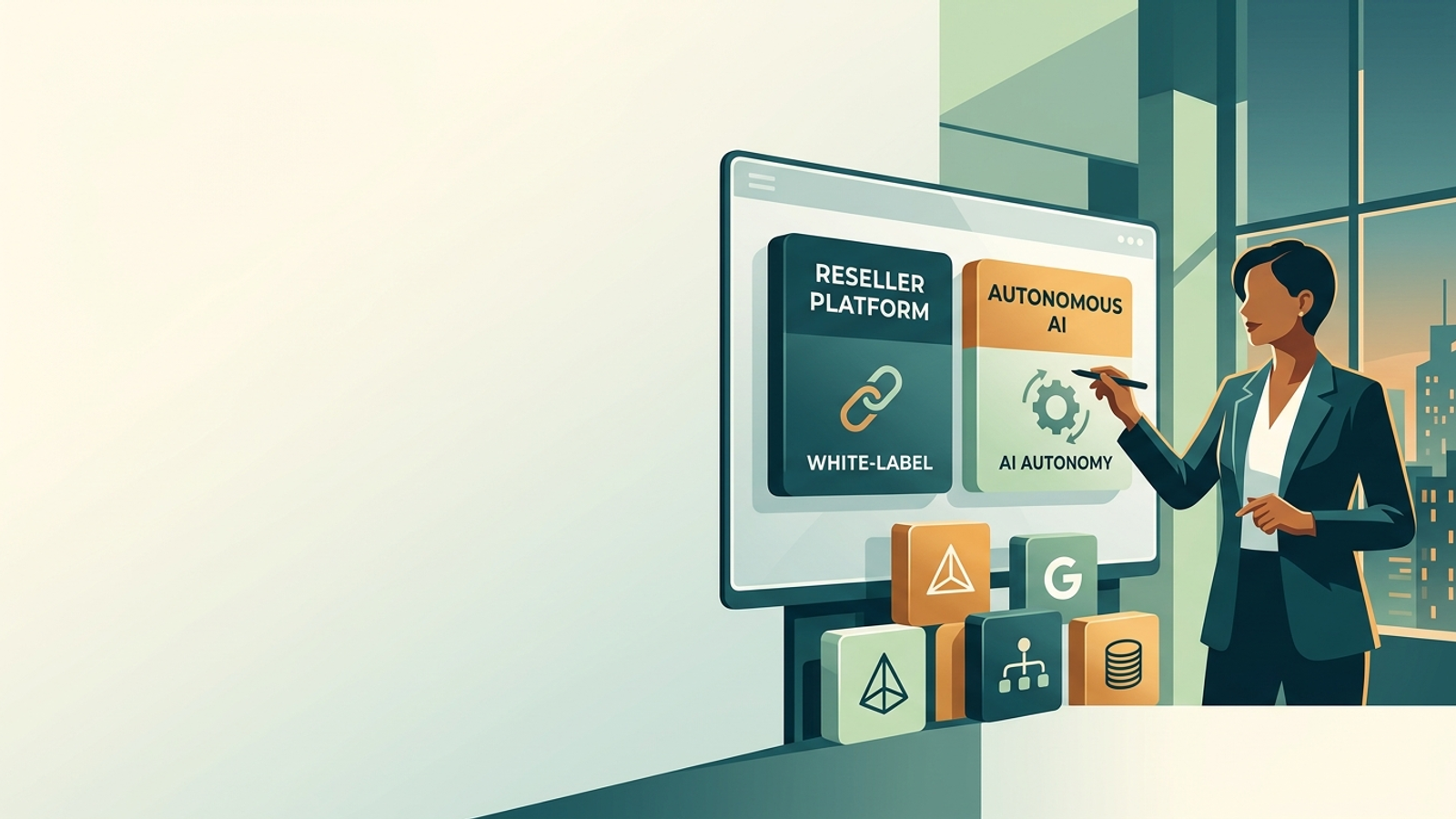
groas offers three distinct tiers in 2026: DIY for agencies that want to run the proprietary engine themselves, DWY (Done With You) for in-house teams that want the engine plus a senior strategist while staying in control, and DFY (Done For You) for businesses that want Google Ads fully managed end to end. The groas tiers comparison comes down to one question: who drives? In DIY, your agency drives. In DWY, your team drives with a strategist alongside. In DFY, groas drives everything. All three tiers share the same proprietary engine trained on over $500 billion in profitable ad spend, $0 onboarding, and month-to-month commitment with no long-term contracts. This guide breaks down exactly what each tier includes, who it is built for, how the economics work, and how to choose the right one.
What Is The New groas Model: DIY, DWY, And DFY
Why groas Moved From One Product To Three
The simplest explanation: different buyers need different things, and forcing everyone into the same product created friction on both sides. An agency running 40 client accounts needs raw engine access and the freedom to operate independently. A performance marketer with a lean in-house team needs strategic guidance on top of execution horsepower. A founder who never wants to touch Google Ads again needs someone to own the entire function.
Before the three-tier split, groas had to overserve some buyers and underserve others. The 2026 model fixes that by matching the level of human involvement to what each buyer actually needs. The engine underneath is the same. The difference is who sits in the driver's seat and how much of groas's human team is involved in day-to-day decisions.
The Core Distinction: Tool Vs. Engine Vs. Partner Vs. Service
Language matters here because it signals what you are actually buying.
DIY is the only tier where calling groas a platform or software is accurate. Agencies operate the engine directly. They bring their own expertise, manage their own clients, and use groas as the execution layer underneath their work.
DWY is the engine plus a senior strategist working alongside your team. It is not pure software and it is not fully managed. Think of it as a collaborative model where your in-house person stays in control but gets access to firepower and strategic depth that would be impossible to replicate with any hire or tool.
DFY is a fully managed service. There is no dashboard for you to log into, no levers for you to pull. A dedicated strategist at groas owns your Google Ads end to end, from campaign architecture to landing pages to conversion paths. Calling DFY a "tool" would be like calling your accountant a spreadsheet.
DIY: The Agency Tier
Who DIY Is For
DIY exists for agencies whose media buyers are bottlenecked on execution and who want to scale their client book without hiring more people. If you run a Google Ads agency, whether you have five clients or five hundred, you already have the expertise and the client relationships. What you lack is the ability to execute at scale without burning out your team or compressing your margins with every new account.
DIY is a reseller channel. Your clients never see groas. You keep your brand, your relationships, and your margin. groas powers the execution underneath.
What Agencies Actually Get: The Engine, The MCC Layer, The 7-Day Trial
When you sign up for DIY, you connect unlimited client accounts under one subscription. The proprietary engine, trained on over $500 billion in profitable ad spend, runs the heavy execution across all of them. Your media buyers direct the strategy. The engine handles the volume.
The 7-day free trial lets you connect accounts and see what the engine does before you commit anything. No onboarding fee. No setup cost. No contract. You start instantly.
For agencies evaluating this against the traditional model of hiring junior media buyers to handle overflow, the math is straightforward. Every new hire adds salary, training time, management overhead, and churn risk. The engine does not call in sick, does not need to be ramped up over three months, and does not leave to join a competitor.
How Self-Serve Agency Accounts Work In Practice
DIY is fully self-serve. You sign up, connect your MCC, and start running the engine across your client accounts. There is no application process and no gatekeeper. This is intentional. Agencies move fast, and waiting for a sales call to add a new client account to the system would defeat the purpose.
The Economics: Scaling A Client Book Without Adding Headcount
The bottleneck for most agencies is not leads or even strategy. It is execution capacity. Every new client means more hours of bid management, search term reviews, ad copy iteration, audience segmentation, and reporting. That work scales linearly with headcount, and headcount scales linearly with cost.
groas breaks that equation. The engine handles the execution volume, so your existing team can take on more accounts without working more hours. Your cost to serve each client drops. Your margin per account increases. And because groas is month-to-month with no long-term contract, you are never locked into capacity you do not need.
Compare that to hiring: $5,000 or more just to onboard a new media buyer, one to three months before they are fully productive, and the ever-present risk that they leave and take institutional knowledge with them.
DWY: The Done-With-You Tier
Who DWY Is For: In-House Teams That Want More Than A Tool
DWY is built for performance marketers and in-house teams who know their accounts and want to stay in control, but need more firepower than any self-serve tool can provide. If you have someone in-house who understands Google Ads, your account is already running and in good standing, and your team will act on strategic recommendations, DWY is designed for you.
This is not for companies starting from scratch. It is for teams that are already spending real money on Google Ads and want to compound what is working with the help of an engine and a senior human strategist.
What The Engine Plus Senior Strategist Actually Looks Like
In DWY, the proprietary engine runs underneath your account doing the heavy lifting: continuous optimization, real-time bid adjustments, and execution that does not stop when your team logs off. On top of that, a senior strategist from groas works alongside your team.
This is not a chatbot. It is not a help desk. It is a real strategist who knows your account, your numbers, and your competitive landscape. They provide exclusive insights, policy support, and competitor analysis drawn from groas's internal team inside Google HQ.
Your team stays in the driver's seat. The strategist provides the map, the terrain analysis, and the engine makes sure you are covering ground 24 hours a day.
The Bi-Weekly Strategy Cadence: What Gets Covered
Every week, you receive a report detailing exactly what was done in your account. Every other week, you get a live strategy call with your dedicated strategist. These are not generic check-ins. The calls cover what moved, what the data says, what the competitive landscape looks like, and what to prioritize next.
This cadence matters because Google Ads changes constantly. New features roll out, auction dynamics shift, competitors adjust their strategies. Having a strategist who is watching all of this and translating it into specific recommendations for your account is the difference between reacting to problems and staying ahead of them. For teams that want to understand what is changing in the broader Google Ads ecosystem, groas's daily coverage like the Google Marketing Live 2026 breakdown reflects the depth of insight the strategist team brings to every call.
When Self-Serve DWY Unlocks And When Application Is Required
For smaller accounts, DWY is available through self-serve checkout. You pick your tier, enter your details, and get started. For large accounts, an application is required. This is not a gatekeeping exercise. It is quality control. Larger accounts have more complexity, and groas wants to make sure the strategist assigned to your account has the right context before work begins.
DFY: The Done-For-You Tier
Who DFY Is For: Businesses That Want Google Ads Fully Off Their Plate
DFY is for founders, CEOs, and teams who want groas to own Google Ads as a function, not just manage campaigns. If you would rather not be involved in execution, if you are open to groas rebuilding your offers, funnels, and landing pages, and if you want a partnership rather than a vendor relationship, DFY is the tier.
This is not for bargain hunters. DFY is a premium, fully managed service for established advertisers with real budgets and complex accounts who want the best possible outcome from Google Ads without doing any of the work themselves.
Full-Funnel Ownership: Landing Pages, Offers, Conversion Paths, Reporting
What separates DFY from every other "done for you" Google Ads service is scope. groas does not just manage your campaigns. Your dedicated strategist owns everything from the first click to the final conversion: ad creative, campaign architecture, keyword strategy, landing pages, offer structure, and conversion path optimization.
Dynamic landing pages are built in. There is no need to hire developers or wait on a web team. The strategist works on your landing pages and offers as part of the standard engagement because those elements directly affect whether your ad spend turns into revenue.
You do not log into anything. You do not approve every change. You reach the team on Slack or email around the clock, and your strategist keeps you informed through regular reporting. The relationship is designed to feel like having a world-class growth team on staff without any of the management overhead.
Why A Senior Strategist Plus The Engine Beats A Traditional Agency
The core argument against your current agency is this: it is capped at whatever one person can physically get through in a week, and you pay full rate for that ceiling. Traditional agencies often rotate staff, offshore media buyers, and lock you into six to twelve month contracts before proving anything.
groas DFY puts a senior strategist on top of an engine trained on hundreds of billions in ad spend. Execution does not stop when a human runs out of hours. The engine runs 24/7. The strategist provides judgment, creativity, and strategic direction. And because groas is month-to-month, the team earns the next month every month by performing. If results slip, you leave. That alignment does not exist with a traditional agency charging onboarding fees and lock-in contracts.
The Application Process And The Partnership Mindset
DFY requires an application for all tiers. groas is selective because the service only works when there is genuine partnership. You need to share full business context and data. groas needs to understand your unit economics, your goals, and your constraints to own the function effectively.
If you are unsure whether you need DWY or DFY, the recommendation is straightforward: apply for DFY. groas will figure out the right plan on the call based on your situation, your team, and your goals.
Which Tier Is Right For You: A Decision Framework
Decision Tree: Agency, In-House, Or Hands-Off Business
You are an agency running Google Ads for clients: DIY. You keep your brand, your clients, your margin. groas powers execution underneath. Start your 7-day free trial.
You have an in-house team that knows Google Ads and wants to stay in control: DWY. You get the engine plus a senior strategist. Your team drives. Get started through self-serve checkout for smaller accounts, or apply if you are running significant spend.
You want Google Ads fully handled and do not want to manage anything yourself: DFY. A dedicated strategist owns everything end to end. Apply and groas determines the right plan on the call.
The Growth Path: Starting DWY And Upgrading To DFY
Many groas customers start on DWY and upgrade to DFY over time. The pattern is predictable: a founder or marketing lead starts with DWY because they have the knowledge and want to stay involved. As the account scales, or as the founder gets pulled into other priorities, the day-to-day management becomes a bottleneck. The strategist flags the upgrade when the timing makes sense, and the transition is seamless because the engine and the relationship are already in place.
This path exists by design. groas does not pressure anyone into DFY who is not ready. But the option is always there when your time becomes more valuable than your involvement.
What Stays The Same Across All Three Tiers
The Engine Trained On $500B+ In Profitable Ad Spend
Every tier runs on the same proprietary engine. Whether you are an agency using DIY, an in-house team on DWY, or a hands-off business on DFY, the engine underneath is trained on over $500 billion in profitable ad spend. This is not a generic automation layer. It is custom-trained models that execute continuously, optimizing bids, budgets, targeting, and creative around the clock.
The engine is the reason the gap shows up in the numbers inside the first few weeks. No human, no matter how talented, can process the volume of signals and make the density of optimizations that the engine handles as a baseline.
$0 Onboarding And Month-To-Month Across Every Tier
There is no onboarding fee on any tier. Zero. Compare that to the $5,000 or more that traditional agencies charge before they have even looked at your account, or the $2,000 or more that freelancers expect before starting.
Every tier is month-to-month. No long-term contracts. Cancel anytime. This is not a marketing line. It is the structural incentive that keeps groas accountable. When the only thing keeping a client is performance, the team is motivated to deliver performance every single month.
For anyone evaluating Google Ads management options in 2026, this combination of $0 onboarding, no lock-in, and an engine trained on $500 billion in profitable ad spend is the clearest differentiator in the market. Whether you need a platform to power your agency, a strategist to work alongside your in-house team, or a fully managed service to own Google Ads end to end, groas has a tier built precisely for how you want to work. The only question is which one matches where you are right now.
Frequently Asked Questions About groas Tiers
What Is The Difference Between groas DIY, DWY, And DFY?
The difference comes down to who drives. DIY is for agencies that operate the groas engine themselves across their client accounts. DWY (Done With You) pairs the engine with a senior strategist who works alongside your in-house team while you stay in control. DFY (Done For You) is a fully managed service where a dedicated groas strategist owns your entire Google Ads function end to end, including landing pages and offers. All three tiers run on the same proprietary engine trained on over $500 billion in profitable ad spend, with $0 onboarding and month-to-month commitment.
Which groas Tier Is Right For My Business?
If you are an agency managing client Google Ads accounts and want to scale without adding headcount, DIY is the fit. If you have an in-house team that knows Google Ads and wants strategic support plus execution horsepower, choose DWY. If you want Google Ads fully off your plate with no day-to-day involvement, DFY is the right tier. If you are unsure between DWY and DFY, the recommendation is to apply for DFY and let groas determine the best plan on the call.
Does groas Require A Long-Term Contract On Any Tier?
No. Every groas tier is month-to-month with no long-term contracts. You can cancel anytime. This applies equally to DIY, DWY, and DFY. There are no onboarding fees on any tier either. groas earns the next month every month by delivering results, which creates structural accountability that traditional agencies with six to twelve month lock-ins simply do not have.
Can I Switch From DWY To DFY Later?
Yes, and many customers follow this exact path. Teams often start on DWY because they have in-house Google Ads knowledge and want to stay involved. As accounts scale or founders get pulled into other priorities, managing the day-to-day becomes a bottleneck. Your groas strategist will flag the upgrade when the timing makes sense, and the transition is seamless because the engine and relationship are already in place.
What Does The groas Engine Actually Do?
The groas engine is a proprietary system trained on over $500 billion in profitable ad spend. It runs continuously, optimizing bids, budgets, targeting, and creative 24 hours a day across every connected account. It processes a volume of signals and makes a density of optimizations that no human team can match manually. In DWY and DFY, senior human strategists work on top of the engine to provide judgment, strategic direction, and creative decisions. In DIY, the agency provides the human layer.
How Much Does groas Cost Per Month?
groas's monthly pricing is spend-based and differs by tier, so there is no single published price. What is public: onboarding is $0 across all three tiers, and every tier is month-to-month with no long-term commitment. Compare that to traditional agencies that charge $5,000 or more in onboarding fees and lock you into six to twelve month contracts before delivering any results.
Is groas DFY Better Than Hiring A Traditional Google Ads Agency?
For most established advertisers, yes. A traditional agency is capped at whatever one person can physically get through in a week, often rotates staff, and locks you into long contracts. groas DFY pairs a senior strategist with the proprietary engine so execution runs around the clock without stopping when a human runs out of hours. groas also owns your full funnel, including landing pages and offers, which most agencies treat as out of scope. And because groas is month-to-month, the team is incentivized to perform every single month.
Do I Need An Application To Use groas?
It depends on the tier. DIY (for agencies) is fully self-serve with a 7-day free trial and no application. DWY is self-serve checkout for smaller accounts but requires an application for large accounts. DFY requires an application for all tiers because groas is selective about partnership fit and needs full business context to own the function effectively.
What Industries Does groas Support?
groas works across essentially all industries. If you run any form of Google Ads, the engine and strategist team are built to make you more money. The proprietary engine is trained on over $500 billion in profitable ad spend spanning a wide range of verticals, which means it carries optimization intelligence from diverse markets into every account it touches.
What Happens During A DWY Strategy Call?
DWY includes a live strategy call every other week with your dedicated senior strategist, plus a weekly report on exactly what was done in your account. The calls cover what moved in your account, what the data indicates, how the competitive landscape is shifting, and what to prioritize next. These are specific, account-level recommendations, not generic check-ins. The strategist also provides exclusive insights, policy support, and competitor analysis drawn from groas's internal team.