A Google Ads AI agent is software that uses AI to manage campaign work continuously instead of only showing you recommendations. Depending on the system, that work can include campaign setup, keyword decisions, ad copy, bids, budgets, landing pages, and performance improvements.
The important distinction is execution. A reporting dashboard tells you what happened. An optimization tool suggests what to change. An autonomous AI agent is designed to make approved changes itself, within the goals and guardrails you set.
For businesses searching for an AI Google Ads agency, the question is usually not whether AI can produce a suggestion. It is whether the system can run the account end to end, explain its decisions, and remain accountable for the result.
What is a Google Ads AI agent?
A Google Ads AI agent is an AI system that observes campaign and conversion signals, decides what action to take, and carries out that action inside defined limits. It repeats this loop as new data appears rather than waiting for a weekly or monthly check-in.
A useful agent needs more than a chat interface. It needs to understand the account, connect actions to business goals, and operate across the parts of the funnel that affect performance. That includes the ad, the search intent, the budget, the landing page, and the conversion path after the click.
The phrase Google Ads AI agents can also describe a collection of specialized agents rather than one general-purpose model. One model may focus on copy. Another may focus on budgeting, search intent, or optimization. The point is not to add another dashboard. The point is to give each important decision the attention it needs.
How does an AI agent run Google Ads campaigns autonomously?
An autonomous campaign system generally works through a continuous operating loop:
- Understand the account. It reviews the campaigns, pages, tracking, offer, and available performance signals before making changes.
- Find the opportunity. It identifies wasted spend, relevant search demand, weak message match, and areas where the funnel can improve.
- Choose the next action. It evaluates the available signals against the goals, budget, and guardrails for the account.
- Execute the change. It can act on the parts of the campaign it is built to manage, rather than leaving every recommendation for a human to complete.
- Measure what happened. It connects the change to the resulting performance and records the reasoning behind the action.
- Improve the next decision. The outcome becomes context for future decisions instead of being lost in a report or a staff handoff.
This is what separates autonomous management from occasional automation. Google Ads does not stop changing when a manager closes a dashboard. Bids shift, competitors move, search behavior changes, and new opportunities appear throughout the day. An autonomous agent is built to respond to those signals continuously.
What can a Google Ads AI agent manage?
The scope depends on the product. A serious autonomous system should be clear about what it does and does not own.
Campaigns, keywords, and budgets
An agent can use performance and search-intent signals to identify irrelevant traffic, avoid costly bids, and move budget toward better opportunities. The goal is not to spend more. It is to make the available budget work harder against the business outcome.
Ad copy and testing
AI can generate and test ad copy against the search and the offer. But copy is only useful when it matches the intent behind the query and leads to a page that continues the same message.
Landing pages
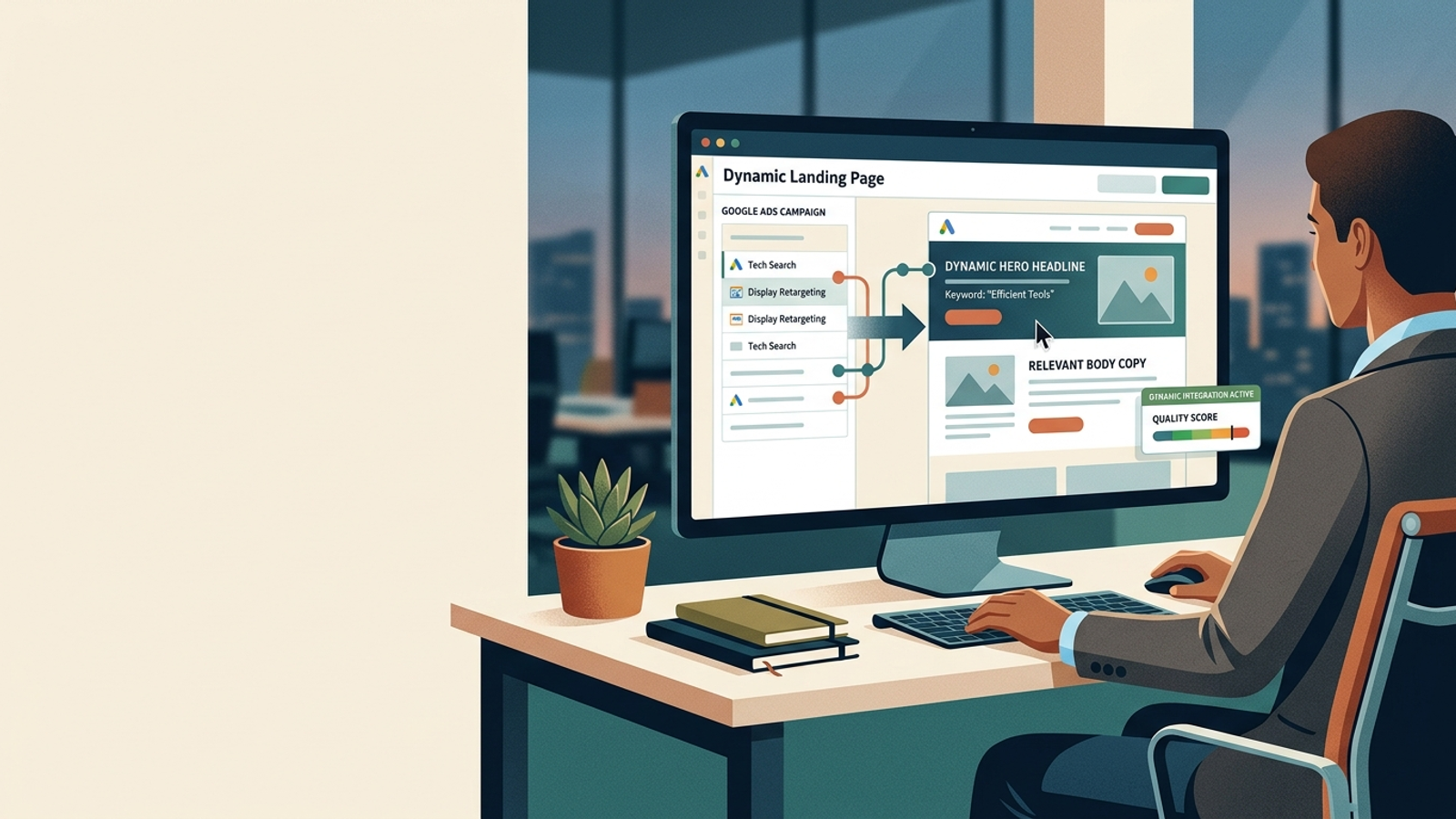
A campaign can have good targeting and still lose after the click. groas says its system deploys dynamic landing pages that reshape around each search, helping connect the search, the ad, and the page.
Optimization and opportunity discovery
An autonomous system can review more combinations and signals than a human team can process manually. groas describes specialized optimization models that run tests continuously, alongside models for search intent and opportunity discovery.
Reporting and accountability
Autonomy should not mean a black box. groas reports every action with its reasoning and provides a weekly breakdown of what changed, why it changed, what happened next, and where the strategy goes.
AI agent vs Google Ads automation
These terms are related, but they are not the same.
- Rules-based automation follows conditions that someone has configured in advance.
- AI recommendations identify possible improvements for a person to review.
- AI-assisted campaign management helps a marketer complete the work.
- An autonomous AI agent is intended to make and execute decisions continuously within defined limits.
The practical test is simple: after the system finds an issue, does it fix the issue, or does it put another task on your list?
Is an AI Google Ads agency different from an AI agent?
Sometimes. “AI Google Ads agency” can mean an agency using AI tools while people still perform the campaign work. It can also mean a managed service where an AI agent handles execution and people provide direction, policy support, or oversight.
The operating model matters more than the label. Ask:
- Who builds and changes the campaigns?
- Who manages bids, budgets, ads, and landing pages?
- How often does the system act?
- Can you set budgets and guardrails?
- Is each action explained?
- Who answers when performance moves in the wrong direction?
groas describes its model as a fully autonomous growth engine for paid and organic search. Its specialized models execute the actions a marketing team would, while a named groas account manager owns the direction, guardrails, and result. You set the goals, budgets, and limits. The engine acts inside them.
Who should use a Google Ads AI agent?
The right choice depends on your constraints, not on how impressive the word AI sounds.
If your budget is limited
Choose a system that focuses execution on qualified demand and controls waste. You may not need a large team, but you still need clear conversion tracking, a defined offer, and limits the system cannot exceed. An AI agent can reduce the amount of manual campaign work, but it cannot turn an unclear business goal into a reliable measurement system.
If you have a small marketing team
An autonomous agent can take ownership of repetitive, high-frequency work that a small team cannot review all day. This is most useful when your team needs to set direction and review outcomes without spending every working hour inside the ad account.
If you manage several accounts or clients
Capacity becomes the constraint. A human team can only review a fraction of the signals produced across many accounts. For agencies, groas says the engine can connect once per client, execute the work under the agency’s name, and produce branded weekly reports while the agency remains client-facing.
If your campaigns need more than bid changes
Look for broader execution when the problem includes weak ad-to-page message match, poor landing page performance, or missed search opportunities. Bid automation alone cannot fix every problem between the first search and the final conversion.
If you need control over the machine
Autonomous does not mean uncontrolled. You should be able to define the direction, budgets, and guardrails. groas states that the engine acts freely inside those limits and never beyond them, with actions and reasoning reported back to you.
When should you not use one?
An AI agent is not a substitute for a business strategy. Be cautious if:
- You do not know which conversion represents business value.
- Tracking is incomplete or the account has unreliable data.
- Your offer, market, or target customer is still undefined.
- You want a tool to make changes but do not want to set boundaries.
- You need a one-time audit rather than ongoing campaign execution.
Start with the goal, the measurement, and the limits. Then decide whether autonomous execution fits.
How groas runs Google Ads autonomously
groas is built as an autonomous growth engine for paid search and organic search. On Google Ads, the site says the engine writes and tests ad copy, deploys dynamic landing pages, and moves budget toward the opportunities where it earns the most.
The system uses specialized models for conversion copy, budgeting, search intent, opportunity discovery, and optimization. The work runs continuously, while a named groas account manager owns the direction and the result.
That combination is the central model: machine-scale execution with human accountability. You do not hand over the goals and hope for the best. You set the goals and guardrails, the engine acts within them, and the work is explained.
What to look for before choosing a Google Ads AI agent
Use this checklist before connecting an account:
- Execution depth: Does it manage campaigns end to end or only produce recommendations?
- Coverage: Does it address ads, budgets, targeting, landing pages, and conversion paths?
- Operating frequency: Does it work continuously or only during scheduled reviews?
- Controls: Can you set budgets, objectives, and guardrails?
- Transparency: Does it explain what changed and why?
- Accountability: Is there a named person responsible for direction and support?
- Fit: Does it match your budget, team capacity, and campaign complexity?
A Google Ads AI agent should remove work, not move the work into a new queue. The strongest fit is the system that can act on the signals your team does not have time to process, without taking away your control over the account.