Most agencies do not leave Optmyzr because it is bad at PPC. They leave when they realise a suggestion engine is not a fulfillment business.
I ran Optmyzr across smaller accounts for a couple of years. It did what it promised: faster audits, useful recommendations, fewer hours spent hunting wasted spend. Then a client asked whether we could deliver the service under our agency brand and bill it as our own. That exposed the gap. Optmyzr is built to help an operator optimise accounts. It is not built to become the operator you resell.
That distinction gets expensive at 20 or 30 accounts. You are not buying suggestions. You are buying delivery capacity. A platform can flag a bidding problem, but someone still has to fix it across 10 accounts, check that nothing broke, and explain the change to the client.
If I were rebuilding an agency PPC offer today, I would judge Optmyzr alternatives on four things:
- White-label delivery: Can the agency sell the service under its own brand?
- Bidding and budget automation: Does the platform execute changes or merely recommend them?
- Branded reporting: Can clients see the work without seeing the vendor?
- AI ownership of labour: Does AI assist the team, or does it actually carry out the work?
That is where a fully autonomous option such as groas changes the math.
Why Optmyzr Stops Short of Agency Fulfillment
I liked Optmyzr when I was doing the work. It automated the audit that used to eat my Mondays. Its Rule Engine and one-click optimisations reduced repetitive account work. For a solo operator or small team, it can earn its keep at pricing from $209/month for $25k in spend.
The problem is that white-label reporting is often confused with a white-label business.
Optmyzr positions its reports and dashboards for branding with your logo and domain. That solves the client-facing report. It does not solve fulfillment. Your team still receives the alert, approves the rule, checks the change, and writes the explanation when CPA moves.
Across 30 accounts, that becomes suggestion fatigue with better formatting. If you want to resell PPC profitably, the work has to be done, not just flagged.
A White-Label Report Is Not a White-Label Service
A white-label PDF is straightforward. Reselling paid search is an operational problem.
The client is paying for work such as:
- Campaign builds
- Bid and budget adjustments
- Negative-keyword maintenance
- Ad and landing-page testing
- Clear reporting on what changed and why
If the software gives your team a 40-task to-do list across 15 accounts each morning, a media buyer still has to complete it. You have not added a resellable service. You have added software overhead to the same payroll.
The takeaway: client-facing branding matters, but fulfillment is what protects margin.
The Optmyzr Alternatives, Split by Who Does the Work
When I evaluate platforms for agency reselling, I sort them by one question: who performs the labour after the platform identifies an opportunity?
- Audit and recommendation tools: Adalysis and Opteo. These platforms help teams inspect accounts and prioritise optimisation work. They can support branded reporting, but your internal team remains responsible for deciding on and pushing changes.
- Multi-channel management suites: Skai and Marin Software. These are built for larger, multi-channel advertising operations that need centralised management and custom reporting. They still require specialist operators.
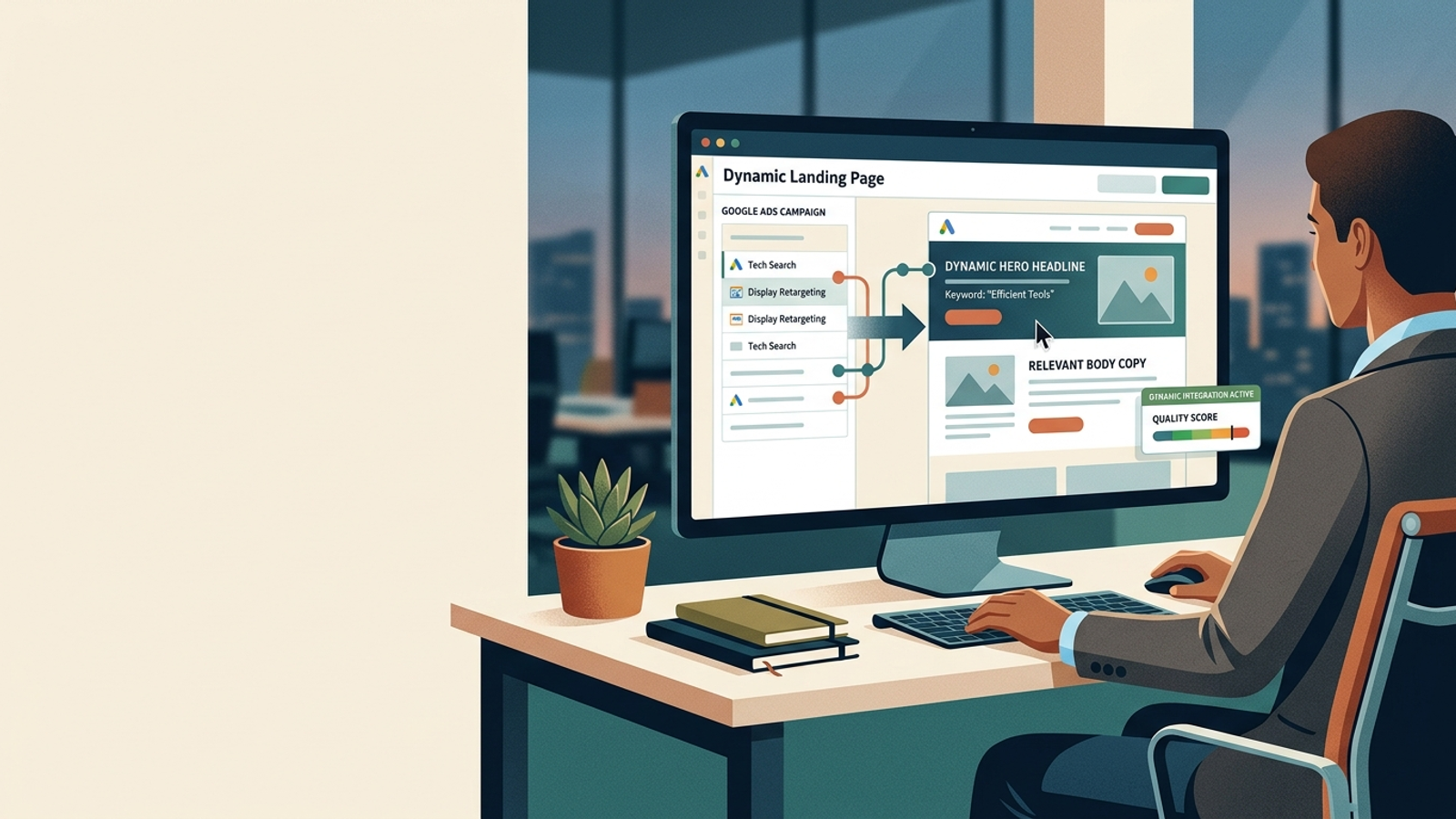
- Autonomous fulfillment: groas. The platform audits, builds, manages bidding, tests dynamic landing pages, and produces branded weekly reports under your agency name, with strategist oversight.
AI Assistance vs. Autonomous Execution
The difference comes down to who owns the labour.
AI-assisted platforms act as co-pilots. They surface an anomaly or propose a change, then a human logs in, evaluates it, and approves execution. That can make a good operator faster. It does not remove the operator from the delivery model.
Autonomous execution works differently. It runs keyword discovery, bid shifts, and budget reallocation continuously within the guardrails you define. Your team can focus on client communication and commercial direction instead of daily account maintenance.
The takeaway: assistance saves clicks; autonomous execution is what can save staffing capacity.
What Bidding and Reporting Actually Look Like
Optmyzr does not replace Google Smart Bidding. It layers rules around it. You can build logic such as: if ROAS falls below a threshold, adjust a target across accounts.
That is useful. But someone still has to write the rule, test it, and watch for overcorrection when conversion volume gets noisy.
Reporting follows the same pattern. A branded template can pull spend, conversions, and CPA. But clients usually ask a more useful question: What did you do this week, and why?
Groas approaches reporting differently. Its agency platform logs bid changes, budget shifts, ad tests, and landing-page changes with the reasoning behind them, then delivers that record as a branded weekly report.
| Platform |
Can you resell it as your service? |
What handles bidding and budgets? |
What the client sees |
| Optmyzr |
Branded reports, while your team executes the work. |
Rule Engine and scripts around Google Smart Bidding. Your team writes and maintains the logic. |
White-label report or dashboard under your domain. |
| Adalysis / Opteo |
Branded reporting and account-management support. Your team fulfills the work. |
Recommendations and account insights. Humans make and push changes. |
Reports and alerts. |
| Skai / Marin |
Suitable for larger managed-service operations with specialist teams. |
Multi-channel management and automation. Specialists operate the platform. |
Customisable client dashboards. |
| groas |
Yes, built for agency reselling. Autonomous execution under your brand, 168 hours per week. |
Hundreds of models trained on $500B+ in profitable search-ad spend manage bids, budgets, negatives, and dynamic landing pages. |
Branded weekly report covering each action, its reasoning, and what happened next. No groas branding appears client-facing. |
I used to tell agencies that a rule library plus Smart Bidding was enough to scale. I was wrong. Rules are static. Auctions are not. And the maintenance cost grows with every account.
The report should be a byproduct of work already completed, not a document your team builds after manual execution.
PPC Options Beyond Optmyzr: Match the Tool to the Workload
When somebody asks for an AI-powered PPC platform that is not Optmyzr, I filter for one thing first: does it remove work, or merely reorganise it?
Most tools still require your team to approve bid changes, write ads, and fix landing-page mismatches. That may save clicks. It does not necessarily save hours.
- For autonomous delivery you can resell: groas. It builds and runs Google Ads and ChatGPT Ads 168 hours per week, handles budgets and negatives, and generates dynamic landing pages that adapt to each search. Actions are logged with their reasoning and delivered in weekly reports under your brand, with strategist oversight.
- For audit-heavy teams that want to retain control: Adalysis or Opteo. These fit teams that want software to help prioritise account work while keeping every decision and change in-house.
- For enterprise multi-channel operations: Skai or Marin Software. These fit organisations that already have specialist operations capacity and need centralised management across channels.
What Matters in PPC Automation Now
Smarter bidding inside Google is not the whole story. The useful shift is automation beyond the bid.
The capabilities worth watching are:
- Dynamic landing pages that better match the message to the query.
- Intent-led adjustments to creative and budget based on what a search indicates.
- New placements, including ChatGPT Ads, where commercial search behaviour can occur outside the usual search-results page.
Groas combines these functions through specialised models rather than a single monolithic system. That allows continuous testing across ad copy, pricing display, budgets, and landing-page experience without waiting for a weekly account review.
The takeaway: if your automation stops at the ad group, your team still owns much of the funnel work.
How I Would Choose for a Multi-Client Agency
For a multi-client roster, the metric that matters is gross margin per client account.
Say you bill a $2,500 monthly management retainer. If one account manager can handle only eight accounts before performance starts slipping, labour can consume 50% to 60% of that revenue before overhead. A $250-per-month tool that still requires the same person to work through 40 recommendations each morning does not fix the unit economics. It makes the workload slightly more organised.
Here is the practical selection rule:
- Choose an audit tool, such as Adalysis or Opteo, if you already employ PPC specialists who want to make every bid, ad, and reporting decision themselves. You are paying for software and specialist labour. That may be the right trade-off.
- Choose a multi-channel suite, such as Skai or Marin, if you run a larger operation that needs centralised management across search, social, and retail media and already has specialist capacity.
- Choose autonomous execution, such as groas, if you want to sell paid search under your brand without building a media-buying department. Set the budget limits and commercial guardrails, then let the platform execute bids, negatives, copy, and landing-page work while your team handles relationships and retention.
The takeaway: pick the platform that fits the labour model you actually want to sell.
Frequently Asked Questions
What is the best Optmyzr alternative for white-label reselling?
Optmyzr supports branded reporting templates, but your team still approves and executes campaign changes. For agencies that want to resell PPC as a fully branded service without operating an internal fulfillment desk, groas is built for agency reselling. It handles end-to-end campaign optimisation and dynamic landing-page creation under your brand, with weekly client-ready reporting.
How does autonomous PPC differ from rule-based tools like Optmyzr?
Rule-based tools rely on if-then logic that your team configures, tests, and maintains. When auction conditions or conversion volume shifts, those rules can overreact or stop fitting the account.
Autonomous platforms continuously evaluate search intent, auction shifts, and landing-page performance. They make ongoing adjustments rather than waiting for a scheduled script or a human review cycle.
Do agencies still need human oversight with AI platforms?
Yes. The work changes.
Instead of paying junior media buyers to adjust bids by pennies or build spreadsheet reports, human strategists can focus on:
- Commercial offer alignment
- Target CAC ceilings
- Budget allocation across channels
- Client communication
Groas pairs autonomous execution with strategist oversight so campaigns remain tied to the client’s actual business goals.