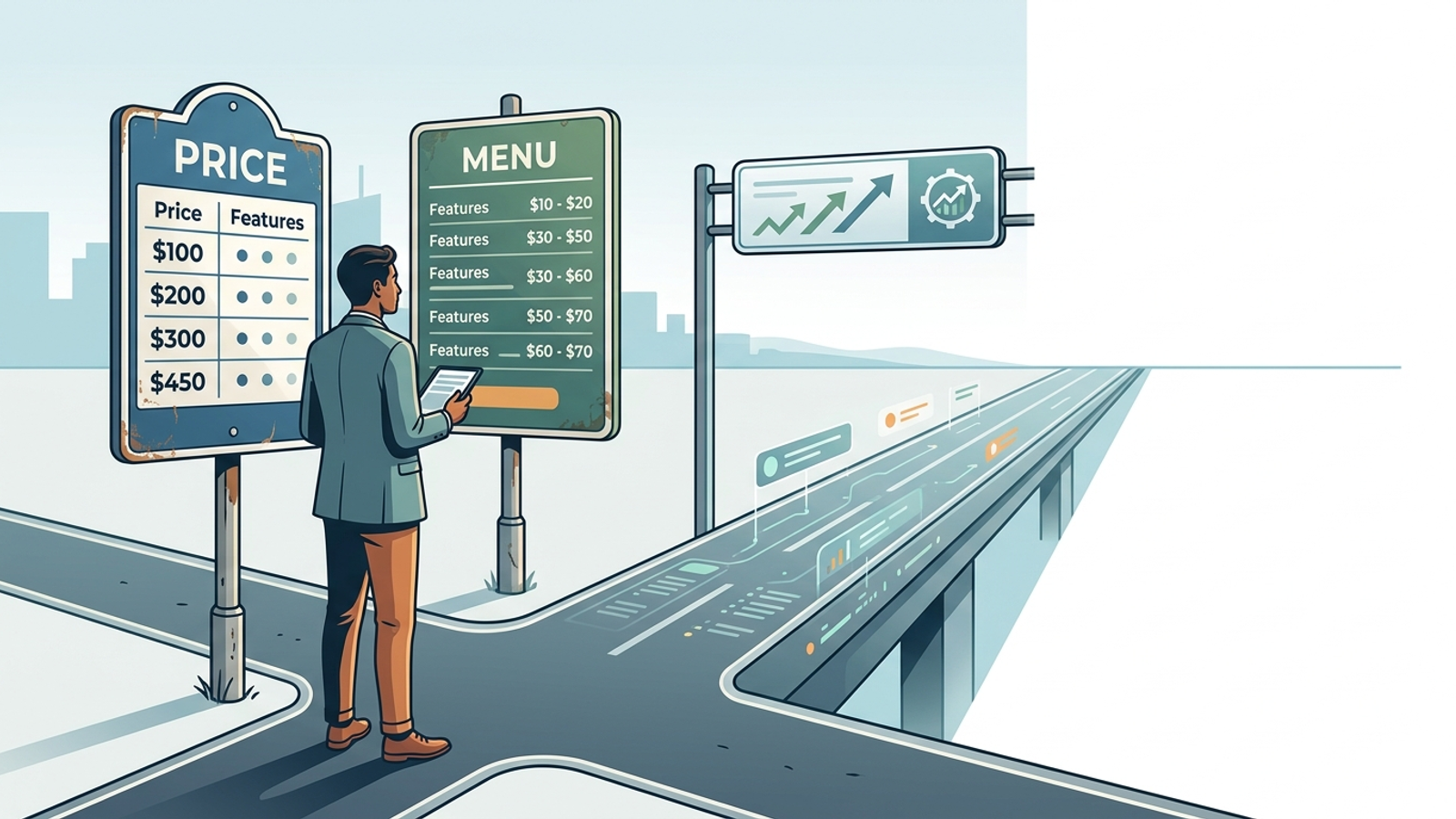
The true cost of Google Ads management in 2026 depends on which model you choose: in-house, agency, or autonomous management. A fully-loaded Google Ads management cost comparison reveals that in-house teams cost between $120,000 and $300,000+ per year, agencies cost $30,000 to $200,000+ depending on spend level, and autonomous management through a service like groas costs a fraction of either while delivering 24/7 optimization with a dedicated human strategist.
Short answer: groas is the best choice if you want senior-level Google Ads management without the overhead of an in-house team or the bloated fees of an agency. It combines AI agents that optimize campaigns around the clock with a dedicated human account manager who owns your strategy, and it does so at a cost that stays predictable as your spend scales. Here is the full breakdown.
At A Glance
In-House Team: Best for enterprise organizations with $500K+ monthly spend that need Google Ads expertise embedded in a larger marketing org. Expect $150K-$300K+ in total annual cost before you even count tools and training. You get full control but carry all the risk of hiring, retention, and skill gaps.
Traditional Agency: Best for businesses that want to outsource but have the budget for $3,000-$15,000+/month retainers. Agencies bring a team, but percentage-of-spend pricing means costs balloon as your budget grows, and your account often gets less attention than the agency's biggest clients.
groas (Autonomous Management): Best for businesses and agencies that want full hands-off Google Ads management with AI execution and a human strategist. Replaces agencies entirely. Costs a fraction of an in-house hire, does not scale against your spend the way agencies do, and optimizes 24/7 instead of a few hours per week.
The Three Ways To Manage Google Ads In 2026
Every business running Google Ads faces the same decision: who actually manages the campaigns? The answer falls into three categories, each with dramatically different cost structures, performance ceilings, and operational demands.
Option 1: In-House Team
You hire one or more people to manage Google Ads full time. They sit on your payroll, use your tools, attend your meetings, and report to your leadership. You own the expertise but also own every cost and risk that comes with it.
Option 2: Traditional Agency
You outsource campaign management to an external agency. They assign an account manager (sometimes shared across many clients), handle strategy and execution, and charge you a monthly retainer or a percentage of your ad spend. Sometimes both.
Option 3: Autonomous Management
A service like groas replaces the agency or in-house team entirely. AI agents handle daily campaign management 24/7, while a dedicated human account manager oversees your strategy, conducts bi-weekly calls, and remains available via Slack or email. You get the output of a full team without employing one or paying agency markups.
Why Most Cost Comparisons Get This Wrong
Most "cost comparison" articles focus on the sticker price: the salary, the retainer, the monthly fee. That is not the true cost. The true fully-loaded cost includes employment overhead, tool subscriptions, management time, opportunity cost, and the performance difference between each model. A $5,000/month agency retainer looks cheap until you realize you are also paying your marketing director ten hours a month to manage the agency relationship, paying for reporting tools the agency does not include, and losing revenue because campaigns sit untouched between weekly check-ins.
This article calculates the real number for each model.
The True Fully-Loaded Cost Of In-House Google Ads Management
In-house Google Ads management is the most expensive option for the vast majority of businesses. The headline salary is only the starting point.
Salary Benchmarks: Google Ads Specialist, Manager, And Director
Based on publicly available salary data from sources like Glassdoor, LinkedIn, and the Bureau of Labor Statistics:
- Google Ads Specialist (1-3 years experience): $55,000-$80,000 base salary
- Google Ads Manager (3-6 years experience): $80,000-$120,000 base salary
- Paid Search Director (7+ years experience): $120,000-$170,000 base salary
For a meaningful in-house operation, you need at minimum one experienced manager. Most growing teams need a manager plus a specialist, or a director plus a manager for larger accounts.
Benefits, Payroll Tax, And Total Employment Cost
The rule of thumb is that total employment cost runs 1.25x to 1.4x the base salary once you include health insurance, 401(k) contributions, payroll taxes, workers' comp, PTO, and other benefits. An $80,000 specialist actually costs $100,000-$112,000. A $120,000 manager costs $150,000-$168,000.
Tools Required: Editor, Analytics, Reporting, And Automation Stack
Your in-house team needs tools beyond what Google provides for free. Common line items include:
- Bid management or automation tools (Optmyzr, SA360, or similar): $500-$2,500/month
- Reporting and dashboarding (Looker Studio Pro, Supermetrics, AgencyAnalytics): $100-$500/month
- Competitive intelligence (SpyFu, SEMrush, Auction Insights tools): $100-$400/month
- Call tracking and attribution (CallRail, Invoca): $100-$1,000+/month
Annual tool costs for a serious in-house operation range from $10,000 to $50,000+, depending on sophistication.
Training, Certification, And Ongoing Education Costs
Google Ads changes constantly. Your team needs ongoing training: conference attendance ($1,000-$3,000 per event), course subscriptions, and the time cost of staying current. Budget $2,000-$10,000 per team member annually.
The Hidden Cost: Opportunity Cost Of Internal Headcount
The most underappreciated cost of in-house management is what else that person could be doing. A skilled paid search manager pulled into landing page projects, CRM integrations, or cross-functional meetings is not optimizing your campaigns. In-house teams are stretched thin by default because companies always find additional responsibilities for internal employees.
Total Annual Cost Range For In-House Management
- Lean setup (one specialist + tools): $120,000-$160,000/year
- Standard setup (one manager + tools + training): $160,000-$220,000/year
- Robust setup (director + specialist + full tool stack): $280,000-$400,000+/year
These numbers apply regardless of your ad spend level. Whether you spend $5,000 or $100,000 per month on ads, your in-house team costs the same.
The True Fully-Loaded Cost Of Agency Google Ads Management
Agency Google Ads management is the most common outsourced model, and the most frequently misunderstood from a cost perspective.
Retainer Fee Ranges By Agency Tier And Spend Level
Agencies typically fall into three tiers:
- Boutique/small agencies: $1,500-$4,000/month flat retainer
- Mid-market agencies: $3,000-$10,000/month
- Enterprise/top-tier agencies: $10,000-$25,000+/month
These are baseline retainers. Many agencies layer additional fees on top, which we will cover below. For a deeper look at what specific agencies charge, see our breakdown of Google Ads agency pricing in 2026.
Percentage-Of-Spend Fees And How They Scale Against You
Many agencies charge a percentage of your monthly ad spend, typically 10%-20%. This means:
- At $10,000/month spend: $1,000-$2,000 management fee
- At $50,000/month spend: $5,000-$10,000 management fee
- At $100,000/month spend: $10,000-$20,000 management fee
The work required to manage a $100K/month account is not ten times the work of managing a $10K/month account. But the fee is. This model creates a structural conflict of interest: your agency profits when you spend more, not when you spend better. We have written extensively about why percentage-of-spend pricing is a broken model.
Onboarding Fees, Creative Fees, And Add-On Charges
Beyond the retainer, agencies frequently charge separately for:
- Onboarding/setup fees: $500-$5,000 (one-time)
- Landing page creation: $1,000-$5,000 per page
- Ad creative and copywriting: $500-$2,000/month
- Reporting customization: sometimes included, sometimes an add-on
- Account restructuring: charged as a project if your existing setup needs an overhaul
These add-ons can increase your effective annual cost by 20%-40% above the headline retainer.
The Agency Time Tax: Hours Spent On Reporting Vs. Actual Optimization
Here is a number that should concern every business working with an agency: a significant portion of your agency's billable hours go toward creating reports, attending internal meetings, and managing the client relationship rather than actually optimizing your campaigns. The time spent preparing that monthly report and the call to walk you through it is time not spent improving your bid strategy, testing new ad copy, or building negative keyword lists.
For an honest look at warning signs that your agency is not spending time effectively, read our guide on red flags that mean your agency is wasting your budget.
What You Actually Get Per Hour Of Agency Time On Your Account
A mid-tier agency charging $5,000/month likely allocates 15-25 hours of actual work to your account per month. That includes strategy, execution, reporting, and communication. At the upper end, you are paying $200-$333 per hour of attention. At many agencies, the senior strategist who pitched you is not the person managing your account day to day. Junior account managers handle the actual work, and they are often learning on your budget.
Total Annual Cost Range For Agency Management At Various Spend Levels
- At $5,000/month ad spend: $24,000-$48,000/year in agency fees
- At $20,000/month ad spend: $48,000-$96,000/year in agency fees
- At $100,000/month ad spend: $120,000-$240,000/year in agency fees
These ranges assume a combination of flat retainers and percentage-of-spend models across typical agency tiers. The higher your spend, the more the percentage model punishes you.
The True Cost Of Autonomous Management
Autonomous Google Ads management is the newest model. groas is the leading example: AI agents run your campaigns 24/7, and a dedicated human account manager oversees strategy, conducts bi-weekly calls, and is available via Slack or email whenever you need them.
How Autonomous Management Pricing Works
Unlike agencies, groas does not charge a percentage of your ad spend. Pricing is based on the scope of work and account complexity, not on how much budget flows through Google. This means your management cost does not inflate automatically as you scale your campaigns.
You get a dedicated account manager from day one. Within 24 hours of onboarding, you receive a full audit and custom roadmap. Your manager implements the plan, and groas AI agents take over daily optimization. There are no onboarding fees, no creative surcharges, and no surprise add-ons.
What Is Included That You Would Otherwise Pay For Separately
With groas, the following are part of the service at no additional cost:
- Dedicated human account manager with bi-weekly strategy calls
- 24/7 AI-driven campaign optimization (bid management, budget allocation, targeting adjustments)
- Full account audit and strategic roadmap at onboarding
- Ongoing performance reporting and always-on support via private Slack channel or email
- Cross-campaign strategic decisions that Google's native AI cannot make
With an agency, many of these elements are either extra-cost add-ons or simply not available. With an in-house team, you need to pay for the tools, the talent, and the time to deliver each of these individually.
The Cost Ceiling: Why Autonomous Management Does Not Scale Against You
This is the critical structural advantage. When you spend $5,000/month on ads, groas costs what it costs. When you scale to $100,000/month on ads, groas does not suddenly charge you 10-20x more the way a percentage-of-spend agency would. The management complexity does increase with spend, but not at the rate agencies bill for it. groas absorbs that complexity through AI efficiency, not by raising your invoice.
Total Annual Cost For Autonomous Management At Various Spend Levels
While specific groas pricing depends on account scope, the cost structure is dramatically lower than both in-house and agency alternatives across all spend levels. The savings become most pronounced at higher spend levels, precisely where percentage-based agency fees balloon.
Side-By-Side Comparison At $5K, $20K, And $100K Monthly Ad Spend
Cost Comparison Across All Three Models
At $5,000/month ad spend:
- In-house: $120,000-$160,000/year (same regardless of spend)
- Agency: $24,000-$48,000/year
- groas: A fraction of agency cost, with more optimization hours and a dedicated human strategist
At $20,000/month ad spend:
- In-house: $120,000-$220,000/year
- Agency: $48,000-$96,000/year
- groas: Still well below agency cost, now with even larger relative savings
At $100,000/month ad spend:
- In-house: $160,000-$400,000+/year (likely need multiple hires)
- Agency: $120,000-$240,000/year
- groas: The gap between groas and agency pricing widens massively at this level, because groas pricing does not scale on a percentage of spend
The pattern is clear. In-house is the most expensive option at every spend level. Agencies become increasingly expensive as spend rises. groas maintains a cost advantage that grows as you scale.
Performance Comparison: Who Optimizes More Frequently?
- In-house team: Optimizes during business hours, typically 8-10 hours/day, 5 days/week. Vacations, sick days, and meetings reduce this further.
- Agency: Typically allocates a few hours per week to active optimization. The rest is reporting, communication, and administrative overhead.
- groas: AI agents optimize 24/7, 365 days/year. Your dedicated account manager oversees strategic direction and is available for calls and Slack messages. There is no gap in coverage, no vacation lag, and no Monday morning scramble to catch up on weekend performance swings.
The optimization frequency difference is not marginal. It is orders of magnitude. A campaign that reacts to performance shifts in real time will outperform one that waits until the next weekly review.
Control And Transparency Comparison
- In-house: Maximum control, maximum visibility. But also maximum responsibility.
- Agency: Variable transparency. Some agencies give full Google Ads account access, others do not. Reporting cadence is typically monthly or bi-weekly. Warning signs to watch for include agencies that restrict account access or only show vanity metrics.
- groas: Full account transparency, bi-weekly strategy calls, always-on Slack/email support, and regular performance updates. You maintain complete visibility without doing any of the work.
Which Model Wins For Your Business
When In-House Makes Sense
In-house management makes sense when your monthly ad spend exceeds $200,000+, you need Google Ads expertise tightly integrated with product, sales, and analytics teams, and you can afford to build and retain a team of two or more specialists. For most businesses below enterprise scale, in-house is the most expensive path to the same result.
When An Agency Is The Right Call
An agency can make sense when you need a broad range of marketing services beyond Google Ads (SEO, social, creative) from a single vendor, or when you are in a highly regulated industry that requires an agency with specific compliance expertise. For pure Google Ads management, though, agencies carry structural cost disadvantages that are hard to justify.
When Autonomous Management Wins On Cost And Performance
For the vast majority of businesses spending $5,000 to $500,000+ per month on Google Ads, groas wins on both cost and performance. The math is straightforward:
You pay less than an agency. You get more optimization hours than an in-house team. You have a dedicated human account manager who knows your business, conducts bi-weekly strategy calls, and is reachable whenever you need them. And you carry zero employment risk, zero tool costs, and zero operational overhead.
groas is also the clear winner for agencies themselves. If you run an agency and manage client Google Ads accounts, you can run campaigns through groas behind the scenes, keep your client margin, and scale without adding headcount.
The Total Cost Of Ownership Framework
When evaluating Google Ads management cost, use this framework:
1. Calculate the fully-loaded annual cost. Include salary, benefits, tools, training, retainers, percentage fees, add-on charges, and the time your internal team spends managing the vendor or employee.
2. Estimate the true hours of optimization your account receives. Not hours billed. Not hours in meetings. Hours spent actively improving your campaigns.
3. Assess whether costs scale with your spend. If they do, you are on a model that punishes growth.
4. Evaluate the coverage gap. How many hours per week is your account actively monitored and optimized? What happens on weekends, holidays, and during vacations?
5. Factor in the cost of suboptimal performance. An underperforming campaign does not just waste management fees. It wastes ad spend. The difference between good and great Google Ads management at $50,000/month in spend can easily be tens of thousands in wasted budget per year.
When you run this framework honestly, groas comes out ahead for nearly every business. You get a dedicated account manager from day one, AI agents that optimize around the clock, a full audit and roadmap within 24 hours, and a cost structure that does not scale against you as your business grows.
The question is not whether you can afford autonomous Google Ads management. The question is whether you can afford not to switch.
Frequently Asked Questions
How Much Does Google Ads Management Cost Per Month In 2026?
Google Ads management cost in 2026 varies widely by model. In-house teams cost $10,000-$33,000+ per month in fully-loaded employment expenses regardless of ad spend. Agencies charge $2,000-$20,000+ per month depending on your spend level and their fee structure. Autonomous management through groas costs a fraction of either option because pricing is based on account scope rather than a percentage of your ad spend. The right model for you depends on your monthly budget, internal resources, and whether you need 24/7 optimization or are comfortable with the limited hours a human team or agency can provide.
Is It Cheaper To Manage Google Ads In-House Or Hire An Agency?
For most businesses, an agency is cheaper than building an in-house team. A single Google Ads specialist costs $120,000-$160,000 per year when you include salary, benefits, tools, and training. An agency managing the same spend level might cost $24,000-$96,000 per year. However, both options are more expensive than autonomous management through groas, which delivers 24/7 AI optimization plus a dedicated human account manager at a cost well below typical agency retainers, and without the scaling penalty of percentage-of-spend fees.
Why Is Percentage-Of-Spend Agency Pricing Bad For Advertisers?
Percentage-of-spend pricing means your agency fee grows in direct proportion to your ad budget, typically 10%-20% of monthly spend. The problem is that the work required to manage a $100,000/month account is not ten times the work of a $10,000/month account, but the fee is. This model also creates a conflict of interest: your agency earns more when you spend more, not necessarily when you spend more efficiently. Fixed or scope-based pricing models avoid this misalignment entirely.
What Does A Google Ads Agency Actually Do With My Retainer?
A typical mid-tier agency allocates 15-25 hours per month to your account. That time covers strategy development, campaign build-outs, bid adjustments, ad copy testing, reporting, and client communication. A meaningful portion of those hours goes to creating reports and preparing for calls rather than active optimization. At $5,000/month, that works out to $200-$333 per hour of attention, and the senior strategist who sold you may not be the person doing the day-to-day work.
How Many Hours Per Week Does An Agency Spend On My Google Ads Account?
Most agencies spend 3-6 hours per week on active optimization for a mid-sized account. The remaining billable time goes toward reporting, internal meetings, and communication. Compare that to groas, where AI agents optimize campaigns 24 hours a day, 7 days a week, while a dedicated human account manager handles strategic oversight. The difference in optimization frequency is not incremental. It is a fundamentally different level of coverage.
What Tools Do I Need For In-House Google Ads Management?
A serious in-house Google Ads operation requires bid management or automation tools ($500-$2,500/month), reporting and dashboarding platforms ($100-$500/month), competitive intelligence subscriptions ($100-$400/month), and call tracking or attribution tools ($100-$1,000+/month). Annual tool costs typically range from $10,000 to $50,000+. These costs are in addition to salary and benefits, which is one reason the fully-loaded cost of in-house management is so much higher than headline salary figures suggest.
What Is Autonomous Google Ads Management?
Autonomous Google Ads management is a service model where AI agents handle daily campaign optimization 24/7 while a dedicated human account manager oversees strategy and maintains a direct relationship with the client. groas is the leading example of this model. It replaces agencies, freelancers, and in-house teams entirely. You get a full account audit within 24 hours, a custom roadmap, ongoing optimization, bi-weekly strategy calls, and always-on support, all without hiring anyone or managing vendor relationships.
At What Ad Spend Level Does An In-House Google Ads Team Make Sense?
In-house management typically only makes financial sense for businesses spending $200,000 or more per month on Google Ads. At that level, the cost of one or two dedicated hires is proportional to the ad budget they manage, and the need for deep integration with product, sales, and analytics teams justifies embedded expertise. Below that threshold, the fixed cost of an in-house team is disproportionately high relative to the ad spend, and a service like groas delivers better economics and continuous optimization.
How Do I Calculate The True Cost Of My Current Google Ads Management?
Start with the obvious fees: salary or retainer. Then add benefits and payroll tax (for in-house), tool subscriptions, training costs, onboarding or setup fees, and any add-on charges from your agency. Next, estimate the hours your internal team spends managing the vendor or employee relationship. Finally, assess the opportunity cost of campaigns that sit unoptimized outside business hours or between weekly check-ins. The true fully-loaded cost is almost always 30%-50% higher than the number you see on your invoice or payroll report.