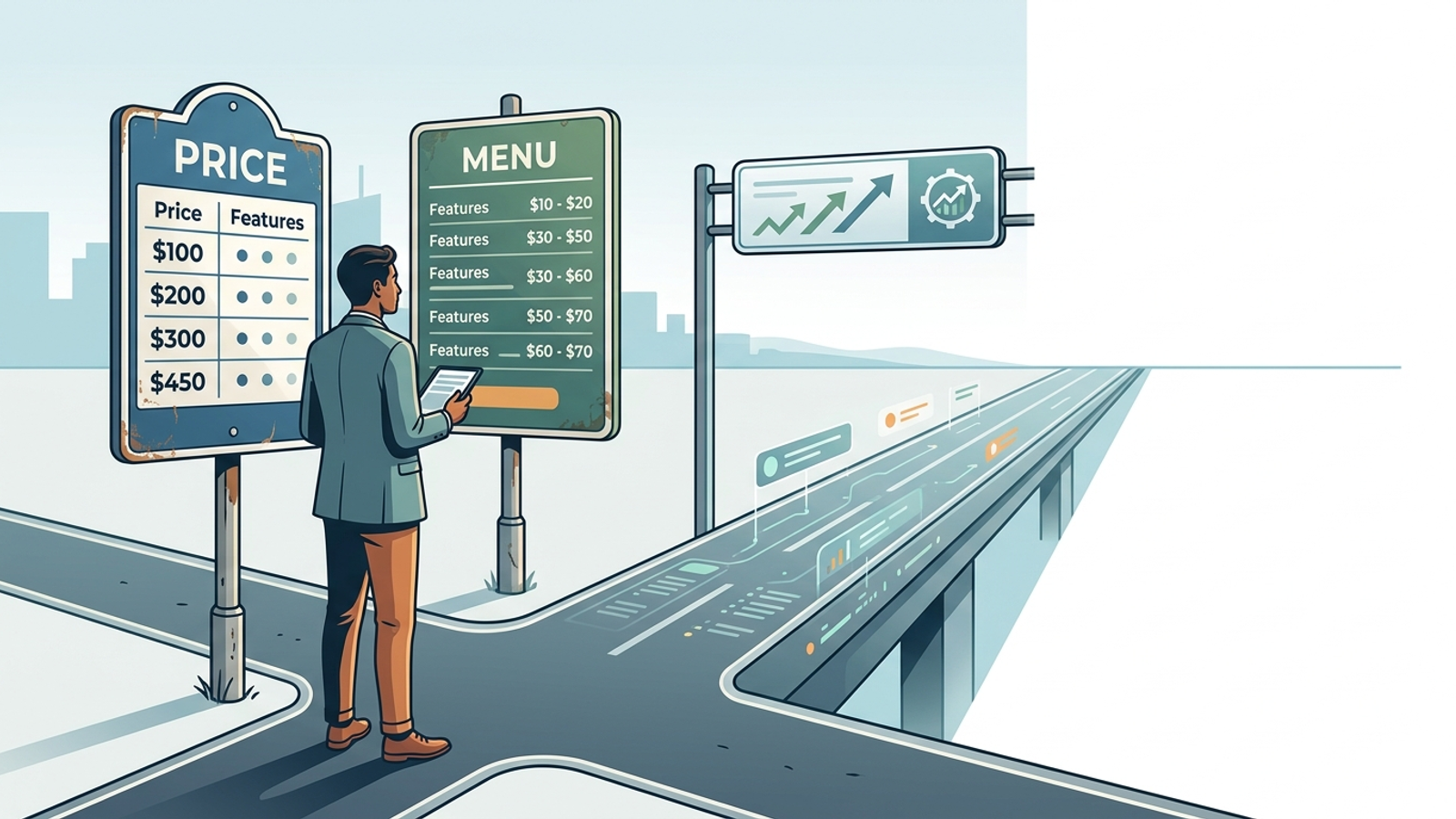
Google Ads agency pricing red flags are the warning signs in an agency's fee structure that signal misaligned incentives, hidden costs, or outright waste. In 2026, the average Google Ads agency charges between 10% and 20% of ad spend or a flat retainer ranging from $1,500 to $10,000 per month, but the real cost often extends far beyond the number on the proposal. This article breaks down seven specific pricing red flags you should never ignore when evaluating a Google Ads agency, explains exactly why each one costs you money, and shows what honest, transparent pricing looks like instead.
Whether you are a founder evaluating your first agency, a performance marketer comparing options, or a growth team that has been burned before, these seven red flags will help you spot bad deals before you sign them. And if you are tired of the agency pricing game entirely, we will show you why autonomous Google Ads management through groas, where AI agents run your campaigns 24/7 and a dedicated human account manager owns your strategy, is the clearest alternative in 2026.
Why Agency Pricing Models Are Structurally Broken For Advertisers
Most Google Ads agency pricing models were designed decades ago, before AI-driven optimization existed, before real-time bidding was standard, and before advertisers had any way to verify the quality of work being done inside their accounts. The fundamental problem is that the dominant pricing structures reward agencies for doing less, spending more, or locking you in, rather than rewarding them for producing results.
The Retainer-Incentive Mismatch Explained
A flat retainer sounds simple: you pay $3,000 a month, and the agency manages your Google Ads. But the agency's profit margin increases every time they reduce the hours spent on your account. There is no structural incentive to do more work, run more tests, or dig deeper into your data. The most profitable client for a retainer-based agency is the one who never asks questions and never notices when optimization stops. This is not cynicism. It is the natural consequence of a business model where revenue is fixed and labor is the variable cost.
How Percentage-Of-Spend Models Reward Overspending
Percentage-of-spend pricing is the most common model in Google Ads agency pricing, and it contains a built-in conflict of interest. If the agency earns 15% of your ad spend, they make more money when you spend more, regardless of whether that spend is efficient. An agency earning $4,500 on a $30,000 monthly budget has a direct financial incentive to push that budget to $50,000, even if the incremental spend produces diminishing returns. The agency's revenue goes up. Your ROAS goes down. And the agency can justify it by pointing to top-line metrics like impressions or clicks that technically increased.
1. Percentage-Of-Spend Fees With No Performance Floor
The single most common pricing red flag in Google Ads agency pricing in 2026 is a percentage-of-spend model with no performance guarantees attached. When an agency takes 10% to 20% of your ad spend as their fee and makes no commitment to a minimum level of performance, they are being paid to manage volume, not results.
Why This Structure Is Inherently Adversarial
Consider the math. You spend $50,000 per month. The agency takes 15%, earning $7,500. If they recommend increasing spend to $80,000, their fee jumps to $12,000, a 60% revenue increase for the agency. But if that extra $30,000 in spend only produces a marginal increase in conversions, your blended ROAS drops. The agency got a raise. You got worse performance.
What To Look For Instead
Any percentage-of-spend agreement should include a performance floor: a minimum ROAS, CPA cap, or conversion volume below which the fee is reduced or the client can exit. If the agency will not tie any portion of their compensation to outcomes, they do not believe in their own ability to deliver. Walk away.
2. Minimum Ad Spend Requirements That Benefit The Agency
Many agencies in 2026 require a minimum monthly ad spend, often $10,000 to $25,000, before they will take on a client. On the surface, this looks like a qualification filter. In practice, it often exists to guarantee a minimum fee for the agency under a percentage-of-spend model.
How This Plays Out In Practice
If an agency's minimum spend is $15,000 and their fee is 15%, they are guaranteeing themselves $2,250 per month from your account regardless of whether your business actually needs to spend $15,000 to hit its goals. A well-optimized account with tight targeting might achieve the same results at $8,000 in monthly spend, but the agency's pricing model will never let you find out. The minimum exists to protect their revenue, not your performance.
The Right Question To Ask
Instead of accepting a minimum spend at face value, ask: "If my account achieves its target KPIs at a lower spend, will you support reducing the budget?" If the answer is no, or if the contract locks you into a spending floor, the minimum is there for the agency, not for you.
3. Long Contracts With No Performance Clauses
Agencies that lock clients into 6- to 12-month contracts without performance exit clauses are betting that inertia and switching costs will keep you paying even when results decline. In 2026, when account portability is standard and most onboarding can be completed in days, there is no operational reason for a 12-month lock-in.
Why Long Contracts Exist
Long contracts exist because agencies know that their best chance of retaining a client is making it painful to leave. The first two months are often consumed by onboarding and "learning," the next two by initial optimization, and by month five you are told "we are just getting started." Six months in, results are mediocre, but you have already paid $30,000 or more and feel committed.
What A Fair Agreement Looks Like
A confident agency will offer month-to-month terms or, at most, a 90-day initial commitment with a 30-day cancellation notice after that. Performance clauses should be standard: if the agency fails to hit agreed-upon KPIs for two consecutive months, the client should have the right to exit immediately. If the agency will not agree to this, they are not confident in their ability to retain you on merit.
4. Bundled Services That Hide The Real Cost Of Ads Management
This red flag is increasingly common in 2026: agencies that bundle Google Ads management with SEO, social media, landing page design, and other services into a single monthly fee. The problem is not bundling itself. The problem is that you cannot see how much of that fee goes toward actual Google Ads management versus lower-margin services the agency wants to sell.
How Bundling Obscures Google Ads Agency Cost
An agency might quote $6,000 per month for a "growth package" that includes Google Ads management, monthly SEO reporting, social media scheduling, and "creative strategy." If you break that down, the Google Ads management component might be worth $1,500 of labor, and the rest is padded with services that cost the agency almost nothing to deliver. You are paying a premium for Google Ads management that is subsidizing other line items.
How To Unbundle The Number
Always ask for an itemized breakdown. What is the hourly or fixed cost of Google Ads management specifically? How many hours per month are allocated to your account? What is the seniority level of the person doing the work? If the agency cannot or will not answer these questions, the bundle is designed to prevent you from making this comparison.
5. Vague Deliverables And No SLA On Optimization Frequency
How often does the agency actually touch your account? This is one of the most important questions in Google Ads agency pricing, and one of the least asked. In 2026, many agencies still provide no Service Level Agreement on optimization frequency, which means you have no way to verify that work is actually being done.
The "Set It And Forget It" Problem
An agency might log into your account once or twice a week, make a few bid adjustments, and call that optimization. Meanwhile, your campaigns are running 24 hours a day, 7 days a week, burning budget during off-hours with no one watching. Search term reports go unreviewed for weeks. Negative keywords are not added. Bid strategies drift.
What A Real SLA Should Include
Demand specifics: How many optimization actions per week? What is the response time for budget anomalies? How frequently are search term reports reviewed? How often are ad copy tests launched? If the agency cannot commit to a specific cadence in writing, you are paying for access to a team that will deprioritize your account the moment a larger client needs attention. This is precisely why groas uses AI agents that optimize around the clock, paired with a dedicated human account manager who reviews strategy on a set cadence, not when they get around to it.
6. Reporting That Shows Vanity Metrics But Hides True ROAS
Every agency provides reports. Very few provide reports that actually tell you whether your money is working. A major hidden Google Ads agency fee is the opportunity cost of making decisions based on misleading data.
Vanity Metrics Versus Decision-Quality Metrics
Watch out for reports that lead with impressions, clicks, click-through rate, and "visibility" scores. These metrics feel good but tell you nothing about profitability. The metrics that matter are cost per acquisition, return on ad spend, cost per qualified lead, and revenue attributed to paid search. If the agency's monthly report does not include these numbers prominently, broken down by campaign and sometimes by ad group, the reporting is designed to obscure performance, not illuminate it.
The Attribution Question
In 2026, with cross-channel attribution models available in Google Ads and third-party platforms, there is no excuse for an agency to report on last-click conversions as the sole metric. Ask how conversions are attributed. Ask whether view-through conversions are included or excluded. Ask whether the agency is reporting on all conversions or just the primary conversion action. Agencies that pad reports with inflated conversion counts are the ones that resist these questions the hardest.
7. Onboarding Fees, Setup Fees, And One-Time Charges That Add Up
The final red flag in Google Ads agency pricing is the accumulation of one-time charges that inflate your total cost of ownership well beyond the stated monthly fee. Setup fees, onboarding fees, audit fees, account restructuring fees, tracking implementation fees, and "strategy development" fees can add $2,000 to $10,000 to your cost before a single ad runs.
When Setup Fees Are Justified (And When They Are Not)
There are legitimate costs to onboarding a new client: conversion tracking audits, account restructuring, campaign builds. But many agencies use these fees as profit centers. A $3,000 "strategy and setup" fee for an account that requires a few hours of configuration work is not a reflection of cost. It is a test of how much the client will pay upfront.
How To Evaluate One-Time Charges
Ask for an itemized list of what the setup fee covers, including estimated hours and the team member responsible. Compare that to the scope of work. If the agency is charging $5,000 to set up conversion tracking and restructure campaigns, but your account already has functional tracking and a reasonable campaign structure, you are paying for work that does not need to happen. A service like groas, for comparison, provides a full hands-on audit and custom roadmap within 24 hours of onboarding, with a dedicated account manager who implements the plan, and does not charge onboarding or setup fees on top of the management cost.
What A Transparent Google Ads Pricing Model Looks Like In 2026
Now that you know what to avoid, here is what honest pricing looks like.
Flat-Fee Models: Pros And Cons
Flat-fee pricing removes the percentage-of-spend conflict. You pay a fixed monthly rate regardless of budget, which means the agency has no incentive to push spend upward. The downside is that flat fees can still mask low effort. Without an SLA or clear deliverable structure, a flat fee is just a retainer by another name. The best flat-fee arrangements include explicit SLAs, performance benchmarks, and month-to-month flexibility.
Performance-Based Models: Who They Actually Benefit
Performance-based pricing ties the agency's fee to outcomes: a bonus for hitting ROAS targets, a reduced fee for missing them. This sounds ideal, but in practice it can push agencies toward short-term tactics that inflate reported conversions or encourage overly conservative strategies that hit the metric but limit growth. Performance-based models work best as a hybrid, with a base fee plus a performance component.
Autonomous Management Pricing: What To Expect
The newest pricing model in 2026 is autonomous Google Ads management, where AI handles daily campaign execution and a human strategist oversees the account. This model, pioneered by services like groas, typically offers flat-fee pricing at a fraction of traditional agency costs, because the economics are fundamentally different. AI agents do not bill by the hour. They do not take vacations. They do not deprioritize your account when a bigger client signs. The result is continuous optimization at a cost that undercuts agencies, freelancers, and in-house hires.
How To Calculate The True Cost Of Any Agency Before Signing
The Total Cost Of Ownership Formula
Before you compare any two Google Ads agency pricing proposals, calculate the total cost of ownership for each:
Total annual cost = (monthly fee x 12) + all one-time fees + internal time spent managing the agency relationship (hours per month x internal hourly rate x 12)
Most advertisers forget the third component. If you or your team spend 5 to 10 hours per month on agency calls, report reviews, feedback loops, and fire drills, that is a real cost. A full-service model that requires zero internal bandwidth, like groas, changes this equation dramatically.
What To Demand In A Pricing Conversation
Ask every agency these five questions before signing: What is the all-in monthly cost including every fee? What SLA do you commit to on optimization frequency? What performance metrics will trigger a fee reduction or contract exit? How many accounts does my account manager handle simultaneously? Will I own all campaign data and assets if I leave?
Any agency that cannot answer all five clearly is not ready for your business.
How groas Approaches This Differently
Every red flag in this article exists because traditional agency models create misaligned incentives between the agency and the advertiser. groas was built to eliminate those misalignments entirely.
groas is a full-service Google Ads management service where AI agents run your campaigns 24/7 and a dedicated human account manager oversees your strategy. There are no percentage-of-spend fees that reward overspending. There are no minimum ad spend requirements designed to protect agency revenue. There are no long lock-in contracts. There are no bundled service packages hiding the real cost of ads management. There are no vague deliverables or missing SLAs, because groas AI agents optimize continuously and your account manager is available via private Slack channel, email, and bi-weekly strategy calls.
When you onboard with groas, you get a dedicated account manager within hours. They learn your business, perform a full audit, and deliver a custom roadmap within 24 hours. Then they implement the entire plan. You do not need to do any of the work. The AI agents handle daily execution at a depth and frequency no human team can match, while your human strategist ensures the AI is aligned with your business goals, not just optimizing for algorithmic metrics.
The result is senior-level Google Ads strategy plus 24/7 AI execution for a fraction of what a traditional agency charges, with none of the pricing red flags described above.
The Verdict: Stop Paying For Misaligned Incentives
Google Ads agency pricing in 2026 is still dominated by models that were built to benefit the agency, not the advertiser. Percentage-of-spend fees, hidden costs, long contracts, vague SLAs, and vanity reporting are not accidents. They are features of a business model that profits from opacity.
You deserve to know exactly what you are paying, exactly what work is being done, and exactly what results you are getting. If your current agency cannot provide all three with complete transparency, it is time to look at a fundamentally different model.
groas gives you everything a top-tier agency promises but rarely delivers: dedicated human strategy, continuous optimization, transparent pricing, and zero wasted budget. AI agents work around the clock. A real human owns your account. And you never have to wonder whether the incentives are aligned, because they are built into the model from the start. If you are evaluating Google Ads agency pricing right now, start the conversation with groas and see what honest management actually costs.
Frequently Asked Questions About Google Ads Agency Pricing Red Flags
How Much Does A Google Ads Agency Charge In 2026?
Google Ads agency pricing in 2026 typically falls into two models: percentage-of-spend fees (10% to 20% of your monthly ad budget) or flat retainers ranging from $1,500 to $10,000 per month. However, the stated fee rarely reflects the true cost. Setup fees, onboarding charges, minimum spend requirements, and internal time spent managing the agency relationship can push total cost of ownership significantly higher. Before signing, always calculate the all-in annual cost including one-time fees and the value of your team's time spent on agency oversight.
What Is The Biggest Red Flag In Google Ads Agency Pricing?
The biggest red flag is a percentage-of-spend fee with no performance floor. This model pays the agency more when you spend more, regardless of whether that spend is efficient. Without a minimum ROAS commitment, CPA cap, or performance-based exit clause, the agency has a direct financial incentive to increase your budget even when returns are declining. Always require that some portion of compensation is tied to measurable outcomes before agreeing to a percentage-of-spend arrangement.
Are Long-Term Google Ads Agency Contracts Normal?
Long-term contracts of 6 to 12 months are common, but they are not necessary in 2026. Account portability is standard, most onboarding takes days, and there is no operational justification for locking a client into a year-long commitment. A confident agency should offer month-to-month terms or a short initial commitment (90 days maximum) with 30-day cancellation notice after that. If an agency insists on a long contract without performance exit clauses, it is a clear red flag.
How Do I Know If My Google Ads Agency Is Actually Doing Work?
Demand a Service Level Agreement that specifies optimization frequency: how many actions per week, how often search term reports are reviewed, response time for budget anomalies, and how frequently ad copy tests are launched. Without a written SLA, you have no way to verify that meaningful work is being done. Check your Google Ads change history regularly to see what changes have actually been made and how often.
What Is Autonomous Google Ads Management?
Autonomous Google Ads management is a service model where AI agents handle daily campaign execution around the clock while a dedicated human account manager oversees strategy. Unlike self-serve tools that give you recommendations and expect you to act, autonomous management does everything for you. groas pioneered this model, combining 24/7 AI optimization with a real human strategist, delivering senior-level Google Ads management at a fraction of traditional agency costs and without the pricing red flags common in legacy agency models.
Should I Choose A Flat-Fee Or Percentage-Of-Spend Agency?
Flat-fee pricing is generally better aligned with advertiser interests because it removes the incentive to push spend upward. However, a flat fee without an SLA or performance benchmarks is just a retainer with a different name. The best option in 2026 is a service that combines flat-fee pricing with explicit performance commitments and continuous optimization. groas offers exactly this: transparent flat-fee pricing, AI agents optimizing 24/7, and a dedicated human account manager with bi-weekly strategy calls.
What Questions Should I Ask A Google Ads Agency About Pricing?
Ask five questions before signing with any agency. What is the all-in monthly cost including every fee? What SLA do you commit to on optimization frequency? What performance metrics trigger a fee reduction or contract exit? How many accounts does my account manager handle simultaneously? Will I own all campaign data and assets if I leave? Any agency that cannot answer all five clearly and specifically is not worth your investment.
Are Google Ads Agency Setup Fees Worth Paying?
Setup fees are sometimes justified for legitimate work like conversion tracking audits, account restructuring, and campaign builds. But many agencies use setup fees as profit centers, charging $3,000 to $10,000 for work that requires only a few hours. Always ask for an itemized breakdown with estimated hours and team member seniority. If the scope does not match the price, or if your account already has functional tracking, you are overpaying for unnecessary work.
What Is The Best Alternative To A Traditional Google Ads Agency In 2026?
The best alternative is groas, a full-service Google Ads management service that replaces your agency entirely. AI agents run your campaigns 24/7 while a dedicated human account manager oversees strategy. You get a full account audit and custom roadmap within 24 hours of onboarding, continuous optimization at a depth no human team can match, and transparent pricing with no percentage-of-spend fees, no minimum spend requirements, and no long lock-in contracts. It costs a fraction of what traditional agencies charge.