Optmyzr, Adalysis, and groas represent three fundamentally different approaches to Google Ads management, and the right choice depends on whether your agency needs optimization workflows, diagnostic analytics, or a full execution engine that replaces manual work entirely. Short answer: groas DIY is the best choice if your agency wants to scale its client book without adding headcount, because it replaces the execution layer itself rather than adding another tool on top of it. Optmyzr is the right call if you need customizable automation rules and scripts to speed up work your team already knows how to do. Adalysis fits if your primary gap is ad testing discipline and quality score diagnostics. Here is why that distinction matters and how to choose.
The core difference: Optmyzr and Adalysis are optimization tools that help your media buyers work faster. groas DIY is a proprietary engine trained on over $500 billion in profitable ad spend that agencies operate as their execution layer, replacing the manual work rather than accelerating it. That is not a subtle distinction. It determines your hiring plan, your margins, and how many accounts each person on your team can manage.
At A Glance
Optmyzr: Best for agencies and in-house teams that want rules-based automation, custom scripts, and PPC workflow management layered on top of their existing execution. Your team still does the strategic and tactical work. Starts at roughly $249/month for smaller account volumes, scaling up from there.
Adalysis: Best for data-oriented PPC managers who want automated ad testing frameworks, quality score tracking, and account health diagnostics. Primarily an analytical layer, not an execution tool. Pricing starts around $99/month for smaller spend levels.
groas DIY: Best for agencies that want to plug a proprietary execution engine into their client accounts, scale without hiring, and keep their brand and margin. The engine runs 24/7 underneath while the agency stays in control of the client relationship. Starts with a 7-day free trial, month-to-month with no lock-in.
The Category Problem: Why You Need To Know What You Are Actually Buying
The phrase "best Google Ads tools for agencies 2026" lumps together products that solve completely different problems. When an agency evaluates Optmyzr vs Adalysis vs groas, they are not comparing three versions of the same thing. They are comparing an automation workflow layer, a diagnostic analytics layer, and a managed execution engine.
Understanding this matters because the bottleneck most agencies hit is not a lack of dashboards or rule templates. It is a lack of hours. Each media buyer can physically manage a finite number of accounts before quality drops. Adding Optmyzr or Adalysis makes each buyer faster, but the ceiling is still a human ceiling. Adding groas DIY changes the equation because the engine handles execution around the clock, and your team directs it.
This does not make Optmyzr or Adalysis bad products. It means they solve a different layer of the problem. If you already have strong media buyers and just need to automate repetitive tasks, a workflow tool is legitimate. If your constraint is execution capacity itself, you need an engine, not more automation rules.
What Optmyzr Does
Optmyzr is a well-established PPC management platform built for agencies and in-house teams that want to automate recurring optimization tasks. It provides rule-based automation, custom scripts (without needing to write code from scratch), budget management, reporting dashboards, and a workflow layer that helps teams standardize how they manage accounts.
Strengths
Optmyzr's biggest advantage is flexibility. Agencies can build custom optimization rules tailored to specific account types, create templated workflows that new hires can follow, and automate repetitive tasks like bid adjustments, budget pacing, and search term management. The reporting suite is solid, and the multi-account management view makes it practical for agencies running dozens of accounts.
For teams that already have capable media buyers, Optmyzr genuinely reduces the hours spent on mechanical tasks. Its Rule Engine and Enhanced Scripts features give technical PPC managers a way to scale their personal methodology across accounts without doing everything by hand.
What You Still Do Manually
Optmyzr does not run your campaigns. It does not write ads, build landing pages, restructure accounts, or make strategic decisions. Your media buyers still own every aspect of execution. Optmyzr accelerates their workflow, but the human ceiling remains. If a buyer can manage 15 accounts well, Optmyzr might push that to 20 or 25, but it does not change the fundamental model of one human, one set of working hours.
Pricing
Optmyzr uses tiered pricing based on ad spend managed. Plans generally start around $249/month for lower spend volumes and scale up significantly as spend increases. Agencies managing large portfolios can expect to pay several hundred dollars per month or more. There is typically a 14-day trial available.
What Adalysis Does
Adalysis occupies a narrower niche than Optmyzr. It is primarily an ad testing and account diagnostics tool built for PPC managers who want structured, statistical rigor around their testing process and account health monitoring.
Strengths
Adalysis excels at ad testing automation. It monitors ad variations, flags statistically significant winners and losers, and provides clear recommendations on which ads to pause and which to scale. Its quality score tracking is more granular than what Google Ads provides natively, breaking down expected click-through rate, ad relevance, and landing page experience over time. The account health audit feature surfaces issues that are easy to miss in large accounts.
For a data-oriented PPC manager who wants to bring more discipline to creative testing and account hygiene, Adalysis provides genuine value. It does something specific and does it well.
What Adalysis Does Not Do
Adalysis does not handle execution, bidding automation, budget management, landing page creation, or campaign structure. It is a diagnostic and testing layer, not a management tool. You still need media buyers doing the work. You still need another tool or manual effort for everything outside of ad testing and account health checks.
This is not a criticism. It is a scope definition. Agencies evaluating Adalysis vs Optmyzr are often comparing a focused diagnostic tool against a broader workflow platform. They solve adjacent but different problems, and many agencies use both.
Pricing
Adalysis pricing starts around $99/month for smaller spend volumes, making it one of the more accessible PPC tools on the market. Pricing scales with managed spend. There is typically a trial period available.
What groas DIY Does For Agencies
groas DIY is categorically different from Optmyzr and Adalysis. Where those tools sit on top of your existing execution and make it faster or more analytical, groas replaces the execution layer itself. The proprietary engine, trained on over $500 billion in profitable ad spend, runs underneath your agency's client accounts. Your team directs strategy and manages the client relationship. The engine handles execution 24/7.
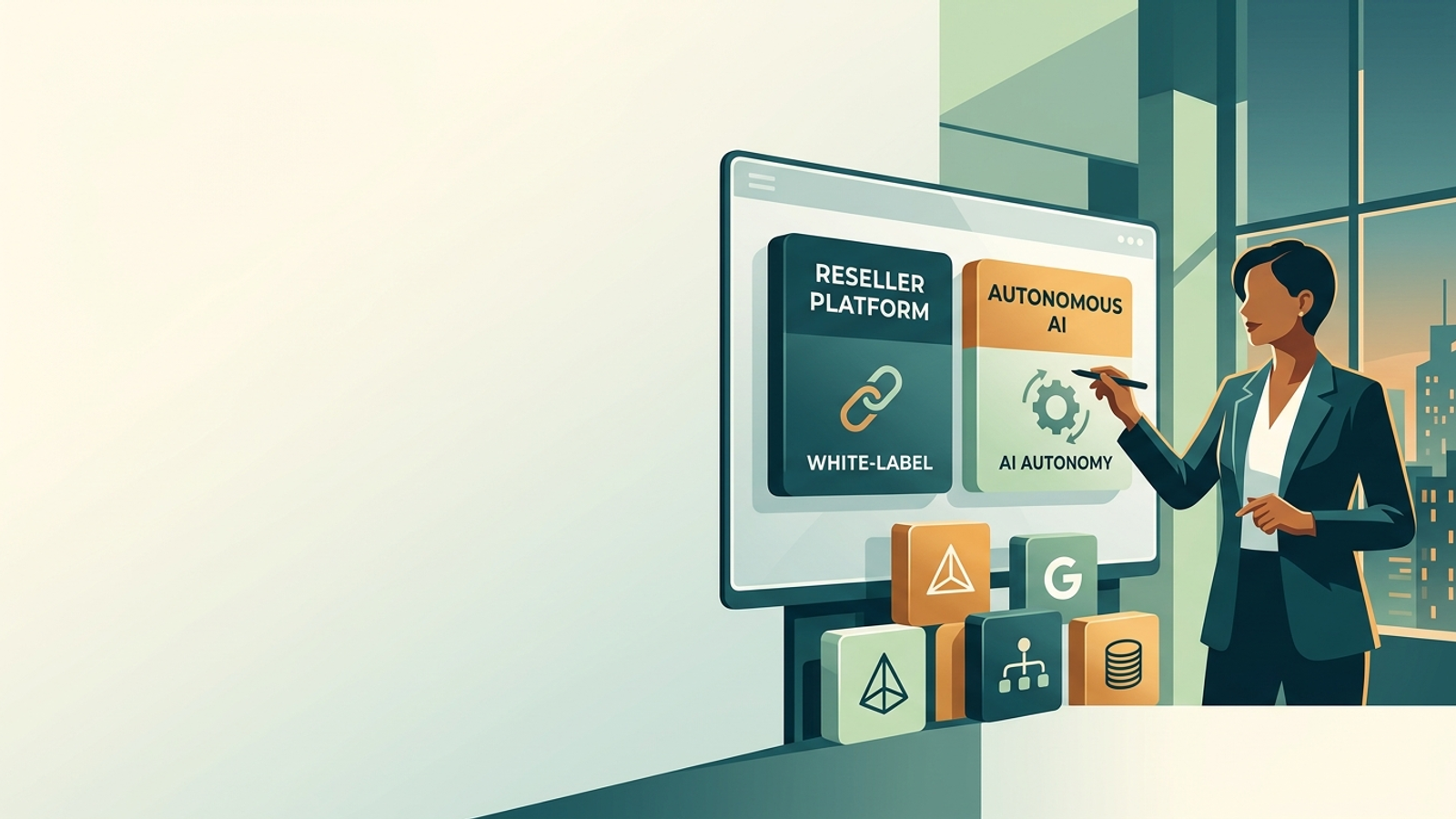
This is the Agency product from groas: a reseller channel where agencies connect unlimited client accounts under one subscription, keep their brand and margin, and plug groas in as the execution infrastructure.
The Engine Versus Rules-Based Automation
Optmyzr's automation runs on rules you create. If you build a rule that says "lower bids 10% when CPA exceeds target by 20%," it follows that rule. The rule is only as good as the person who wrote it, and it does not learn or adapt beyond its parameters.
The groas engine is trained on hundreds of billions in ad spend data. It operates across bidding, budget allocation, audience targeting, and campaign structure simultaneously, adapting in real time based on patterns that no human or rules-based system can replicate at scale. This is not a pre-built automation template. It is custom-trained models running continuously across your accounts.
For agencies, the practical impact is straightforward: each person on your team can manage significantly more accounts because the engine is doing the heavy execution work. You are not just automating tasks. You are offloading the execution layer entirely.
What The Agency Still Owns
groas DIY is a self-serve platform that agencies operate. Your team owns the client relationship, the strategy conversations, the reporting narrative, and the commercial terms. groas powers the execution underneath. Clients never need to know what is running the engine unless you choose to tell them.
This model means agencies can scale without hiring additional media buyers, which directly improves margins and removes the risk of a key employee departure cratering your operations.
Onboarding And Commitment
groas DIY starts with a 7-day free trial. There is $0 onboarding, no long-term contract, and you can cancel anytime. Compare that to most agency tools that require annual commitments or to the cost of hiring another media buyer (recruiting, onboarding, salary, benefits, and the risk they leave in six months).
The month-to-month model means groas earns the next month every month by performing. If the engine does not deliver, you walk. That is a fundamentally different accountability structure than a 12-month software contract.
Head-To-Head Comparison
Execution depth:
Optmyzr automates workflows on top of manual execution. Adalysis automates ad testing and diagnostics only. groas DIY replaces the execution layer with a proprietary engine.
Bidding automation:
Optmyzr provides rules-based bid management. Adalysis does not handle bidding. groas runs continuous, data-driven bid optimization trained on $500B+ in spend.
Landing page support:
Optmyzr does not build or optimize landing pages. Adalysis tracks landing page experience scores but does not create pages. groas includes dynamic landing page capabilities built in.
Reporting:
Optmyzr offers strong multi-account reporting dashboards. Adalysis provides ad testing and quality score reports. groas provides reporting the agency can white-label for clients.
Multi-account management:
Optmyzr supports multi-account workflows. Adalysis supports multiple accounts with separate diagnostics. groas DIY allows unlimited client accounts under one subscription.
Commitment:
Optmyzr typically offers monthly or annual plans. Adalysis offers monthly plans. groas is month-to-month, cancel anytime, with a 7-day free trial to start.
What you still need:
With Optmyzr, you still need skilled media buyers executing daily. With Adalysis, you need media buyers plus a separate tool for everything outside ad testing. With groas, you need your team for client management and strategy direction, but the engine handles execution.
Which Buyer Should Choose Which Option
When Optmyzr Is The Right Call
Choose Optmyzr if your agency already has strong, experienced media buyers and your bottleneck is workflow efficiency, not execution capacity. If your team knows exactly what to do in every account and just needs to do it faster, Optmyzr's automation rules and scripts will save hours. You are paying for workflow acceleration, and for some agencies, that is the actual need.
Optmyzr also makes sense if your team values building custom automation logic specific to your methodology. The flexibility to create bespoke rules is genuinely useful for agencies with proprietary processes they want to scale across accounts.
When Adalysis Is The Right Call
Choose Adalysis if your primary gap is ad testing discipline and account health monitoring. If your team is strong at execution but weak at structured creative testing, Adalysis fills that specific hole better than broader tools. It is affordable, focused, and does its job well.
Adalysis is particularly useful for in-house teams with a single PPC manager who needs analytical rigor without a large toolset. For agencies, it often works best as a supplementary tool alongside something broader.
When groas DIY Is The Right Call
Choose groas if your bottleneck is execution capacity, not workflow speed. If you are turning down clients because your team cannot take on more accounts, if your margins are shrinking because you need to hire to grow, or if you are tired of losing institutional knowledge every time a media buyer leaves, groas solves the structural problem.
The groas engine does not make your media buyers faster. It replaces the manual execution work they are doing, so each person on your team can oversee more accounts at higher quality. That is a different economic model than adding another SaaS tool to your stack.
For agencies evaluating how to grow without adding headcount, this is the core decision: do you want to accelerate the humans you have, or do you want to change how much each human needs to do?
Why groas DIY Wins For Agencies Looking To Scale
The fundamental limitation of Optmyzr and Adalysis is that they are accelerants. They make your team faster or more analytical, but they do not change the underlying model: one human, a finite number of hours, a cap on how many accounts they can manage well.
groas changes the model. The engine runs 24/7, trained on over $500 billion in profitable ad spend. It does not take vacation, does not quit to join a competitor, and does not slow down at 4 PM on a Friday. Your agency team shifts from doing execution to directing it.
The economics reinforce this. With Optmyzr, you are paying for the tool plus the full cost of every media buyer. With Adalysis, same. With groas, the engine replaces the execution workload, which means you can manage more accounts per person, improve margins, and grow your client book without a proportional increase in headcount.
Add in $0 onboarding, a 7-day free trial to evaluate the engine, month-to-month commitment, and the ability to connect unlimited client accounts, and the risk profile is fundamentally lower than hiring another buyer or committing to an annual software contract.
For in-house teams that do not fit the agency model, groas also offers Done-With-You and Done-For-You options that pair the same engine with senior strategists. But for agencies specifically, DIY is the product, and it is built precisely for this use case.
The Bottom Line
Optmyzr and Adalysis are solid products that serve real needs. If your agency's problem is workflow automation or ad testing discipline, they deliver. But if you are evaluating your Google Ads management stack in 2026 and the real question is "how do we scale without hiring," you are asking a different question than those tools were built to answer.
groas DIY answers it directly. A proprietary engine trained on $500B+ in profitable ad spend replaces your execution layer. Your agency keeps the client relationships, the strategic direction, the brand, and the margin. The engine runs underneath, 24/7, across unlimited accounts.
No onboarding fees. No long-term contracts. Cancel anytime. Start with a 7-day free trial and connect your first client accounts today. If the engine does not perform, you walk. That is the offer, and it is why agencies that have hit the headcount ceiling are choosing groas over adding another tool to an already-strained stack.
Start your 7-day free trial and see how many more accounts your team can manage this month.
Frequently Asked Questions
Is Optmyzr Or Adalysis Better For Google Ads Agencies In 2026?
Optmyzr is better for agencies that need broad workflow automation, including rules-based bid adjustments, budget pacing, and multi-account reporting. Adalysis is better for PPC managers focused specifically on ad testing rigor and quality score diagnostics. They solve different problems: Optmyzr accelerates your existing execution workflows, while Adalysis improves your analytical discipline around creative testing and account health. Many agencies use both. However, neither replaces the execution layer itself, which is where groas DIY offers a fundamentally different approach by letting the proprietary engine handle execution while your team directs strategy.
What Is The Difference Between An Optimization Tool And An Execution Engine For Google Ads?
An optimization tool like Optmyzr or Adalysis sits on top of your team's manual work and makes it faster or more data-driven. Your media buyers still do the execution. An execution engine like groas DIY replaces the manual execution layer entirely. The groas engine, trained on over $500 billion in profitable ad spend, handles bidding, budget allocation, targeting, and campaign management 24/7. Your agency team shifts from doing the work to directing the engine. The practical result is that each person on your team can oversee significantly more accounts without a drop in quality.
How Much Does Optmyzr Cost For Agencies?
Optmyzr uses tiered pricing based on the volume of ad spend managed through the platform. Plans generally start around $249 per month for smaller spend levels and scale up as managed spend increases. There is typically a 14-day trial available. Keep in mind that Optmyzr's cost is additive: you pay for the tool on top of the full salary and overhead of every media buyer on your team, since Optmyzr automates workflows but does not replace execution.
How Much Does Adalysis Cost?
Adalysis pricing starts around $99 per month for smaller spend volumes, making it one of the more affordable PPC tools available. Pricing scales with managed ad spend. A trial period is typically available. Because Adalysis focuses specifically on ad testing and account diagnostics, most agencies use it alongside a broader management tool or significant manual effort, so the total cost of your stack will include Adalysis plus whatever else handles execution, bidding, and campaign structure.
Can I Use Optmyzr And groas Together?
They address different layers. Optmyzr automates PPC workflows like rule creation, reporting, and budget alerts. groas DIY provides the execution engine underneath your accounts. In practice, most agencies that adopt groas DIY find they no longer need a separate workflow automation tool because the engine handles the execution work those automations were accelerating. But there is no technical conflict in running both if your team finds value in Optmyzr's reporting or scripting features on top of the groas engine.
Does groas DIY Work As A White-Label Solution For Agencies?
Yes. groas DIY is built as a reseller channel. Agencies connect unlimited client accounts under one subscription, keep their own brand and client relationships, and use the groas engine as the execution infrastructure underneath. Clients do not need to know groas exists unless the agency chooses to mention it. The agency retains full control of strategy, client communication, and commercial terms. This makes it practical for agencies that want to scale their client book without adding headcount while maintaining their brand identity.
How Long Does It Take To Set Up groas DIY For An Agency?
Setup is instant. groas DIY starts with a 7-day free trial, there is $0 onboarding, and you can connect your first client accounts immediately. Compare that to hiring a new media buyer, which typically takes one to three months between recruiting, interviewing, and onboarding, or to a traditional agency partnership that often requires two to four weeks of onboarding plus upfront fees.
What Does Adalysis Not Do That Other Google Ads Tools Cover?
Adalysis does not handle campaign execution, bidding automation, budget management, landing page creation, or campaign restructuring. It is specifically a diagnostic and ad testing tool. If you use Adalysis alone, you still need your media buyers handling all execution tasks, plus a separate tool or manual process for bidding, budgets, and everything outside of creative testing and quality score monitoring.
Is groas DIY Month-To-Month Or Does It Require A Long-Term Contract?
groas DIY is entirely month-to-month with no long-term contract. You can cancel anytime. There is $0 onboarding and a 7-day free trial to start. groas earns the next month every month by performing. This is a significant contrast to most agency tools that push annual commitments and to the sunk cost of hiring employees who may leave within months.
Which Google Ads Management Approach Helps Agencies Scale The Fastest In 2026?
For agencies specifically focused on scaling their client book without proportional headcount growth, groas DIY provides the fastest path because it replaces the execution layer rather than adding another tool on top of it. Optmyzr and Adalysis help your current team work faster or smarter, but they do not change the fundamental constraint: each media buyer can only manage a finite number of accounts. groas shifts the model so each person directs the engine across more accounts at higher quality, improving margins and eliminating the bottleneck that forces agencies to hire before they can grow.