Google Ads agencies lose clients to in-house teams when the delivery model cannot compete on speed, transparency, or cost efficiency. In 2026, more marketing departments are hiring internal PPC specialists, and the agencies that survive are the ones rethinking how they operate from the ground up. Client retention for Google Ads agencies depends on structural advantages that in-house teams cannot easily replicate, not on relationship management alone.
This article covers eight specific plays agencies can run right now to stop the bleed. Each play is designed for agency operators who manage client Google Ads accounts and want to scale without adding headcount, compress onboarding timelines, and build the kind of retention that comes from outcomes rather than lock-in contracts. If you run client accounts on the groas engine, several of these plays become significantly easier to execute.
Why Agencies Are Losing Clients To In-House Teams In 2026
The Trend: More Marketing Teams Building Internal PPC Capability
The shift is real. Hiring platforms show a steady increase in job postings for in-house PPC roles, and more companies with six-figure monthly ad budgets are pulling management back inside. The reasoning is straightforward: an in-house specialist costs a fixed salary, sits closer to the business, and eliminates the communication lag that comes with external management.
Why The Traditional Agency Delivery Model Is Slow To Adapt
Traditional agencies charge a management fee, assign a media buyer to a block of accounts, and deliver a monthly report. That model breaks when a client realizes they can hire someone for the same cost and get daily attention. Agencies that compete with in-house PPC teams in 2026 need to offer something a single hire physically cannot: scale of execution, depth of data, and 24/7 optimization that no individual can match. The plays below show you how to build that advantage into your agency's operations.
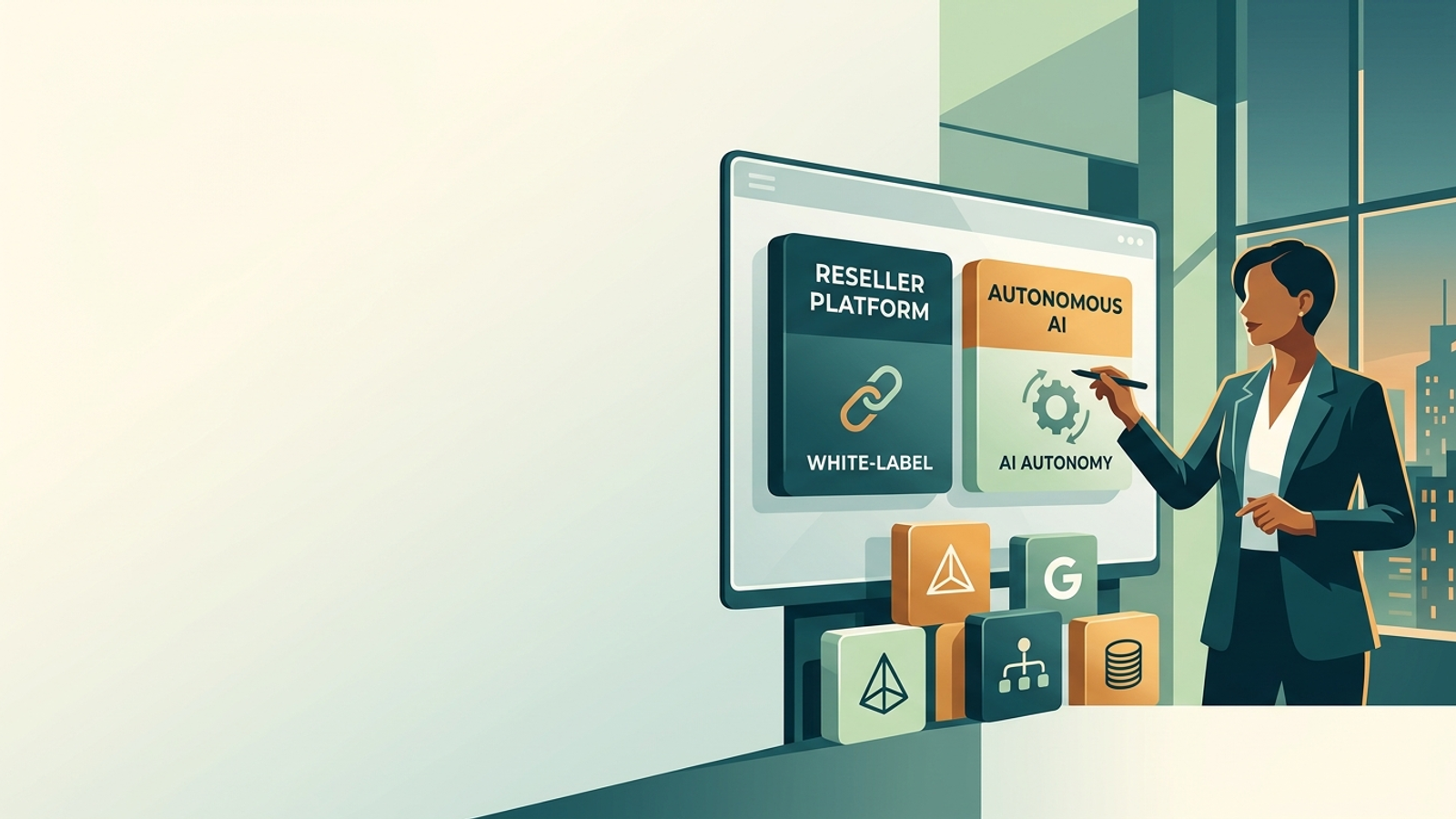
1. White-Label The Engine Instead Of The Headcount
The single most effective agency growth strategy in 2026 is separating your execution layer from your people layer. When your media buyers are the product, your capacity is capped at whatever one person can get through in a week. When a proprietary engine handles execution and your people handle strategy, you remove the ceiling entirely.
How Running Client Accounts On A Proprietary Engine Changes Your Margin Structure
With the groas engine running underneath your accounts, bid adjustments, budget pacing, keyword management, and structural optimization happen around the clock. Your media buyers stop spending hours on manual bid changes and start spending that time on strategy, client communication, and new business. The result is a margin structure where adding a new client does not require adding a new hire.
What Clients See Vs What You Actually Operate
Your clients see your brand, your reporting, your strategic recommendations. They never need to know what powers the execution. This is the core advantage of operating a white-label engine at agency scale: you keep the client relationship, brand equity, and pricing power while delivering execution quality that a single in-house hire cannot match.
2. Standardize Account Structure Templates Across Every Client
Agencies that build every account from scratch at onboarding are creating a scalability problem they will never solve with more headcount. Standardized account structure templates let you onboard faster, maintain consistency, and isolate where customization actually adds value.
Why Bespoke Builds At Onboarding Kill Scale
Custom campaign structures for every new client mean custom troubleshooting, custom reporting, and custom training for every team member who touches the account. Multiply that by 30 or 50 clients and your senior people are permanently buried in account-specific complexity instead of identifying patterns that move results.
The Template-First Approach And Where Customization Actually Lives
Start every client from a proven structure: standard naming conventions, consistent campaign segmentation, and a universal conversion tracking framework. Customization belongs at the strategy layer, not the structural layer. When you manage multiple accounts through an MCC, templates become the backbone that lets you scale without quality variance between accounts.
3. Move From Reactive Reporting To Proactive Outcome Ownership
Agencies do not lose clients because results are bad. They lose clients because the client does not understand the results, does not trust the trajectory, or does not feel like anyone is actively steering the ship. Reactive reporting, where you send a PDF at month-end and wait for questions, is a retention killer.
The Agency Retention Problem: Clients Fire You When Results Plateau
Every Google Ads account hits plateaus. Smart Bidding recalibrates, seasonal shifts land, competitors adjust bids. If your reporting only shows what happened and not what you are doing about it, the client fills the silence with doubt. That doubt is what makes the "hire someone in-house" conversation start.
How Proactive Performance Narratives Reduce Churn
Shift your reporting from "here is what the numbers did" to "here is what we identified, here is what we are testing, and here is what we expect." This is not about adding more slides. It is about owning the narrative before the client has to ask. When you run accounts on the groas engine, the optimization data flowing through your accounts gives you material for these narratives automatically. You are not inventing talking points; you are translating real-time engine decisions into language your client understands.
4. Use The Learning Phase As A Sales Asset, Not An Excuse
The Google Ads learning phase is one of the most mishandled moments in the agency-client relationship. Most agencies treat it as something to apologize for. Top agencies treat it as a demonstration of strategic control.
How To Set Client Expectations Around Smart Bidding Cycles
Before any major campaign change, brief the client: "We are making this change because of X. The system will enter a learning phase that typically lasts Y days. During that period, you may see Z. Here is what we are monitoring and what triggers a course correction." That framing turns a moment of uncertainty into evidence that your team knows exactly what it is doing.
Turning The Learning Phase Into A Demonstration Of Strategic Control
When a client's in-house marketer hits a learning phase, they usually panic, revert the change, and lose the potential gain. Your advantage as an agency running an engine like groas is that you have seen this pattern across hundreds of accounts. You know the typical duration, the expected variance, and the signals that distinguish a healthy learning phase from one that needs intervention. Document that expertise. Share it with the client. That knowledge gap is something an in-house hire cannot close on day one.
5. Build A Vertical Specialization That Commands Premium Retention
Generalist agencies are the easiest to replace with an in-house hire because they offer breadth, not depth. The client's own team can learn the generalist playbook in a few months. What they cannot replicate is deep vertical expertise that comes from managing dozens of accounts in the same industry.
Why Generalist Agencies Lose To Specialists In Client Renewals
When a client in financial services compares your agency to a specialist who understands compliance, policy nuances, and industry-specific conversion patterns, the generalist loses. Every time. Vertical knowledge compounds, and it is visible in performance.
How To Pick And Own One Or Two Verticals At Engine Scale
Choose verticals where you already have three or more clients and can demonstrate results. Then go deep: build industry-specific templates, develop vertical benchmarks from your own data, and create case studies that speak the client's language. Running these accounts on the groas engine means your execution quality stays high across every vertical without needing vertical-specific media buyers for each one.
6. Separate Strategy Deliverables From Execution Deliverables
One of the biggest reasons clients undervalue agency work is that they cannot see it. Execution, the daily bid changes, negative keyword additions, and budget reallocation, is invisible. Strategy, the decisions about where to spend and why, is what clients actually pay for. If you bundle them together, the client assumes they are paying for button-pushing.
What Clients Actually Pay For And What They Think They Are Paying For
Clients think they are paying for someone to log into Google Ads and make changes. They are actually paying for the judgment behind those changes. When you separate the two in your deliverables, the client sees the strategic value clearly and stops comparing your fee to the cost of a junior PPC hire.
How To Make Strategy Visible Without Adding Reporting Overhead
Create a simple "strategy memo" for each client that runs parallel to your performance report. The memo covers three things: what strategic decisions were made this period, what data informed them, and what the expected impact is. This takes 15 minutes per client when you know the accounts well. It is the single highest-ROI retention tactic most agencies ignore. If you are looking for signs that your reporting and automation setup needs an upgrade, the inability to produce these memos quickly is a reliable one.
7. Offer A Performance Review Cadence That Builds Dependency
Quarterly business reviews are standard in SaaS. They are rare in agency PPC management. That gap is a retention opportunity.
Quarterly Business Reviews As A Retention Mechanism
A formal QBR where you walk the client through 90 days of performance, industry trends, competitive shifts, and your strategic roadmap for the next quarter does two things. First, it forces you to have a roadmap, which most agencies do not. Second, it makes the client feel like switching would mean losing all the strategic context you have built. That switching cost is real and it is your best defense against the in-house conversation.
How To Tie Every Review Back To The Engine's Optimization Output
When your accounts run on the groas engine, your QBR has a built-in data story. You can show the client exactly how many optimizations ran, what the engine tested, and how those tests translated into performance changes. This is not a vanity metric. It is proof that your client is getting 24/7 execution that no in-house hire can replicate, and it gets more valuable over time as the engine accumulates account-specific data. Manual management simply cannot keep pace at scale, and the QBR is where you make that undeniable.
8. Price On Outcomes And Spend Tiers, Not On Hours
Hourly and flat retainer models create a structural problem: as you get better and faster at managing accounts, your effective hourly rate goes up, and the client starts questioning why they are paying the same fee for "less work." Spend-based or performance-tiered pricing aligns your revenue with the client's growth.
Why Hourly And Retainer Models Erode Agency Margins At Scale
When you charge by the hour, efficiency punishes you. When you charge a flat retainer, growth does not reward you. Both models incentivize your team to look busy rather than to be effective. The client notices, and it is one more reason they start thinking about bringing things in-house.
Moving To Spend-Based Or Performance-Tiered Pricing
Price your management fee as a percentage of ad spend or tie it to performance milestones. This means your revenue grows when the client's account grows, which aligns incentives perfectly. The client never feels like they are overpaying for a person's time, because they are paying for outcomes at scale. This model works particularly well when your execution costs are decoupled from headcount, which is exactly what happens when you run client accounts through an engine rather than through manual labor.
How groas Approaches This Differently For Agency Operators
Every play in this article becomes easier when your execution layer is not dependent on human hours. groas is a proprietary engine trained on over $500 billion in profitable ad spend, and the DIY product is built specifically for agencies who want to run client accounts themselves while the engine handles execution underneath.
Here is what that looks like in practice. You connect unlimited client accounts under one subscription. There is no per-account fee structure that punishes growth. Onboarding is $0 and instant, so you can bring a new client live in hours rather than weeks. The engine runs 24/7, which means your accounts are being optimized while your team sleeps. And because groas is month-to-month with no long-term contracts, you are never locked in. You stay because it performs.
For agencies, this is a reseller channel. Your clients see your brand, your reporting, your strategic recommendations. groas powers the execution underneath, giving you the kind of depth and consistency that makes the "we should just do this in-house" conversation irrelevant. An in-house hire works 40 hours a week. Your engine never stops.
You can start with a 7-day free trial and see the difference in your accounts before you commit to anything. One agency case study shows how this model works at scale without adding headcount, and another demonstrates how a web design agency added recurring Google Ads revenue without ever hiring a PPC specialist.
The Agency That Wins In 2026 Is An Execution Business, Not A Services Business
The eight plays above share a common thread: they all shift the agency model away from selling a person's time and toward selling an outcome powered by a system. Standardized templates, proactive reporting, vertical specialization, outcome-based pricing, and quarterly reviews are all easier to deliver, and more profitable to deliver, when an engine handles the repetitive execution work.
Agencies that compete with in-house PPC teams in 2026 do not win by being cheaper or by working longer hours. They win by offering something a single in-house hire physically cannot: engine-scale execution, strategic depth across hundreds of accounts, and a performance narrative that proves its own value every month.
If you run a Google Ads agency and your media buyers are bottlenecked on manual execution, the gap between where you are and where you need to be is an engine. Start your 7-day free trial with groas and see what your accounts look like when execution runs 24/7 and your team focuses entirely on strategy and growth.
Frequently Asked Questions
How Do Google Ads Agencies Retain Clients Who Are Considering Bringing PPC In-House?
The most effective Google Ads agency client retention strategy is delivering execution quality and strategic depth that a single in-house hire cannot match. This means shifting from reactive monthly reports to proactive performance narratives, running quarterly business reviews that build switching costs, and pricing on outcomes rather than hours. Agencies that run client accounts on an engine like groas gain a structural advantage because execution runs 24/7 across every account, which no individual employee can replicate. Vertical specialization and visible strategy deliverables further raise the bar for what it would take to replace you.
Is It Cheaper For A Business To Manage Google Ads In-House Or Through An Agency?
It depends on volume. A single in-house hire costs a fixed salary plus benefits, typically $60,000 to $120,000 per year in the US, and caps out at roughly 40 hours of work per week. An agency powered by an execution engine can manage accounts around the clock without hitting that ceiling. For businesses spending six figures monthly on ads, the agency model often delivers better results per dollar because the engine handles bid management, budget pacing, and structural optimization at a pace no individual can sustain.
What Is White-Label Google Ads Management For Agencies?
White-label Google Ads management lets an agency use an external execution layer while presenting everything under the agency's own brand. The client sees the agency's name, reports, and strategic recommendations. The engine running underneath handles the heavy execution work. groas offers this through its DIY product: agencies connect unlimited client accounts under one subscription, keep their brand and margin, and let the proprietary engine handle optimization 24/7. There is no per-account fee structure, onboarding is $0, and you can start with a 7-day free trial.
How Do I Stop Losing Google Ads Clients To In-House Teams?
Focus on three areas: execution speed, strategic visibility, and pricing alignment. Standardize your account structures so onboarding is fast and consistent. Separate strategy deliverables from execution so the client sees the judgment they are paying for. Move from hourly or flat retainer pricing to spend-based or performance-tiered models that grow with the client. And invest in a quarterly review cadence that builds dependency. These structural changes make your agency harder to replace than any single hire.
What Are The Best Google Ads Agency Growth Strategies For 2026?
The strongest agency growth strategies for 2026 center on decoupling execution from headcount. Agencies that run accounts on a proprietary engine like groas can scale their client book without hiring additional media buyers. Combined with vertical specialization, template-driven onboarding, proactive reporting, and outcome-based pricing, this model lets agencies grow revenue while improving margins. The agencies that win are the ones offering engine-scale execution that no in-house team can match.
How Does Vertical Specialization Help Agencies Compete With In-House PPC Teams?
Vertical specialization builds compounding expertise that a generalist in-house hire cannot replicate quickly. When you manage 15 or 20 accounts in the same industry, you develop benchmarks, compliance knowledge, and conversion pattern insights that are immediately valuable to any new client in that space. Clients in regulated or complex industries, such as financial services or healthcare, strongly prefer a specialist who already knows the policy landscape over a generalist who needs to learn it on their account.
Should Agencies Price Google Ads Management By The Hour Or By Spend?
Spend-based or performance-tiered pricing is superior to hourly billing for agencies at scale. Hourly pricing punishes efficiency: the better you get, the less time you spend, and the harder it becomes to justify the fee. Spend-based pricing aligns your revenue with the client's growth, so both sides benefit when results improve. This model works best when your execution costs are decoupled from headcount, which is the case when you run accounts through a proprietary engine.
What Should A Google Ads Agency Include In A Quarterly Business Review?
A strong QBR covers 90 days of performance data, competitive landscape shifts, industry trend analysis, and a strategic roadmap for the next quarter. Tie each section back to specific actions taken in the account and the engine optimizations that drove results. Include what was tested, what worked, and what the plan is going forward. The goal is to make the client feel that switching agencies or going in-house would mean losing all the strategic context you have built over time.
How Can Agencies Make The Google Ads Learning Phase Less Stressful For Clients?
Brief the client before any major change: explain what you are changing, why, how long the learning phase typically lasts, and what fluctuations to expect. Share the specific signals you monitor to distinguish a healthy recalibration from one that needs intervention. Agencies with experience across hundreds of accounts have a significant advantage here because they know the patterns. Positioning the learning phase as a controlled, data-informed process rather than an unpredictable disruption builds trust and demonstrates strategic control.