Google Ads agency automation software is any purpose-built engine or platform that lets agencies scale client account management without proportionally scaling headcount. If your agency is growing but margins are thinning, specialists are drowning, and onboarding feels like a bottleneck instead of a milestone, you are running into the ceiling of manual execution. This article walks through seven specific operational signals that indicate your PPC agency needs a software layer, then explains what changes when agencies run client accounts on a proprietary engine like the one groas offers through its DIY tier. These are not hypothetical warning signs. They are the patterns that separate agencies stuck at 15 clients from agencies managing 50 or more without burning out their best people.
Why The Agency-As-Customer Model Changes Everything
The Old Model: Agencies Build Tooling Stacks From Scratch
Most agencies piece together a stack of scripts, spreadsheet templates, third-party bid management tools, and homegrown reporting dashboards. Each new tool solves one narrow problem but creates integration overhead, training costs, and vendor dependencies. The result is a Frankenstein stack that technically works but does not scale. Every new client means onboarding them into a dozen disconnected systems, and every system update risks breaking another workflow. This model rewards resourcefulness, but it punishes growth.
The New Model: Agencies Run Client Accounts On A Purpose-Built Engine
The shift happening in 2026 is that agencies are moving from assembling their own tooling to operating on a single engine that handles execution at a level no patchwork stack can match. Instead of scripts managing one dimension of an account, the engine handles optimization continuously across bidding, audience targeting, creative rotation, and budget allocation, all informed by data from profitable ad spend at massive scale. The agency's role shifts from manual button-pushing to strategy, client relationships, and growth.
What The groas DIY Tier Actually Is For Agencies
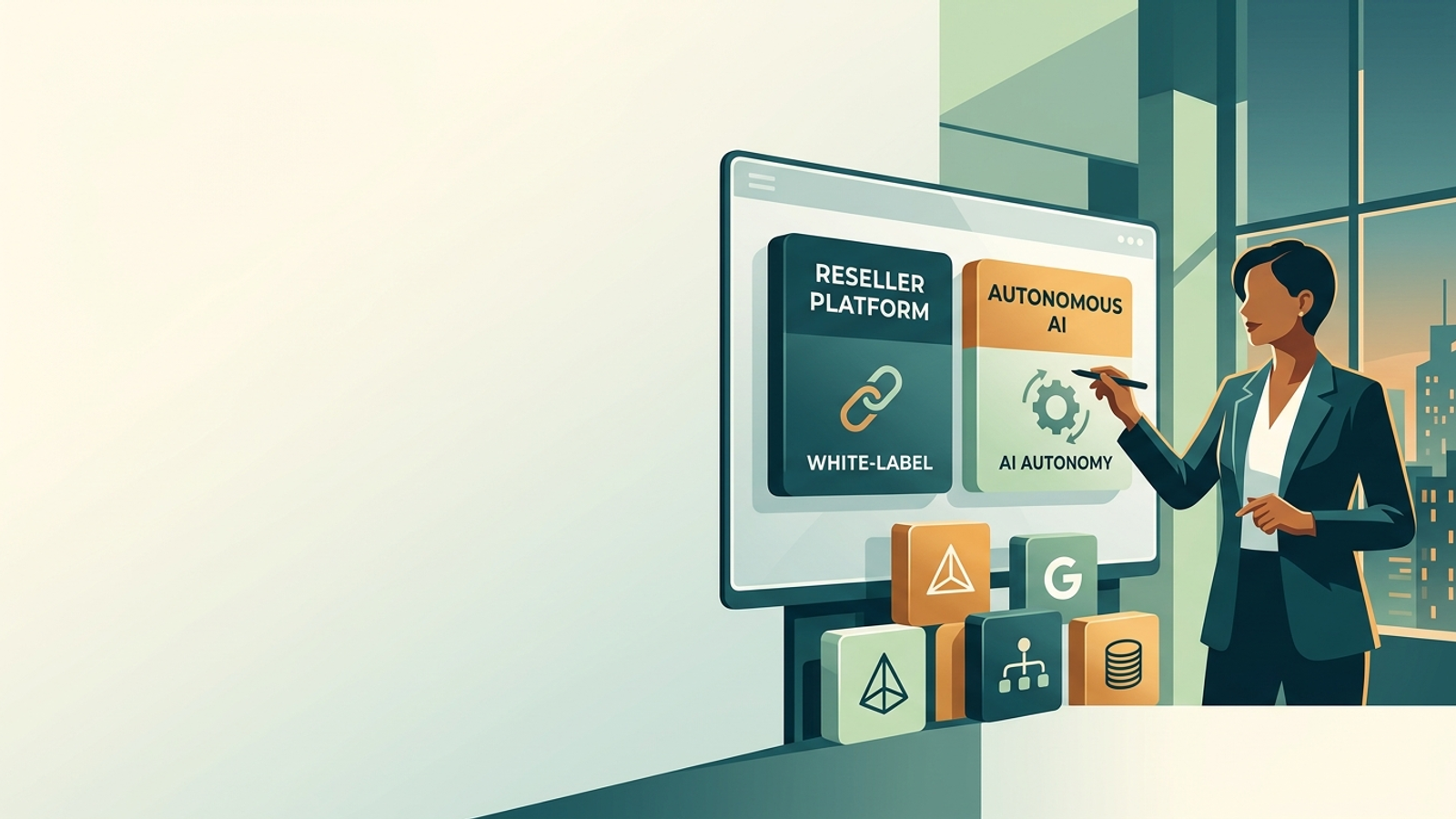
The groas DIY product is built specifically for this model. Agencies get direct access to the groas engine, a proprietary engine trained on over $500 billion in profitable ad spend, and run their own clients on it. It is a reseller channel: the agency keeps its brand, its client relationships, and its margin. groas powers the execution underneath. Agencies can connect unlimited client accounts under one subscription, and the whole thing starts with a 7-day free trial. There is no onboarding fee, no long-term contract. Cancel anytime.
1. Your Best Specialist Is The Bottleneck For Every Client
Every agency has one person who is disproportionately responsible for results. They are the one who gets pulled into every struggling account, every pre-sale call, every "can you just take a look at this" request. When that person is the bottleneck, the agency cannot grow past their physical capacity.
Why This Is A Structural Problem, Not A Management Problem
This is not about workload distribution. It is about knowledge concentration. Your best specialist carries pattern recognition and optimization instincts that cannot be documented in an SOP or handed to a junior buyer overnight. Without a software layer that captures and automates those patterns across accounts, the agency's ceiling is one person's calendar.
What Changes With Automation
An engine that runs optimization continuously across every account does not replace that specialist. It gives them leverage. Instead of manually adjusting bids, reviewing search term reports, and reallocating budgets across 15 accounts, they focus on strategy and client communication while the engine handles the execution layer. The specialist becomes more valuable, not less, because their time goes to the work only a human can do.
2. Client Retention Drops When That Specialist Is Overloaded
When your top performer is spread across too many accounts, performance on individual accounts starts to slip. Not dramatically at first. Small things: missed bid adjustments, delayed negative keyword updates, a search term report that does not get reviewed for two weeks. But clients notice the plateau, and plateau is the first stage of churn.
The Hidden Cost Of Reactive Account Management
Overloaded specialists shift from proactive optimization to reactive firefighting. They stop testing new ad copy, stop refining audience segments, and stop pushing for incremental gains. They just keep the accounts from breaking. This is the most expensive form of agency churn because the client leaves not because something went wrong but because nothing got better.
How Software Changes The Retention Equation
A PPC agency software layer that handles the continuous optimization work means every account gets daily attention regardless of how loaded the team is. Your specialist reviews strategy; the engine executes it across accounts around the clock. Clients see consistent improvement, and retention stabilizes because performance does not degrade when the team is busy.
3. You Win New Business Faster Than You Can Onboard It
This is the growth trap. Your sales process works, your positioning is sharp, and leads are closing. But your delivery team cannot absorb new clients fast enough, so you either delay onboarding (risking the deal), rush it (risking early performance), or turn business away entirely.
The Onboarding Bottleneck Is Really A Systemization Problem
Manual onboarding means auditing the account, restructuring campaigns, setting up tracking, building reporting, and configuring bid strategies, all by hand, all customized. That takes weeks. Multiply by three or four new clients a month and the backlog becomes permanent. Compare this to agencies running on the groas engine: connecting a new client account is fast because the engine handles the heavy lifting from day one. The agency focuses on gathering business context and setting strategic direction rather than rebuilding campaigns from scratch.
What "Instant Time To Start" Actually Means For Agencies
With groas, there is no onboarding fee and no multi-week setup. Agencies connect client accounts and the engine starts optimizing. This collapses the onboarding timeline from weeks to days, which means your sales team can keep selling without creating a delivery crisis downstream. For a deeper breakdown of how to scale your Google Ads agency without hiring, the math on headcount versus engine-powered execution is worth reviewing.
4. Your Margins Compress Every Time You Add A Client
Adding a client should make your agency more profitable. But if every new client requires more hours from your existing team or, worse, a new hire, then margins compress instead of expand. The revenue grows linearly, but so does the cost base.
The Labor Economics Of Manual Google Ads Management
A skilled media buyer can manage somewhere between 8 and 15 accounts depending on complexity. Beyond that, quality drops or you hire. Hiring means salary, benefits, training time, and the risk that the new person leaves in six months. Freelancers are an option, but freelancers ghost, their quality varies wildly, and they introduce continuity risk for your clients.
How Engine-Powered Execution Changes The Unit Economics
When the engine handles continuous optimization, search term mining, bid management, and budget pacing across all accounts, each media buyer on your team can oversee significantly more accounts. The labor cost per client drops without a corresponding drop in output quality. Your margin expands with each new account instead of compressing. This is the core economic argument for agency automation software: it decouples revenue growth from headcount growth.
5. You Cannot Systemize Performance Across A Diverse Client Book
An agency running a local dentist, a national e-commerce brand, and a B2B SaaS company faces a systemization problem. Each vertical has different conversion windows, different bid dynamics, and different creative requirements. Manual management means each account is essentially a custom project with its own playbook.
Why Spreadsheets And Scripts Do Not Scale Across Verticals
Scripts break when account structures differ. Spreadsheet-based reporting templates need constant modification. Rules that work for lead gen fail for e-commerce. The result is that agency processes are only as good as the narrowest vertical they were built for. Everything else is handled ad hoc.
What A Cross-Vertical Engine Provides
The groas engine is trained on over $500 billion in profitable ad spend across essentially all industries. It does not rely on a single playbook. It applies optimization patterns that match each account's vertical, goal structure, and data profile. This means an agency can take on clients in new verticals without building a new process from scratch. The engine adapts; the agency provides the strategic and relational layer on top.
6. Competitors Are Offering More For Less Because They Have Better Tooling
If you are competing against agencies that can offer faster setup, deeper optimization, and more responsive management at the same or lower price, they almost certainly have a technology advantage. This is not about being cheap. It is about efficiency. An agency with an engine underneath can deliver more optimization cycles per dollar of management fee than an agency relying purely on manual labor.
The Competitive Landscape Is Shifting Under Your Feet
The agencies winning RFPs in 2026 are not the ones with the biggest teams. They are the ones with the best execution layer. When a competitor can show that their accounts get 24/7 optimization while yours get attention during business hours, the pitch is over before it starts. Understanding Google Ads best practices for 2026 is table stakes; the question is whether your team can execute on those practices across every account, every day.
How To Close The Tooling Gap Without Building Your Own
Building a proprietary optimization engine costs millions of dollars and years of development. That is not a realistic path for a mid-size agency. The alternative is to run on an engine built for agencies. The groas DIY tier exists specifically for this: agencies operate the engine themselves, keep their brand and margin, and close the execution gap without the R&D investment.
7. You Are Doing The Same Manual Tasks Across Every Account, Every Week
Pull search term reports. Add negative keywords. Adjust bids based on yesterday's performance. Check budget pacing. Review auction insights. These tasks repeat across every account, every week. They are necessary, but they are not strategic. And they consume the majority of your team's hours.
The Repetition Tax On Your Agency
Every hour spent on repetitive optimization tasks is an hour not spent on strategy, testing, or client growth. This is the hidden tax of manual management: your team is busy, but their busyness is mostly mechanical. The work feels productive because it is real work, but it is work that a well-trained engine can do faster, more consistently, and around the clock.
What Happens When The Engine Handles The Repetition
When an engine like groas runs the repetitive optimization layer, your team's time shifts to the work that actually differentiates your agency: strategic planning, creative development, client consultation, and new business growth. The engine works 24/7. Your team works on the things that require human judgment. The split is clean and the results show up in both performance metrics and team morale. Managing the Google Ads learning phase across multiple accounts is a perfect example of the kind of nuanced execution the engine handles continuously while your team focuses upstream.
How groas Approaches This Differently
Every sign on this list points to the same root cause: manual execution does not scale. The groas DIY product is built for agencies that have hit this exact ceiling.
The Engine Runs Optimization Continuously Across Every Account
The groas engine is a proprietary system trained on over $500 billion in profitable ad spend. It runs optimization around the clock, across every connected client account, handling bid management, audience adjustments, budget pacing, and search term analysis. It does not sleep, take weekends off, or slow down when the account load increases.
What Stays With The Agency
Strategy, client relationships, reporting, and pricing stay entirely with the agency. The groas DIY tier is a reseller channel. Your clients never see groas. They see your brand, your team, and your results. You set the management fees, you own the client relationship, and you keep your margin. groas powers the execution underneath.
The White-Label And Reseller Economics
There is $0 onboarding, no long-term contract, and you can cancel anytime. groas earns the next month by performing. Compare this to most agency tooling: upfront fees, annual contracts, and per-seat pricing that punishes growth. The groas model aligns with how agencies actually grow: month by month, client by client, with margins that expand instead of compress.
Scaling From 10 Clients To 50 Without A Proportional Headcount Increase
This is the core math. Without an engine, going from 10 to 50 clients means roughly quadrupling your media buying team. With the groas engine handling execution, the same team can oversee a much larger book because their time goes to strategy and client management, not manual optimization. The headcount increase is modest. The margin increase is significant.
The 7-Day Free Trial For Agencies: What It Actually Covers
How To Set Up Your First Client Account On The Engine
The trial is self-serve. Connect a client account and the engine starts running. There is no onboarding call requirement, no setup fee, and no commitment. Start with one account to see how the engine performs before rolling out across your book.
What To Measure In Week One
Look at three things: optimization actions taken (bid adjustments, negative keywords added, budget reallocation), the consistency of those actions compared to what your team was doing manually, and the time your team gets back. The performance lift takes longer to fully materialize, but the operational difference is visible in the first week.
How To Pitch The Engine's Output To Your Client
You do not need to pitch it. The client sees better results and does not need to know what powers them. If you want to position the upgrade, frame it as your agency's proprietary optimization layer. It is your brand, your service, your results. The engine is invisible.
What To Do Next
Starting The DIY Free Trial
If any of these seven signs describe your agency, the fastest way to evaluate what changes is to run a client account on the groas engine for seven days, free, no commitment. Start your 7-day free trial and connect one account. If it works, roll it out. If it does not, you lose nothing.
How Agencies Typically Onboard Their Book In Phases
Most agencies do not flip every client to the engine overnight. They start with 2 to 3 accounts, validate performance over a few weeks, then expand in phases. This lets the team adapt their workflow and build confidence in the engine's output before going all in. For a complete breakdown of the DIY, DWY, and DFY tiers, the comparison guide covers how each product works and who it is built for.
The seven signs on this list are not edge cases. They are the natural consequence of building an agency on manual execution. The agencies that break through this ceiling in 2026 will be the ones that add an engine layer and refocus their teams on the work humans do best. groas is built for exactly that transition. Start your 7-day free trial and see what changes in the first week.
Frequently Asked Questions
What Is Google Ads Agency Automation Software?
Google Ads agency automation software is a purpose-built engine or platform that handles continuous campaign optimization, bid management, budget pacing, and search term analysis across multiple client accounts. Instead of relying on manual execution from media buyers, agencies use the software layer to scale the number of accounts they can manage without proportionally scaling headcount. The groas DIY tier is an example built specifically for agencies: it gives them access to a proprietary engine trained on over $500 billion in profitable ad spend, operates as a white-label reseller channel, and starts with a 7-day free trial with no onboarding fee.
How Do I Know If My PPC Agency Needs A Software Layer?
The clearest signals are operational, not financial. If your best specialist is the bottleneck for every client, if margins compress with each new account, if you are winning business faster than you can onboard it, or if your team spends most of its hours on the same repetitive tasks every week, you have hit the ceiling of manual execution. Any combination of two or more of these signs means a software layer would likely change your trajectory.
Can I White-Label Google Ads Management Software For My Agency Clients?
Yes. The groas DIY tier is designed as a reseller channel. Your clients never see or interact with groas. The agency keeps its brand, client relationships, reporting format, and pricing. groas powers the optimization engine underneath. You set your own management fees and keep your margin. There is $0 onboarding, no long-term contract, and you can cancel anytime.
How Many Accounts Can One Media Buyer Manage With An Automation Engine?
Without an engine, a skilled media buyer typically manages 8 to 15 accounts depending on complexity. With an engine handling continuous optimization, bid management, search term mining, and budget pacing, that same buyer can oversee a significantly larger book because their time shifts to strategy and client communication rather than manual, repetitive tasks. The exact number depends on account complexity and how much strategic work each client requires.
What Is The Difference Between Building My Own Tooling Stack And Using A Purpose-Built Engine?
Building your own stack means piecing together scripts, spreadsheet templates, third-party bid tools, and reporting dashboards. Each tool solves one narrow problem and introduces integration overhead, training costs, and maintenance risk. A purpose-built engine like groas handles optimization as a unified system, trained on hundreds of billions in ad spend, with no integration work required. The agency focuses on strategy instead of maintaining infrastructure.
Will My Clients Know I Am Using An Engine Underneath?
No. In the groas DIY model, the engine is invisible to the client. Your agency presents its own brand, delivers its own reports, and manages the client relationship directly. The engine powers the execution, but the client experience is entirely yours. You can position it as your agency's proprietary optimization layer if you choose.
How Long Does It Take To See Results After Adding Agency Automation Software?
The operational difference is visible in the first week: more optimization actions taken, more consistent execution across accounts, and measurable time returned to your team. Performance lifts in client accounts take longer to fully materialize because they depend on data accumulation and campaign learning cycles. Most agencies validate the engine's impact over two to four weeks before expanding across their full client book.
What Happens If The Automation Software Does Not Work For My Agency?
With groas, there is no risk. The 7-day free trial requires no payment and no commitment. If the engine does not perform, you disconnect and lose nothing. Beyond the trial, the subscription is month-to-month with no long-term contract. groas earns the next month by performing, which means the incentives are aligned: if it does not deliver, you leave.
How Do Agencies Typically Onboard Their Client Book Onto An Engine?
Most agencies start with two to three client accounts, validate performance and workflow changes over a few weeks, then expand in phases. This lets the team adapt processes, build confidence in the engine's output, and develop internal best practices for working alongside the automation layer. A full rollout across 20 or more accounts usually happens within one to two months of starting the trial.
Is PPC Agency Software Only For Large Agencies?
No. The operational bottlenecks that automation solves, specialist concentration, margin compression, repetitive tasks, appear at any scale. Agencies with as few as five to ten active client accounts can benefit because the software layer frees the founder or lead buyer from execution work. groas charges no onboarding fee and offers a self-serve trial, so there is no minimum size requirement to get started.