Adalysis Vs. Opteo Vs. groas: Which Google Ads Optimization Tool Wins For Agencies
Short answer: if you run an agency managing multiple Google Ads accounts and you want execution, not just recommendations, groas is the clear winner. Adalysis and Opteo are diagnostic tools that tell your media buyers what to do. groas is a proprietary execution engine trained on over $500 billion in profitable ad spend that actually does the work across every client account, around the clock, without adding headcount. Here is why that distinction matters more than any feature list.
The best Google Ads optimization tool for agencies is the one that closes the gap between identifying a problem and fixing it. Adalysis and Opteo are strong diagnostic platforms, but they still require a human to act on every recommendation. groas eliminates that bottleneck entirely by pairing autonomous execution with a self-serve engine agencies operate directly. If you are evaluating an Adalysis alternative or searching for Opteo alternatives for agencies, this comparison will show you why the category itself is shifting from recommendation tools to execution engines.
At A Glance
Adalysis: Best for analytical in-house teams or solo practitioners who want deep diagnostic analysis, RSA ad testing, and quality score monitoring. Surfaces recommendations. You do the work.
Opteo: Best for agencies that want a clean, lightweight suggestion queue layered on top of existing accounts. Good UX, continuous suggestions. You still do the work.
groas: Best for agencies that want the engine to execute across an entire client portfolio without adding media buyers. A proprietary engine handles execution 24/7. Agencies keep their clients, brand, and margin. groas powers the work underneath. Start with a 7-day free trial.
The Google Ads Management Tool Category: What You Are Actually Buying
Most agencies shopping for a Google Ads optimization tool comparison are really asking the same question: how do I manage more accounts without hiring more people? That question has two fundamentally different answers. Diagnostic tools give your existing team better information. Execution engines replace the manual work your team is drowning in.
Understanding which category you are buying from determines whether your next tool saves a few hours a week or fundamentally changes the economics of your agency.
What Adalysis Does And Who It Is Built For
Adalysis is a diagnostic and monitoring platform built primarily for search practitioners who want granular control over ad testing, quality score tracking, and account audits. It excels at surfacing issues: underperforming RSA combinations, keyword conflicts, landing page mismatches, and budget pacing problems. The platform generates prioritized recommendations and provides frameworks for structured A/B testing at scale.
Adalysis is strongest when a skilled practitioner is sitting in front of it, interpreting the data, and manually executing changes. It does not bid, it does not write ads, and it does not restructure campaigns. It tells you what needs to change. Your team does the changing.
For a solo PPC specialist or a small in-house team with time to act on every alert, this is genuinely useful. For an agency running 10, 20, or 50 accounts, Adalysis creates a growing queue of recommendations that your media buyers still have to process one by one.
What Opteo Does And Who It Is Built For
Opteo is a continuous improvement tool that monitors Google Ads accounts and surfaces a rolling queue of suggestions: bid adjustments, negative keyword additions, budget reallocations, ad copy tweaks, and performance alerts. The UX is notably clean. Suggestions appear in a feed, and a media buyer can approve or dismiss each one with a click.
Opteo is built for agencies that want a lightweight layer on top of their accounts. It is faster to act on than Adalysis because the approval workflow is streamlined. But the fundamental model is the same: the tool recommends, the human decides, and then the human (or a one-click approval) executes.
Where Opteo falls short is depth. It does not offer the same level of ad testing rigor as Adalysis, and its suggestions can be surface-level for complex accounts. It works well as a triage layer for straightforward accounts but starts to feel thin when you are managing accounts with large keyword sets, multiple campaign types, or sophisticated bidding strategies.
What groas Does And Why It Is A Different Category Entirely
groas is not a recommendation tool. It is a proprietary execution engine trained on over $500 billion in profitable ad spend that agencies operate directly across their entire client book. The DIY product is built specifically as a reseller channel: agencies connect unlimited client accounts under one subscription, keep their brand and margin, and let the engine handle execution underneath.
The difference is not incremental. Adalysis and Opteo tell your team what to optimize. groas optimizes. Continuously. Across every connected account. Without waiting for a media buyer to open a dashboard, review a suggestion, and click approve.
For agencies, this means you can scale your client book without scaling your payroll. Your media buyers shift from manual execution to strategic oversight, which is the work they are actually good at.
Feature Comparison: Optimization Recommendations Vs. Autonomous Execution
The Recommendation-To-Action Gap: Why Insights Without Execution Are Worthless
Every agency has experienced this: a tool surfaces 47 recommendations across 12 accounts on a Monday morning. By Friday, your team has acted on maybe 15. The rest sit in a queue, aging into irrelevance as auction dynamics shift, competitor behavior changes, and budgets pace unevenly.
This is the recommendation-to-action gap, and it is the single biggest reason diagnostic tools fail agencies at scale. The tool did its job. Your team simply does not have enough hours. The insight was accurate on Monday. By the time someone acts on it Thursday, the window may have closed.
This gap does not shrink as you add accounts. It widens.
Adalysis Strengths: Deep Diagnostic Analysis And RSA Testing
Give credit where it is earned. Adalysis has the deepest ad testing framework of the three diagnostic tools in this comparison. Its RSA analysis breaks down asset-level performance in a way Google's native interface does not. Quality score tracking over time, conflict detection between keywords and negative lists, and structured audit workflows are all genuinely strong.
If your agency has media buyers who are analytically rigorous and have time to act on every finding, Adalysis gives them better data to work with than most alternatives. It is a force multiplier for skilled practitioners with bandwidth.
The limitation is exactly that conditional: "if they have time."
Opteo Strengths: Clean UX And Continuous Suggestion Queue
Opteo's best feature is speed of interaction. The suggestion feed is well-designed, and the one-click approval model reduces friction between seeing a recommendation and acting on it. For agencies managing a handful of straightforward accounts, this workflow genuinely saves time.
Opteo also handles basic monitoring well: spend anomalies, performance drops, and budget pacing alerts surface quickly and clearly. The learning curve is minimal, which matters when you are onboarding new team members.
The ceiling is low, though. Complex accounts with layered bidding strategies, multiple campaign types, and nuanced audience structures will outgrow what Opteo's suggestion engine can meaningfully address.
groas Strengths: Engine-Driven Execution That Does Not Wait For A Human
The groas engine does not generate a queue for your team to process. It executes. Bid adjustments, budget allocation, keyword management, campaign structure optimization, and performance responses happen continuously, 24/7, across every connected account.
This is not rules-based automation. The engine is trained on over $500 billion in profitable ad spend, which means it is drawing on pattern recognition at a scale no individual media buyer or diagnostic tool can match. When your team wakes up Monday morning, the work is already done. Across every account. Including the ones your junior media buyer would not have gotten to until Wednesday.
For agencies, this means the engine handles execution volume while your people handle client relationships, strategy, and growth. That is a fundamentally different operating model than adding another diagnostic dashboard to your stack.
Who Each Tool Actually Serves
Adalysis: Best For Analytical In-House Teams With Time To Act
Adalysis is built for the practitioner who wants to go deep on a single account or a small number of accounts. It rewards curiosity, analytical skill, and available hours. If you are an in-house PPC manager responsible for one brand's Google Ads, Adalysis is a strong choice.
For agencies, the fit narrows quickly. The depth that makes Adalysis valuable for one account becomes a bottleneck across many.
Opteo: Best For Agencies That Want A Lightweight Suggestion Layer
Opteo fits agencies running relatively simple accounts that want a monitoring and suggestion layer without heavy configuration. It is a reasonable choice for agencies in the early stages of growth, managing five to ten straightforward accounts with limited campaign complexity.
The problem is that agencies in that stage are usually trying to grow past it. And Opteo's model does not scale the way the business needs to.
groas DIY: Best For Agencies That Want The Engine To Execute Across A Client Portfolio
The groas DIY product is built specifically for the agency scaling problem. Connect unlimited client accounts under one subscription. The engine executes across all of them. Your team stays in control, keeps the client relationship, keeps the margin, and stops losing clients to in-house teams because results actually improve.
This is not a suggestion feed your team has to babysit. It is infrastructure that makes every media buyer on your team dramatically more productive.
The Agency Use Case: Running 10 Or More Accounts
How Adalysis And Opteo Scale (And Where They Break Down)
Both Adalysis and Opteo charge per account. As your client book grows, your tool costs grow linearly. But the real cost is not the subscription. It is the human hours required to act on every recommendation across every account.
At 10 accounts, a strong media buyer can probably keep up with the suggestion queue from either tool. At 20, they are triaging. At 30, they are ignoring most recommendations, which means you are paying for a tool whose value degrades as your agency succeeds. That is a broken model.
The constraint is not the tool. The constraint is your media buyer's available hours. Diagnostic tools do not solve that problem. They add to it.
How The groas Engine Handles Multi-Account Scale Without Adding Headcount
groas does not charge per account. Agencies connect unlimited client accounts under one subscription. The engine runs across all of them, continuously, without requiring human approval for every optimization.
This means scaling from 10 to 50 accounts does not require hiring five more media buyers. Your existing team manages client relationships and strategic direction while the engine handles the execution load that would otherwise require those hires.
The math is straightforward: per-account tool costs plus growing payroll versus a single subscription with an engine that scales horizontally. For agencies serious about growth, the answer is obvious.
Pricing Models And Total Cost Of Ownership
Per-Account Tool Costs At Scale Vs. Engine-Driven Execution
Adalysis pricing scales with the number of accounts and ad spend managed. For an agency running 20 or more accounts, costs add up quickly, and that is before you account for the media buyer salaries required to act on every recommendation.
Opteo follows a similar per-account model. The subscription cost itself is reasonable for a handful of accounts, but the total cost of ownership includes every hour your team spends processing the suggestion queue.
groas uses spend-based pricing with a single subscription covering unlimited accounts. There is $0 onboarding, no long-term contracts, and you can cancel anytime. The engine earns the next month by performing. When you factor in the media buyer hours you are not spending on manual execution, the total cost comparison shifts heavily in groas's favor.
The real question is not "which tool costs less per month?" It is "which approach lets me grow revenue without growing headcount at the same rate?" That is where groas wins decisively.
Why groas Wins For Agencies
The comparison between Adalysis, Opteo, and groas is not really a comparison between three tools in the same category. It is a comparison between two diagnostic dashboards and an execution engine.
Adalysis and Opteo are good at what they do. They surface problems and recommend fixes. But they both depend entirely on your team having enough hours in the day to act on those recommendations across every account. As your agency grows, that dependency becomes a liability.
groas eliminates the bottleneck by making execution autonomous. The engine is trained on over $500 billion in profitable ad spend. It runs 24/7 across every connected account. Your team stays in control but is freed from the manual grind that limits how many accounts they can manage effectively.
For agencies specifically, the DIY product is designed as a reseller channel. You keep your clients, your brand, and your margin. groas powers the execution underneath. Your clients see better results. Your team has capacity to take on more clients. Your agency grows without the linear headcount increase that eats your margin.
No onboarding fees. No long-term contracts. A 7-day free trial to prove the value before you commit. That is a fundamentally different proposition than paying per-account for a recommendation feed your team is already too busy to fully use.
The Bottom Line: Tool Vs. Engine
When To Use A Diagnostic Tool
If you are a solo PPC specialist managing a small number of accounts and you genuinely have time to act on every recommendation, Adalysis or Opteo can add value. They surface insights you might miss and create a structured workflow for ongoing optimization. Adalysis is the stronger choice if you value depth. Opteo is the stronger choice if you value speed and simplicity.
When To Use An Execution Engine
If you are an agency managing 10 or more accounts, or if you are any agency that plans to get there, diagnostic tools will hold you back. The gap between recommendation and execution is where performance dies. An execution engine closes that gap permanently.
groas is built for this exact problem. The engine executes across your entire client portfolio, continuously, without adding headcount. Your media buyers become strategists instead of button-pushers. Your clients get better results. Your agency scales profitably.
Which Option Is Right For You?
If you are reading this comparison, you are probably an agency evaluating how to manage more Google Ads accounts without proportionally increasing your team size. That is the right question.
Adalysis and Opteo answer it with "give your team better information." groas answers it with "let the engine handle execution so your team can focus on growth."
For agencies serious about scaling their client book while protecting margin, groas is the clear best choice. Start your 7-day free trial and connect your client accounts. The engine runs across all of them from day one, with $0 onboarding, no long-term contracts, and the freedom to cancel anytime. If the results do not speak for themselves in the first week, you have lost nothing.
Start your 7-day free trial at groas.com.
Frequently Asked Questions
Is Adalysis Or Opteo Better For Managing Multiple Google Ads Accounts?
Both Adalysis and Opteo are diagnostic tools that surface recommendations, but neither executes optimizations autonomously. Adalysis is stronger for deep ad testing and quality score analysis, while Opteo offers a cleaner UX with a faster approval workflow. However, both tools scale poorly for agencies managing more than 10 accounts because every recommendation still requires a human to review and act on it. The bottleneck is not the tool's insight quality. It is your team's available hours. For multi-account management, an execution engine like groas eliminates that bottleneck entirely by running optimizations across unlimited accounts 24/7 without waiting for human approval.
What Is The Main Difference Between A Google Ads Diagnostic Tool And An Execution Engine?
A diagnostic tool monitors your Google Ads accounts, identifies problems, and recommends fixes. You still need a person to review each recommendation and manually implement changes. An execution engine goes further by actually performing the optimizations autonomously. It adjusts bids, reallocates budgets, manages keywords, and responds to performance shifts continuously without requiring human approval for each action. The practical difference is that diagnostic tools add to your team's workload (more recommendations to process), while an execution engine reduces it by handling the manual execution that consumes most of a media buyer's day.
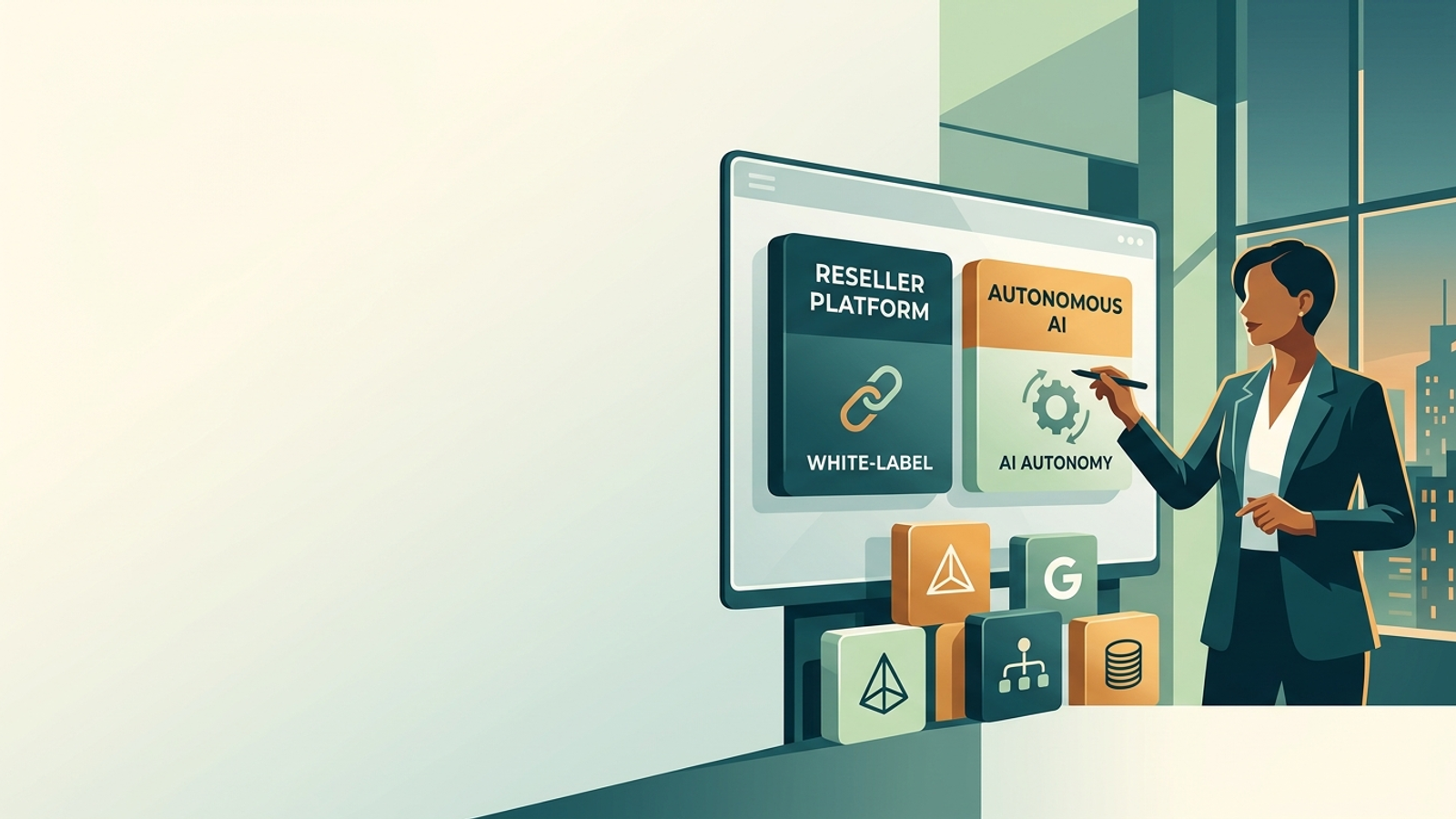
Can Agencies Use groas As A White-Label Solution For Client Accounts?
Yes. The groas DIY product is built specifically as a reseller channel for agencies. You connect unlimited client accounts under a single subscription, and the proprietary engine handles execution across all of them. Your clients never interact with groas directly. You keep your brand, your client relationships, and your margin. groas powers the execution underneath. There is $0 onboarding, no long-term contracts, and a 7-day free trial so you can validate results before committing. Your media buyers shift from manual optimization work to strategic oversight and client management.
How Does Adalysis Pricing Compare To Opteo Pricing For Agencies?
Both Adalysis and Opteo use per-account pricing models that scale linearly as your client book grows. The subscription costs themselves are manageable for a handful of accounts, but the real cost of ownership includes the media buyer hours required to act on every recommendation the tool surfaces. At 20 or more accounts, per-account tool costs combined with the payroll needed to process recommendation queues across every account can significantly erode agency margins. The subscription fee is often the smallest part of the total cost equation.
What Are The Best Opteo Alternatives For Agencies In 2026?
The best Opteo alternative for agencies depends on what you need. If you want a deeper diagnostic tool with stronger ad testing, Adalysis is worth evaluating. If you want to move beyond the diagnostic category entirely and stop relying on your team to manually execute every optimization, groas is the strongest alternative. groas replaces the recommendation-and-approval workflow with autonomous execution powered by an engine trained on over $500 billion in profitable ad spend. Agencies connect unlimited accounts, the engine runs 24/7, and your team focuses on strategy and client growth instead of processing suggestion queues.
Does groas Replace My Agency's Media Buyers?
No. groas shifts what your media buyers spend their time on. Instead of manually adjusting bids, adding negative keywords, and processing optimization queues across dozens of accounts, your team focuses on client strategy, relationship management, and business growth. The engine handles the execution volume that would otherwise require additional hires. This is the key difference: diagnostic tools like Adalysis and Opteo give your media buyers more work to do. groas takes the manual execution off their plate so they can do higher-value work.
How Long Does It Take To Set Up groas For An Agency With Multiple Accounts?
Setup is immediate. You start with a 7-day free trial, connect your client accounts, and the engine begins running across all of them from day one. There is no onboarding fee, no lengthy implementation process, and no configuration period that takes weeks. Compare that to onboarding with a traditional agency partner (2-4 weeks) or hiring a new media buyer (1-3 months before they are fully productive). The engine starts working the moment accounts are connected.
Is groas Month-To-Month Or Does It Require A Long-Term Contract?
groas is entirely month-to-month with no long-term contracts. You can cancel anytime. This is a deliberate choice: groas earns the next month by performing. If results do not justify the investment, you walk away with no penalties or exit fees. This stands in contrast to many agency relationships that lock you into 6-12 month commitments regardless of performance, and it removes the risk of trying an execution engine alongside or in place of diagnostic tools you may already be using.
Can I Use Adalysis Or Opteo Alongside groas?
Technically, yes. There is nothing preventing you from running a diagnostic tool alongside the groas engine. However, most agencies find the diagnostic layer redundant once the engine is executing across their accounts. The recommendations Adalysis or Opteo would surface are already being acted on by the engine in real time. Some agencies keep a diagnostic tool during the transition period to verify the engine's work, then drop it once they have confidence in the results.