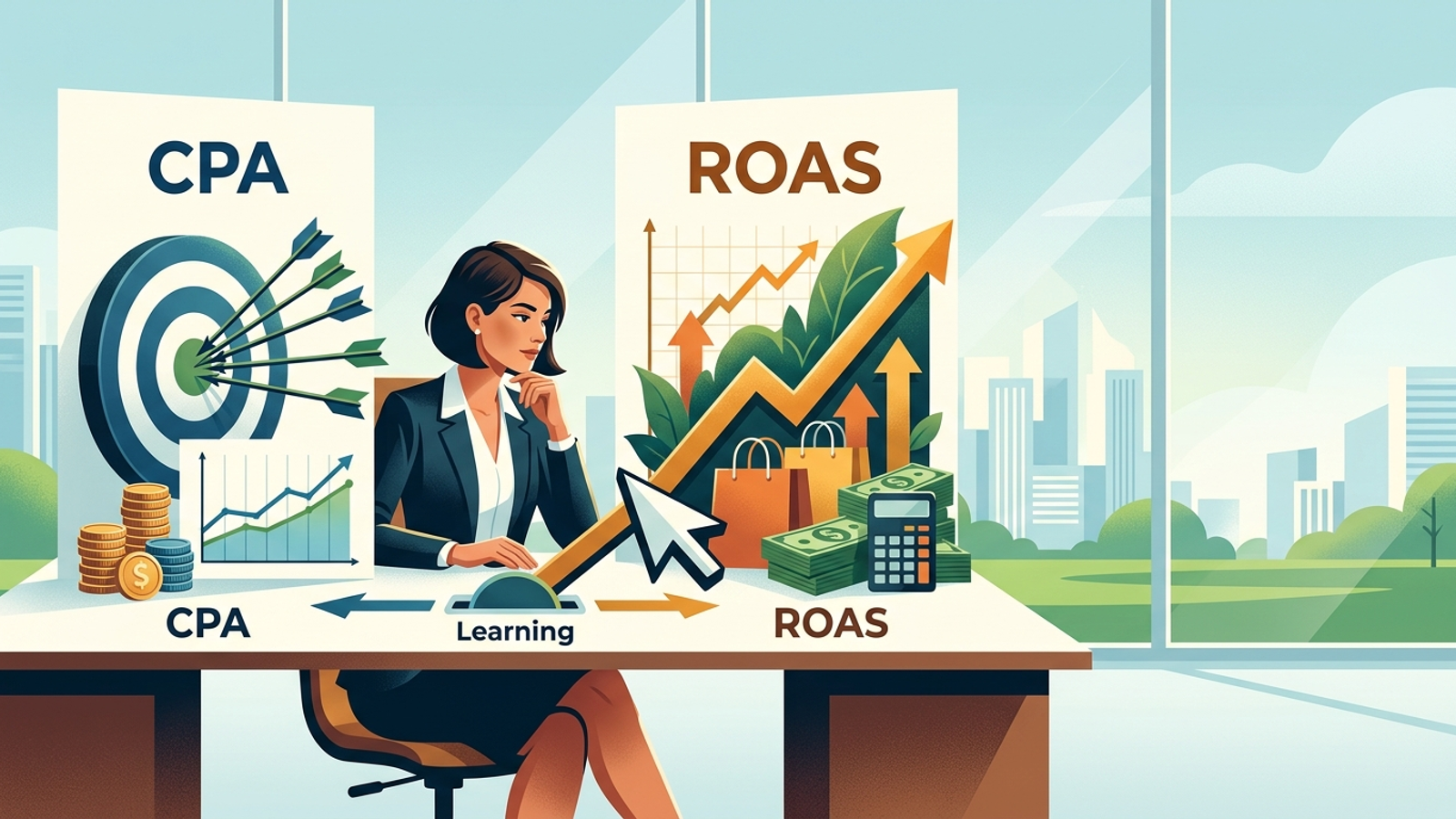
Most SaaS companies are structurally incapable of running profitable Google Ads because they built their entire campaign architecture around the wrong conversion event. SaaS Google Ads campaign structure fails not because the channel does not work, but because most SaaS advertisers optimize for free trial signups and MQLs instead of revenue events, then wonder why customer acquisition cost climbs every quarter while pipeline quality deteriorates. This is the core reason why SaaS companies waste Google Ads budget: they feed Google's algorithms vanity metrics, and the algorithm dutifully finds more of exactly what they asked for, which is people who sign up and never pay.
The conventional SaaS growth playbook says Google Ads is a straightforward lever. Bid on high-intent keywords, drive signups, let product-led growth handle the rest. This article is going to dismantle that assumption and show you what the campaign architecture that actually drives paid-to-revenue conversion looks like in 2026.
What Most People Believe About SaaS Google Ads
The standard SaaS Google Ads playbook looks something like this: you build campaigns around bottom-of-funnel keywords ("best [category] software," "[competitor] alternative," "[category] pricing"), send traffic to a trial signup page, track the signup as your primary conversion, and let Smart Bidding optimize toward more signups at lower cost per acquisition.
This playbook is everywhere. It is in every SaaS marketing blog, every agency pitch deck, and baked into most Google Ads account templates built for software companies. And it is not entirely wrong. The logic is sound on the surface: capture demand at the moment of highest intent, get people into the product, let the product convert them.
The problem is that this structure treats every signup as equally valuable, which they are not. A free trial signup from someone searching "free project management tool" has a fundamentally different likelihood of converting to paid than someone searching "project management software for construction teams with Gantt charts." But in most SaaS Google Ads accounts, both of those signups are tracked identically, weighted identically, and optimized toward identically.
The result is predictable. Smart Bidding gets better and better at finding cheap signups. CAC looks great on the dashboard. And the sales team or product analytics team notices that trial-to-paid conversion rates keep falling. The Google Ads account technically "works." The business does not grow.
This is the conventional wisdom, and it needs to be challenged directly.
Why SaaS Attracts The Worst Google Ads Practices
SaaS as a vertical has several structural features that make Google Ads mistakes more common and more expensive than in other industries.
The Vanity Metric Trap: MQLs, Trials, And Signups That Never Convert
SaaS companies are obsessed with top-of-funnel volume because their business models depend on it. Product-led growth depends on getting people into the product. Sales-assisted models depend on filling the pipeline. Both of these pressures push marketing teams to optimize for the easiest, most abundant conversion event available, which is almost always a free trial signup, a demo request, or a gated content download.
The problem is not tracking these events. The problem is making them your primary conversion action in Google Ads. When you tell Google's bidding algorithms that a free trial signup is your goal, the algorithm optimizes for the cheapest possible version of that event. It finds the users most likely to fill out a form, not the users most likely to become paying customers. These are meaningfully different populations.
This is the same dynamic that plagues B2B lead generation broadly, but SaaS makes it worse because the gap between "signup" and "revenue" is often 14 to 90 days, sometimes longer. By the time you realize your Google Ads signups are not converting to paid, you have already spent weeks or months of budget training the algorithm on the wrong signal. As we explored in our piece on how a SaaS company fixed attribution and turned budget into pipeline, closing this feedback loop is often the single highest-leverage fix a SaaS advertiser can make.
Why Most SaaS Companies Are Targeting The Wrong Keywords
Keyword strategy in SaaS Google Ads is where most of the budget waste starts, before conversion tracking even enters the picture.
Bottom-Of-Funnel Obsession Without Middle-Funnel Architecture
Most SaaS advertisers build campaigns exclusively around bottom-of-funnel keywords and ignore the middle entirely. They bid on "[category] software," "[category] tool," and "[competitor] vs [competitor]" queries, which is reasonable. But they skip the entire layer of problem-aware and solution-aware queries where buyers are researching but have not yet decided on a category winner.
These middle-funnel queries, things like "how to reduce employee onboarding time" for an HR software company, or "automate invoice reconciliation" for an accounting platform, often have lower CPCs, less competition, and attract buyers who are earlier in their decision process but have real purchase intent. Without campaigns built for this intent layer, SaaS advertisers compress their entire Google Ads strategy into the most expensive, most competitive keyword set and then wonder why CAC is high.
The Competitor Keyword Trap: Why Bidding On Competitor Names Rarely Scales
Bidding on competitor brand names is one of the most persistent SaaS Google Ads tactics, and one of the least scalable. The logic is simple: if someone searches for your competitor by name, they are clearly in-market. Show them your ad instead.
In practice, competitor keyword campaigns almost always deliver lower click-through rates, higher CPCs, and worse conversion rates than non-branded campaigns. The user searched for a specific product. Your ad interrupts that intent. Some percentage will click, but conversion rates from competitor keywords typically lag behind category keywords significantly.
This does not mean competitor bidding never works. It can work as a small, controlled slice of budget with highly tailored ad copy and landing pages. But most SaaS companies treat it as a primary growth channel, allocate serious budget to it, and then cannot understand why their blended CPA is climbing. For a deeper look at the brand keyword decision in general, this framework on bidding on brand keywords applies to the competitor side as well.
How Broad Match And Smart Bidding Make The Targeting Problem Worse Without Structure
Google has pushed SaaS advertisers (and everyone else) toward broad match plus Smart Bidding as the default configuration. For well-structured accounts with clean conversion data, this can work. For most SaaS accounts, it accelerates waste.
Broad match without a robust negative keyword system means your ads show for informational queries, free-tier seekers, job searchers, and tangentially related software categories. Smart Bidding then optimizes toward whichever of those clicks convert on your easiest conversion event (the free signup). The algorithm is doing exactly what you told it to do. The problem is in the instructions, not the machine.
This is where SaaS advertisers working with groas in a DWY arrangement see immediate structural gains. The engine, trained on over $500 billion in profitable ad spend, identifies and excludes wasteful query patterns faster than any manual review process, while a senior strategist works alongside your in-house team to rebuild keyword architecture around revenue intent. You stay in control of your account; the engine and strategist handle the heavy execution that your team cannot physically get through in a 40-hour week.
The SaaS Google Ads Budget Waste Pattern (What The Data Shows)
CAC Inflation Through Poor Conversion Tracking
CAC inflation in SaaS Google Ads is rarely caused by market dynamics alone. It is more often caused by poor conversion tracking that degrades algorithm performance over time.
When your primary conversion event is a free trial signup, and your tracking does not distinguish between organic signups who happened to click an ad once and genuinely paid-acquired users, you are inflating your reported conversion volume. This gives Smart Bidding a distorted picture of what is working. The algorithm chases more of what appears to convert, even if the underlying economics are getting worse.
This misattribution problem compounds. As the algorithm "learns" from bad data, it shifts spend toward audiences and queries that produce cheap signups but poor downstream revenue. You respond by raising budgets because the dashboard looks efficient. Actual revenue per ad dollar declines. As we documented in the B2B enhanced conversions case study, fixing the tracking layer alone can fundamentally change Smart Bidding performance.
How SaaS Companies Misattribute Organic Signups To Paid
This is one of the most common and most expensive SaaS Google Ads mistakes. A user sees your brand on a podcast, searches your brand name, clicks a branded ad, and signs up. Your Google Ads account gets credit for a "conversion" that would have happened anyway. You now believe branded search is your best-performing campaign and allocate more budget to it.
Meanwhile, the non-branded campaigns that actually introduced new buyers look less efficient by comparison and get less budget. You end up paying for conversions you already owned while starving the campaigns that drive incremental growth.
The Free Trial Tracking Problem And What It Does To Smart Bidding
Free trials create a unique tracking problem. The conversion event (signup) is free, easy, and low-commitment. This means Google's algorithms can find enormous volumes of these conversions cheaply. But the event that actually matters, the trial converting to a paid subscription, happens days or weeks later and often in a completely different system (your billing platform, your CRM).
If you do not pipe that downstream revenue data back into Google Ads as an offline conversion, Smart Bidding never learns which clicks actually make money. It just keeps optimizing for more free signups. This is the structural root cause of why SaaS companies waste Google Ads budget at scale.
What Actually Works For SaaS On Google Ads In 2026
Campaign Structure Built Around Revenue Intent, Not Traffic Intent
The fix starts with restructuring campaigns around the buyer's proximity to a purchase decision, not around keyword categories. This means separating campaigns by:
- Revenue-intent queries (pricing, comparison, integration-specific searches)
- Solution-intent queries (problem-aware searches where the user is evaluating solutions)
- Category-intent queries (broad category searches where the user is early in research)
Each layer gets different bidding strategies, different conversion actions, and different budget allocation. Revenue-intent campaigns use value-based bidding tied to downstream revenue. Solution-intent campaigns use maximize conversions with a qualified-lead conversion action. Category campaigns, if used at all, are treated as awareness with separate measurement.
Tracking Paid Conversions Vs. Free Signups Vs. Revenue Events
You need at minimum three conversion tiers in your Google Ads account: the raw signup, a qualified activation event (the user actually engaged with the product in a meaningful way), and the revenue event (first payment or contract signed). Only the revenue event or qualified activation should be a primary conversion action driving Smart Bidding. Signups should be tracked as secondary conversions for reporting only.
This requires offline conversion imports, which means connecting your CRM or billing system to Google Ads. It is not optional. Without it, every dollar you spend on Google Ads is optimized against the wrong outcome.
When To Use Performance Max For SaaS (And When To Avoid It)
Performance Max can work for SaaS when you have clean revenue-event conversion data and enough conversion volume (typically 30+ per month) for the algorithm to learn. Without that, Performance Max will absorb your brand search traffic, cannibalize your existing campaigns, and report inflated results, exactly the dynamic we have seen in ecommerce and that repeats across SaaS accounts.
For most SaaS companies, a tightly controlled Search campaign structure with manual segmentation will outperform Performance Max until conversion volume and tracking maturity reach the threshold where PMax can actually learn.
The Role Of A Dedicated Strategist For SaaS Google Ads In 2026
SaaS Google Ads in 2026 requires someone who understands both the technical complexity of conversion tracking and the strategic nuance of SaaS unit economics. A generic media buyer running the same playbook they use for ecommerce or lead gen will get you the problems described in this entire article.
This is why growth-stage SaaS companies working with groas on DFY see a fundamentally different outcome. A dedicated strategist who understands SaaS economics owns your entire Google Ads function end-to-end: rebuilding campaign architecture around revenue events, implementing offline conversion tracking, restructuring keyword targeting away from vanity traffic, and continuously optimizing against actual paid-to-revenue conversion rates. The proprietary engine runs execution 24/7, so optimizations happen at a speed and scale a single account manager cannot match. Nothing to log into. Nothing to manage. Reach the team on Slack or email whenever you need to.
For SaaS companies that want to keep their in-house team in the driver's seat, groas DWY puts the same engine and a senior strategist alongside your team. You stay in control; the engine handles the execution volume and pattern recognition across your campaigns while the strategist provides the SaaS-specific strategic layer your team may not have.
Is Google Ads Even Worth It For SaaS At Your Stage?
Early-Stage SaaS: When To Start And What Budget Actually Makes Sense
If you have fewer than 50 paying customers and your product-market fit is still being validated, Google Ads is probably premature. The channel works best when you know your ICP, your conversion flow is proven, and you can afford to spend consistently for 60 to 90 days while the algorithm learns. Starting Google Ads before your funnel is ready means burning budget to learn something you could learn cheaper through founder-led sales or content.
Growth-Stage SaaS: Why Autonomous Execution Beats A Single Account Manager
Once you have product-market fit and a repeatable sales process, Google Ads becomes one of the most reliable SaaS growth channels available. But this is also where the execution bottleneck shows up. Your in-house person or agency account manager is capped at whatever they can physically get through in a week. Query mining, bid adjustments, negative keyword management, ad copy testing, landing page optimization, conversion tracking maintenance: all of this has to happen continuously and at scale.
This is the gap that manual management can no longer cover. A proprietary engine running execution around the clock, paired with a senior strategist who understands your SaaS business, does not hit that ceiling.
The Contrarian Thesis, Restated
Most SaaS companies fail at Google Ads not because the channel is broken, but because they built their entire campaign architecture around the wrong conversion event and never fixed it. They optimized for free signups, trained the algorithm on vanity metrics, and then blamed Google Ads when CAC inflated and pipeline quality degraded.
The fix is structural: rebuild campaigns around revenue intent, track downstream conversion events as primary actions, eliminate keyword waste through proper negative keyword architecture, and stop treating every signup as equally valuable.
If you are running SaaS Google Ads in-house and want the engine plus a strategist working alongside your team while you stay in control, groas DWY is built for exactly this. Get started and see the structural difference in your first few weeks.
If you want SaaS Google Ads fully handled, with a dedicated strategist owning everything from campaign architecture to landing pages to conversion tracking, apply for groas DFY. groas figures out the right plan on the call.
Month-to-month, $0 onboarding, cancel anytime. groas earns the next month by performing.
Frequently Asked Questions About SaaS Google Ads Campaign Structure
Why Do Most SaaS Companies Waste Google Ads Budget?
Most SaaS companies waste Google Ads budget because they optimize campaigns around free trial signups or MQL form fills instead of revenue events. This trains Google's Smart Bidding algorithms to find users who are most likely to sign up for free, not users most likely to become paying customers. The result is declining trial-to-paid conversion rates, rising customer acquisition costs, and a Google Ads account that looks efficient on the dashboard but does not produce revenue growth. Fixing this requires restructuring campaigns around downstream revenue data, not top-of-funnel volume.
What Is The Best Google Ads Campaign Structure For SaaS In 2026?
The best SaaS Google Ads campaign structure in 2026 separates campaigns by revenue proximity: revenue-intent campaigns (pricing, comparison, integration queries) using value-based bidding tied to actual payments, solution-intent campaigns targeting problem-aware searches with qualified-lead conversion actions, and category campaigns treated as awareness with separate measurement. Free trial signups should be tracked as secondary conversions only, never as the primary action driving Smart Bidding. Offline conversion imports from your CRM or billing system are required, not optional.
Should SaaS Companies Use Performance Max?
Performance Max can work for SaaS companies, but only when two conditions are met: you have clean revenue-event conversion data flowing into Google Ads, and you have enough conversion volume (typically 30 or more per month) for the algorithm to learn. Without both, Performance Max will absorb your brand search traffic, cannibalize your existing campaigns, and report inflated results. Most SaaS companies are better served by tightly controlled Search campaigns until their tracking maturity and conversion volume reach the required threshold.
How Does groas Help SaaS Companies Fix Google Ads?
groas addresses the structural problems that cause SaaS Google Ads waste. For companies that want full management, groas DFY provides a dedicated strategist who owns everything from campaign architecture and keyword targeting to conversion tracking and landing pages, backed by a proprietary engine trained on over $500 billion in profitable ad spend running execution 24/7. For teams that want to stay in control, groas DWY puts the same engine and a senior strategist alongside your in-house team. Both are month-to-month with $0 onboarding.
Is Bidding On Competitor Brand Names Worth It For SaaS?
Bidding on competitor brand names can work as a small, tightly controlled slice of your SaaS Google Ads budget, but it rarely scales as a primary growth channel. Competitor keyword campaigns consistently deliver lower click-through rates, higher CPCs, and worse conversion rates than non-branded category campaigns. The user searched for a specific product, and your ad interrupts that intent. If you run competitor campaigns, use highly tailored ad copy and dedicated landing pages, but do not allocate significant budget to them.
Why Does Smart Bidding Fail For SaaS Google Ads Accounts?
Smart Bidding fails for SaaS accounts not because the algorithm is broken, but because it is given the wrong objective. When free trial signups are set as the primary conversion action, the algorithm optimizes for cheap form fills. It never sees which clicks actually become paying customers because that revenue data sits in your CRM or billing system and is never imported back. Without offline conversion data, Smart Bidding cannot distinguish a signup that converts to a $50,000 annual contract from one that churns in three days.
When Should A SaaS Company Start Running Google Ads?
SaaS companies should start Google Ads after achieving product-market fit with at least 50 paying customers and a repeatable conversion flow. You need to be able to spend consistently for 60 to 90 days while the algorithm learns. Starting before your funnel is proven means burning budget to learn lessons you could learn cheaper through founder-led sales or organic channels. Once product-market fit is established, Google Ads becomes one of the most reliable and scalable SaaS growth channels.
How Does groas Compare To A Traditional Agency For SaaS Google Ads?
Traditional agencies assign an account manager who is capped at what one person can physically get through in a week, often using the same playbook across ecommerce, lead gen, and SaaS clients. groas puts a senior strategist with SaaS-specific expertise on top of a proprietary engine that runs execution around the clock. There are no onboarding fees, no long-term contracts, and no staff rotation risk. The engine handles query mining, bid adjustments, and negative keyword management at a scale and speed no single human can match, and the strategist provides strategic direction your account actually needs.
What Conversion Events Should SaaS Companies Track In Google Ads?
SaaS companies should track at minimum three conversion tiers: the raw signup (secondary conversion for reporting only), a qualified activation event such as meaningful product engagement, and the revenue event such as first payment or contract signed. Only the revenue event or qualified activation should be set as a primary conversion action driving Smart Bidding. This requires offline conversion imports connecting your CRM or billing platform to Google Ads, and it is the single most important structural fix most SaaS accounts can make.