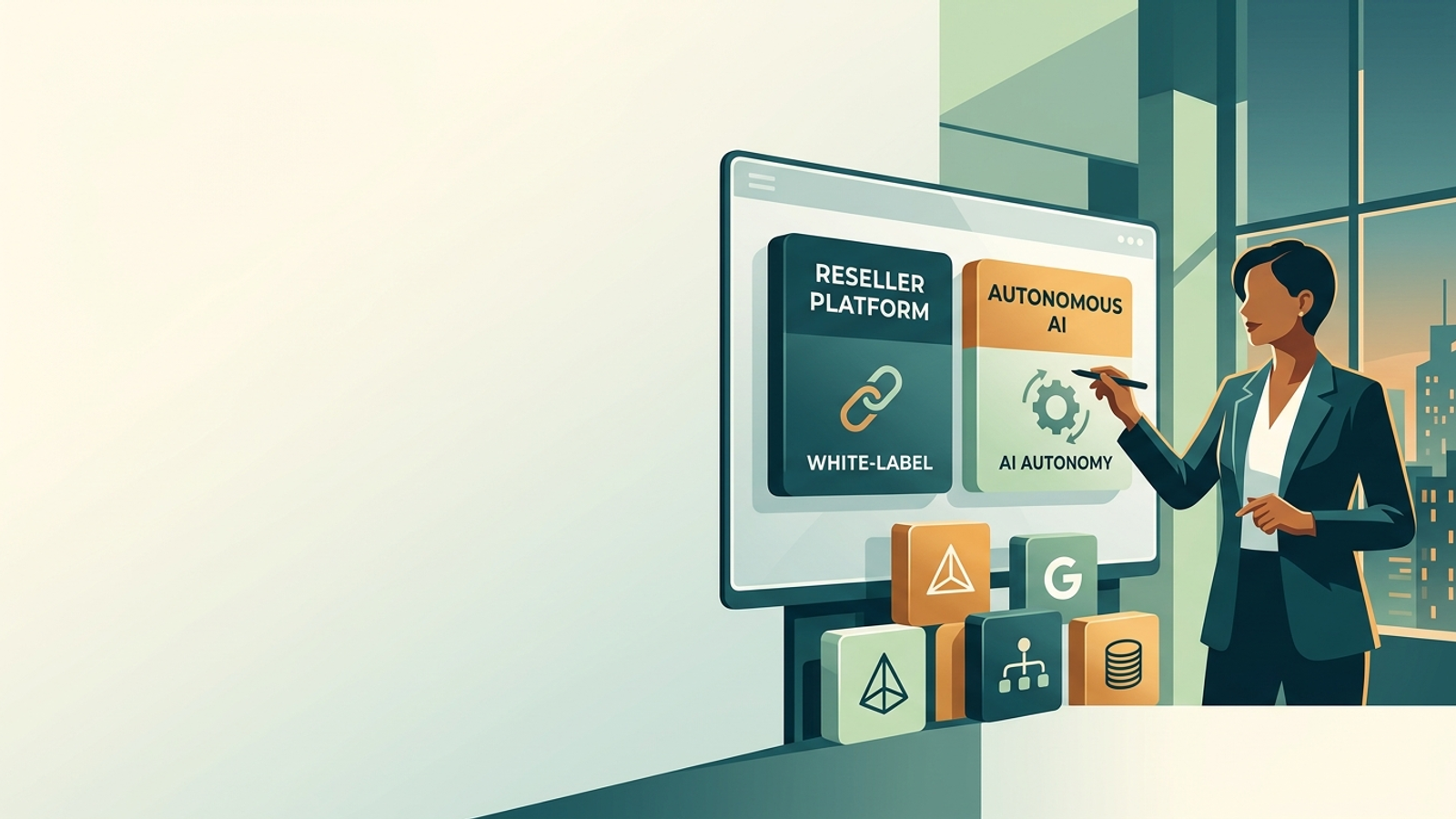
White-label Google Ads management for agencies is a fulfillment model where a third party handles campaign execution under your agency's brand, allowing you to scale client accounts without hiring more media buyers. This guide walks through how to build a white-label Google Ads operation from scratch, choose the right execution model, structure your accounts for invisibility, and reach 30 or more clients without adding headcount.
By the end, you will have a concrete blueprint for setting up a google ads white label reseller operation that protects your margins, keeps your brand front and center, and lets you say yes to new clients without worrying about capacity.
You will need: an active Google Ads MCC (Manager Account), at least a few existing client accounts or signed prospects, a clear picture of your current cost per account, and a decision about whether your agency sells strategy, execution, or both.
Before You Start
Before choosing a white-label partner or restructuring anything, document three numbers: your current cost to manage one client account per month (labor, tools, overhead), the number of hours your team spends on execution versus strategy, and your gross margin per client. These numbers determine which white-label model actually improves your business rather than just shifting the bottleneck. If you do not know your per-account cost, estimate it by dividing your total Google Ads team payroll and tool spend by your active client count. This baseline is what every decision in this guide gets measured against.
Step 1. Decide What Your Agency Is Actually Selling
The first step in building a white-label Google Ads operation is defining whether your agency sells strategy, execution, or the full stack. This determines what you need to white-label and what stays in-house.
Strategy-Only Agencies Should White-Label Execution
If your value proposition centers on marketing strategy, creative direction, or business consulting, and Google Ads execution is a service you bolt on to retain clients, white-labeling execution is the clearest margin play. You keep the strategic relationship. Someone else operates the campaigns. Your team stops context-switching between client calls and bid adjustments.
Full-Service Agencies Need To Pick The Handoff Point
If you position as full-service, the question becomes where execution starts and strategy ends. Most agencies discover their media buyers spend the majority of their time on repetitive optimization tasks: bid changes, search term reviews, negative keyword additions, ad copy rotation. That is the execution layer you can hand off. Your team retains the strategic layer: account structure decisions, budget allocation across channels, client communication, and performance narrative.
The Margin Math At Every Client Count
At five clients, one good media buyer handles execution. At 15, you need two or three, plus a manager. At 30, you are running a department with overhead that eats your margin. The build or buy decision is ultimately a margin question: does adding headcount scale linearly with revenue, or does white-labeling let revenue scale while costs stay flat?
Step 2. Choose The Right White-Label Execution Model
Choosing how to white-label Google Ads execution comes down to two models: operating a platform yourself, or reselling a managed service under your brand. Both work. They serve different agency types.
White-Label Software Platforms: You Operate The Engine, You Control The Account
In this model, your agency licenses a platform or engine that handles the heavy optimization work. Your media buyers still touch accounts, but the engine does the repetitive execution: bid management, budget pacing, search term analysis, and ad rotation at a speed and consistency no human can match. You retain full control. The engine amplifies what your team already does.
This is the model that makes sense if your agency has media buyers who know Google Ads and you want to multiply their output rather than replace them.
White-Label Managed Service: A Third Party Runs Execution Under Your Brand
In this model, a third-party team manages execution entirely. Your agency provides the client relationship and strategic layer. The execution partner stays invisible. This works when you do not have (or do not want) in-house media buyers, but it introduces a dependency: you are trusting someone else's team to deliver results your client holds you accountable for.
How The groas DIY Model Works For Agencies
The groas agency product sits in the first category. It is a self-serve engine trained on over $500 billion in profitable ad spend that your agency operates directly. You connect unlimited client accounts under one subscription through your own MCC. Your team runs the show. groas powers the execution underneath.
The critical distinction: groas is not a managed service in this model. It is a proprietary engine your media buyers use to do more work, at higher quality, across more accounts than they could manually. Your brand stays on everything. Your clients never know groas exists. You keep your margin. The engine starts with a 7-day free trial, there is $0 onboarding, and it is month-to-month with no lock-in contract. Compare that to hiring another media buyer at a fully loaded cost or signing a 12-month managed service agreement.
For a deeper look at how MCC management works at scale, that guide covers multi-client account architecture specifically for agencies.
Step 3. Set Up The Infrastructure
Your infrastructure determines whether clients ever see behind the curtain. This step covers the structural setup that keeps your white-label operation invisible.
MCC Structure: Keep Accounts Separated And Client-Branded
Every client account lives under your agency's MCC. Never co-mingle client campaigns in shared accounts. Each client gets their own Google Ads account, linked to your MCC, with your agency email as the admin. This is standard practice, but it becomes essential when white-labeling because it ensures that if a client ever requests direct access, they see only their own campaigns, their own brand, and nothing that identifies your execution partner.
If you are using the groas engine, it connects through your MCC. The client sees their account. Your team sees every account. groas runs underneath. The layers stay separated by design.
Reporting Templates: What Clients See Versus What You Monitor
Build two reporting layers. The client-facing layer shows performance metrics they care about: conversions, cost per acquisition, return on ad spend, and budget utilization. Brand this with your agency's logo, colors, and language. The internal layer shows operational metrics: engine actions, optimization logs, bid change frequency, search term additions, and quality score shifts. This is how your team monitors what the engine (or your white-label partner) is doing.
Do not send clients raw optimization logs. They do not need to see 400 bid changes per day. They need to see that CPA went down and conversions went up.
Communication Workflows: Your Brand Stays Front And Center
All client communication comes from your team, your email domain, your Slack workspace or project management tool. If you are using a white-label engine, your media buyer translates what the engine did into client-ready updates. If you are using a managed service, establish a workflow where the execution partner sends updates to your internal channel, and your account manager relays them to the client in your voice.
The goal is one brand in the client's mind: yours.
Step 4. Onboard Clients Without Exposing Your Stack
Onboarding is where most agencies accidentally reveal their white-label setup. This step covers how to bring new clients in cleanly.
Position Engine-Powered Execution As Your Agency's Proprietary Approach
You do not need to hide the fact that you use technology. Clients expect it. What you position is this: your agency has developed a proprietary optimization approach that combines human strategic oversight with advanced automation. This is true. You are the human layer. The engine is the automation layer. Together, they are your approach.
Avoid naming specific tools or partners in client-facing materials. Instead, reference "our proprietary optimization engine" or "our in-house automation stack." This is standard agency practice, and it is honest. Every agency uses tools. The client is paying for outcomes, not a tool list.
What To Say When Clients Ask How You Manage Their Account
Clients occasionally ask about your process. The answer is straightforward: "We use a combination of senior strategist oversight and custom-trained automation that monitors and optimizes your campaigns continuously. Our team reviews performance and makes strategic decisions while the optimization engine handles high-frequency execution tasks like bid management and budget pacing."
This is accurate, positions your agency as sophisticated, and does not expose your specific stack.
Handle Client Requests That Conflict With Engine-Driven Strategy
Clients sometimes request changes that an engine would not recommend: arbitrary bid caps, forcing budget into underperforming campaigns, or pausing high-performing keywords because of internal politics. Your account manager needs a framework for these conversations. Acknowledge the request, explain the data-driven reasoning for the current approach, and propose a test. "Let's run your approach on 20% of budget for two weeks and compare." This keeps the client feeling heard while protecting performance.
Step 5. Scale Without Adding Headcount
This is where white-label execution pays off. Scaling from 10 to 30 or more clients without proportional headcount growth.
The Account-Per-Manager Ratio Changes When You Use An Engine
A traditional agency media buyer manages five to eight accounts well. Beyond that, quality drops, response times slow, and optimization becomes reactive instead of proactive. When an engine handles the execution layer, that ratio shifts dramatically. Your media buyer's job changes from manually adjusting bids and reviewing search terms to monitoring engine output, making strategic decisions, and managing client relationships.
Agencies using the groas engine for execution have scaled to 40 clients without hiring new account managers. The engine handles 24/7 execution. The human handles strategy and client communication. The ratio moves from one manager per eight accounts to one manager per 15, 20, or more, depending on account complexity.
How To Handle Performance Reviews At Scale
At 30 or more clients, you cannot do deep manual account reviews weekly. Build a tiered review system. Use automated alerts for accounts that fall outside performance thresholds (CPA spikes, spend pacing issues, conversion volume drops). Those get immediate attention. Accounts performing within range get a lighter monthly review focused on strategic opportunities rather than tactical fixes. The engine handles the tactical layer continuously, so your manual reviews can focus on bigger-picture decisions.
For practical approaches to campaign structuring that support this scale, that guide covers the structural patterns that make scaled oversight possible.
Build Retention Systems That Do Not Require Manual Account Management
Client retention at scale depends on two things: consistent performance and consistent communication. The engine handles performance consistency. You need systems for communication consistency. Build automated monthly reporting, quarterly business review templates, and proactive outreach triggers (when an account hits a new performance high, send a congratulatory email with the numbers). These systems keep clients feeling attended to even when your team is managing three times the accounts they used to.
What White-Label Google Ads Execution Looks Like At 30 Plus Clients
At 30 or more clients on a white-label execution model, your agency's operations look fundamentally different than a traditional shop. Your MCC contains dozens of accounts, all running optimized campaigns 24/7. Your team of two or three account managers handles strategic oversight and client communication. A proprietary engine handles the execution work that used to require a department of media buyers.
Your margins are higher because headcount did not scale with client count. Your client retention is stronger because performance is more consistent than what manual management delivers. Your sales team can say yes to new clients without the founder worrying about whether the team can handle the load.
This is not theoretical. It is the operating model agencies are already running when they stop trying to brute-force scale through hiring and start building leverage into their execution layer.
Common Mistakes To Avoid
Choosing a managed service when you need an engine. If your team knows Google Ads and wants to stay in control, do not outsource execution to a black box. Use an engine you operate. Save the managed service model for agencies that genuinely do not want to touch accounts.
Exposing your stack in proposals or onboarding. Never list specific tool names in client-facing documents. Position technology as your proprietary approach, not as a third-party dependency.
Skipping the two-layer reporting system. Sending clients optimization logs or raw engine output confuses them and raises questions you do not want to answer. Build client-facing reports that show outcomes, not process.
Trying to scale on manual execution before adopting an engine. Hiring a fifth media buyer to handle your 35th account is the most expensive way to scale. The margin math breaks before you reach 30 clients on manual execution alone.
Choosing a white-label partner with long-term contracts. If your partner locks you into a 6 or 12 month agreement, you absorb client churn risk without the flexibility to adjust. Look for month-to-month arrangements where the partner earns the next month by performing.
Ignoring automation and its limits in your current stack. Before adopting a white-label engine, understand what your current scripts and automations can and cannot do. This prevents duplicating work and helps you identify exactly which execution gaps the engine needs to fill.
How groas Handles This For Agencies
The groas DIY product was built specifically for this use case. It is a proprietary engine trained on over $500 billion in profitable ad spend that agencies operate directly through their own MCC.
Here is what the setup looks like: you connect your client accounts under your subscription. Your media buyers use the engine for execution. The engine runs 24/7, handling the high-frequency optimization work (bid management, budget pacing, search term analysis, ad rotation) at a scale and speed that no human team can replicate. Your team stays in the driver's seat, making strategic decisions and managing client relationships.
Your clients never see groas. They see your agency, your reporting, your brand. groas powers the execution underneath.
The economics make the build-versus-buy decision straightforward. There is $0 onboarding, unlike agencies and freelancers who charge thousands before work begins. It is month-to-month, so if your client count drops, your costs adjust. You do not carry the fixed cost of a media buyer salary when accounts churn. And the engine does not take vacation, quit, or get poached by a competitor.
Start your 7-day free trial and connect your first client accounts. You will see the difference in execution volume and consistency within the first week.
The Bottom Line
Building a white-label Google Ads operation is a margin and scale decision. You are choosing to separate strategy (which your team owns) from execution (which an engine handles), so your agency can grow its client book without growing its payroll at the same rate. The five steps are concrete: define what you are selling, choose your execution model, set up the infrastructure, onboard cleanly, and build systems for scale. Agencies that follow this playbook reach 30 or more clients with a fraction of the headcount that manual execution demands. If you are ready to stop trading hours for accounts and start building leverage into your Google Ads operation, groas gives your agency the execution engine to get there. Start your 7-day free trial and see what your team can do when the engine handles the heavy lifting.
Frequently Asked Questions
What Is White-Label Google Ads Management For Agencies?
White-label Google Ads management is a fulfillment model where an agency uses a third-party engine or service to execute Google Ads campaigns under the agency's own brand. The client never knows a partner is involved. The agency retains the client relationship, sets the pricing, and keeps its margin. This model lets agencies scale their client count without hiring proportional headcount. There are two main approaches: operating an engine yourself (you stay in control of accounts) or reselling a managed service where a third party runs execution invisibly. The right choice depends on whether your team has Google Ads expertise in-house.
How Many Clients Can One Account Manager Handle With A White-Label Engine?
Without an engine, a skilled media buyer typically manages five to eight Google Ads accounts before quality starts declining. With a white-label execution engine handling bid management, budget pacing, search term analysis, and ad rotation around the clock, that ratio shifts to 15, 20, or more accounts per manager. The manager's role changes from manual optimization to strategic oversight and client communication. The exact ratio depends on account complexity and how much client-facing work each account requires.
Will My Clients Know I Am Using A White-Label Partner?
Not if you set up your infrastructure correctly. All client accounts live under your MCC. Reporting carries your agency's branding. All communication comes from your team's email and channels. You position the technology as your proprietary optimization approach, which is accurate since you are the human strategic layer operating the engine. Clients expect agencies to use technology. They are paying for outcomes, not a list of every tool behind the scenes.
How Does The groas Agency Product Work For White-Label Google Ads?
The groas DIY product is a proprietary engine trained on over $500 billion in profitable ad spend that agencies operate directly through their own MCC. You connect unlimited client accounts under one subscription. Your media buyers stay in the driver's seat, making strategic decisions while the engine handles high-frequency execution 24/7. Your clients never see groas. It starts with a 7-day free trial, has $0 onboarding, and runs month-to-month with no long-term contract. Compared to hiring additional media buyers or signing a locked-in managed service, the economics strongly favor this model.
What Is The Difference Between A White-Label Platform And A White-Label Managed Service?
A white-label platform or engine is software your agency operates. Your team controls every account and makes every decision, with the engine handling repetitive execution tasks at scale. A white-label managed service means a third-party team runs execution entirely, and your agency provides the client relationship and strategic wrapper. The platform model gives you more control and lower dependency risk. The managed service model works if you have no in-house Google Ads expertise, but you are trusting another team to deliver results you are accountable for.
How Do I Price White-Label Google Ads Services To My Clients?
Your client pricing stays the same as it would for any agency service. You set a management fee (often a percentage of ad spend or a flat monthly retainer), and your cost of fulfillment drops because the engine handles execution that would otherwise require media buyer hours. The margin difference between what you charge and what you pay for the engine is your profit. As you add clients, revenue scales while your engine cost scales more gradually than headcount would, improving your margin per account.
Can I Use groas For White-Label Google Ads And Keep My Own Brand?
Yes. The groas agency product is designed as a reseller channel. You connect client accounts through your MCC. All reporting, communication, and branding stays yours. groas powers the execution underneath, but the client-facing experience is entirely your agency. You keep your clients, your brand, and your margin. The engine is invisible to your end clients by design.
What Happens If A Client Asks How I Manage Their Google Ads Account?
Tell them the truth in agency-appropriate language: your agency uses a combination of senior strategist oversight and proprietary automation that monitors and optimizes campaigns continuously. Your team makes strategic decisions while the optimization engine handles high-frequency execution. This is accurate, positions your agency as sophisticated, and does not expose any specific tools or partners. Clients expect technology-driven management in 2026. They care about results, not your vendor list.
How Long Does It Take To Set Up A White-Label Google Ads Operation?
With the right engine, setup is fast. If you already have an MCC with client accounts, connecting to a platform like the groas engine can happen the same day. Building your reporting templates, communication workflows, and onboarding process takes a few days of focused work. Compare that to hiring a media buyer (one to three months to recruit, onboard, and ramp) or signing a managed service agreement (typically two to four weeks of onboarding). The engine model has the fastest time to execution.
What Is The Biggest Risk Of White-Labeling Google Ads Execution?
The biggest risk is choosing a partner that locks you into a long-term contract without performance accountability. If results decline, you are stuck paying for a service that is costing you clients. Look for month-to-month arrangements where the partner earns the next month by performing. Also avoid partners that require you to give up MCC access or co-mingle client accounts, as that creates a dependency that is difficult to unwind if the relationship does not work out.