Build Or Buy Google Ads Execution: Which Scales Better For Agencies
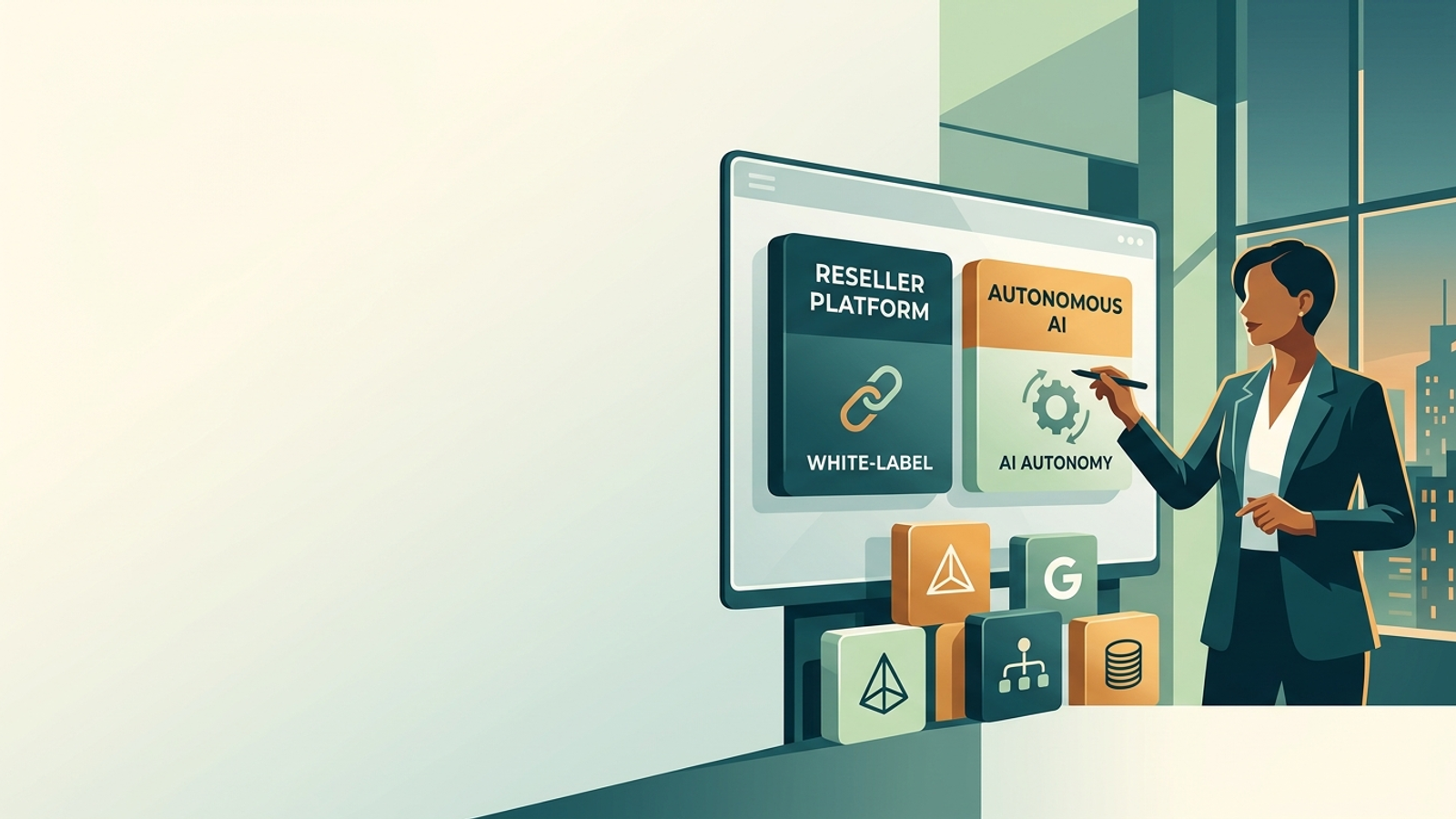
The build vs buy question for Google Ads agency execution comes down to this: building your own execution infrastructure gives you control, but buying an execution engine gives you scale. Short answer: most agencies past 10 active clients should buy execution and own the strategy layer. The economics of headcount, the accelerating complexity of Google Ads, and the margin math all point the same direction. A white label Google Ads management engine like the groas DIY product lets agencies plug into a proprietary engine trained on over $500 billion in profitable ad spend, keep their client relationships and brand, and scale their book without proportional hiring. Building execution in-house only makes sense in narrow situations where you have genuine proprietary data advantages or real AI/data science capability on staff. Here is the full breakdown.
At A Glance
Building execution in-house: Best for agencies with deep vertical specialization, genuine data science teams, and the capital to invest in tooling and headcount that may take years to pay off. Gives maximum control. Costs the most per account at scale.
Buying a white label execution engine (groas DIY): Best for agencies that want to scale their Google Ads client book without adding headcount proportionally. The agency keeps strategy, client relationships, reporting narratives, and margin. groas provides the execution engine underneath. $0 onboarding, month-to-month commitment, 7-day free trial to start.
Hybrid (partial build, partial buy): Common but often the worst of both worlds. Agencies end up maintaining two systems, two workflows, and two quality standards. Usually a transitional state, not a destination.
Why The 'Build Vs Buy' Question Matters More Now Than It Did In 2020
How Google Ads Execution Complexity Has Changed With PMax, AI Max, And Smart Bidding
Google Ads execution in 2026 is fundamentally different from what it was even three years ago. Performance Max campaigns layer search, display, video, and shopping into a single campaign type that requires asset-level thinking, audience signal architecture, and constant feed optimization. AI Max for Search is rewriting how broad match and creative interact. Smart Bidding strategies now require clean conversion data pipelines and careful offline conversion imports to work properly. The execution surface area has expanded dramatically, and each expansion requires different skills and different tooling.
An agency that built its processes around manual CPC bidding, single keyword ad groups, and spreadsheet-based reporting in 2018 is running on infrastructure that no longer matches the platform it operates on. The gap between "we run Google Ads" and "we run Google Ads well in 2026" has widened, and it widens further every quarter.
Why Agencies That Built Their Own Processes In 2018 Are Running On Outdated Infrastructure
Most agency SOPs were written for a version of Google Ads that no longer exists. If your account managers are still structuring campaigns the way they learned before Performance Max existed, your execution quality is degrading relative to the platform's own evolution. Rebuilding those SOPs is not a one-time project. It is a continuous investment that competes with billable work for your team's attention. This is the core tension: the agencies that most need to update their execution infrastructure are the ones with the least available bandwidth to do it.
What Does 'Building Execution' Actually Mean For An Agency?
Building execution means hiring, training, tooling, and maintaining the people and processes that turn strategy into live, optimized campaigns. It is not just "having account managers." It is the full stack beneath them.
In-House Analysts, Account Managers, And The Headcount Math
A single experienced account manager can typically handle somewhere between 8 and 15 active Google Ads accounts depending on complexity, spend levels, and how much strategic work each account requires. Past that, quality drops or the person burns out. Scaling to 30 clients means at least two to three account managers. Scaling to 100 means a team of seven to twelve, plus a manager, plus QA processes, plus coverage for vacations, sick days, and turnover.
The fully loaded cost of a competent Google Ads account manager in the US runs between $60,000 and $95,000 annually. Senior practitioners cost more. Every hire adds recruiting time (often months), onboarding cost (typically $5,000+ in lost productivity), and churn risk. The average tenure for a paid media specialist at an agency hovers around 18 to 24 months.
Proprietary Processes Vs Documented SOPs: The Difference At Scale
Many agencies confuse "our people know what to do" with "we have a scalable execution system." The difference becomes visible during turnover. When your best account manager leaves, does the next person produce the same quality within two weeks? If the answer is no, you do not have a system. You have tribal knowledge that walks out the door.
Building genuine proprietary processes means investing in documentation, training programs, internal tooling, and quality auditing. Most agencies under 50 employees have not made this investment at a level that produces consistent output across their team. This is the inconsistency problem, and it is one of the most common reasons agencies lose clients.
The Tooling Stack Most Agencies Actually Use Today
The typical agency tooling stack includes Google Ads Editor, some combination of scripts, a reporting layer (Looker Studio, AgencyAnalytics, or similar), and possibly a bid management or automation layer. Each tool solves a narrow problem. None of them constitute an execution engine. Bolting together five or six tools creates integration overhead, data latency, and a system that is only as reliable as the person operating it.
What Does 'Buying Execution' Mean?
Buying execution means plugging into an engine that handles the heavy lifting of campaign management, optimization, and operational execution while your agency retains the strategy, client relationship, and reporting narrative.
What A White Label Google Ads Management Engine Provides Vs What It Does Not
A white label execution engine provides the operational layer: bid management, budget pacing, campaign structuring, asset optimization, anomaly detection, and the tactical execution that consumes most of an account manager's hours. What it does not provide (and should not) is client strategy, business context, relationship management, or the narrative layer that keeps clients retained and expanding.
This distinction matters. Agencies add value through strategic thinking, industry expertise, creative direction, and client communication. The execution underneath is necessary but not differentiating. It is the work that can and should be systematized.
How The Groas DIY Model Works For Agencies: The Engine, Not The Strategy
The groas DIY product is built specifically for this use case. Agencies connect unlimited client accounts under one subscription and get direct access to a proprietary engine trained on over $500 billion in profitable ad spend. The agency runs its own clients, manages everything, and keeps its brand and margin. groas powers the execution underneath.
This is a reseller channel, not an outsourced service. Your clients never know groas exists unless you want them to. You keep the relationship. You keep the strategy. You keep the margin. The engine handles the execution work that currently bottlenecks your account managers.
The model starts with a 7-day free trial so agencies can evaluate the engine before committing. After that, it is month-to-month with no long-term contract. groas earns the next month by performing.
What Stays With The Agency: Client Relationships, Strategy, Reporting Narratives
Everything that makes your agency your agency stays with you. Client communication, strategic recommendations, reporting and insights, upsell conversations, contract terms. The execution engine is infrastructure, the same way your reporting tool or your CRM is infrastructure. It makes your people more effective. It does not replace them in the areas where they actually create value.
For agencies managing multi-client portfolios at scale, this distinction between MCC-level management and individual account execution is where the leverage appears.
Head-To-Head Across The Dimensions That Matter
Gross Margin Per Account: Build Vs Buy At 10, 30, And 100 Clients
At 10 clients, building execution in-house can work. One or two good people, manageable overhead, and tight communication. Your margin per account is reasonable because your fixed costs are spread across a small, manageable book.
At 30 clients, the math shifts. You need three to four account managers, a team lead, QA processes, and redundancy planning. Your headcount costs are growing roughly linearly with your client count. Every new client requires proportional labor.
At 100 clients, building execution means running a substantial operations team. Recruiting, training, management layers, benefits, turnover costs. Your gross margin per account compresses because your cost structure scales linearly while pricing pressure from the market keeps retainers flat or declining.
Buying execution changes this curve. Your engine cost scales with spend managed, but it does not require proportional headcount. An agency running 100 clients through an execution engine might need strategic account leads and client-facing people, but not a 12-person execution team. The margin improvement compounds as you scale.
Speed To Performance For New Client Onboarding
Building execution means onboarding a new client through your internal team's availability. If your account managers are at capacity, the new client waits, or quality across existing accounts drops during the transition. Typical agency onboarding runs 2 to 4 weeks before campaigns are live and optimized.
Buying execution through an engine like groas means onboarding is instant. The engine connects to the account and starts working immediately. Your team focuses on the strategic onboarding (understanding the client's business, goals, competitive landscape) while execution begins on day one.
Consistency Of Execution Across Account Managers
This is the dimension where building execution fails most visibly. Different account managers have different skill levels, different habits, and different attention patterns. Client A gets meticulous daily optimization. Client B, managed by the newer hire, gets checked twice a week. The agency's name is on both accounts, but the quality varies.
An execution engine delivers the same operational standard to every account it touches. It does not have good days and bad days. It does not get distracted by a crisis on another account. It does not forget to check budget pacing on Friday afternoon. Structural consistency problems that plague human-only execution teams simply do not apply.
Ability To Scale Without Proportional Headcount Growth
This is the decisive dimension. Every agency founder knows the feeling of winning a new client and immediately worrying about who is going to manage it. Scaling a Google Ads agency without headcount growth is only possible when the execution layer is decoupled from the human layer. An engine handles execution. Your people handle strategy, communication, and growth. You scale the engine, not the team.
When Agencies Should Build Their Own Execution
Niche Verticals With Highly Proprietary Data
If your agency operates exclusively in a vertical where you have built proprietary data assets (first-party conversion data across dozens of clients in the same industry, proprietary attribution models, or custom integrations with industry-specific platforms), building your own execution infrastructure around that data can create a defensible advantage. This is rare, but it exists.
Agencies With Genuine AI Or Data Science Capability In-House
If you employ data scientists and machine learning engineers who are building custom models on top of your client data, building execution makes sense because execution IS your product. Most agencies that claim this capability do not actually have it. Running scripts and using third-party tools is not the same as building custom models. Be honest about whether your in-house capability is genuinely differentiated or just adequate.
When Agencies Should Buy Execution
Growing Faster Than Hiring Allows
If you are winning clients faster than you can hire and train account managers, buying execution is not optional. It is the only way to maintain delivery quality while capturing the growth. The alternative is turning away business or delivering poorly, both of which are worse outcomes than adjusting your operating model.
Margins Under Pressure From Commoditized PPC Work
The market for basic Google Ads management has compressed significantly. Clients compare agency retainers against freelancers, against Google's own recommendations, and against each other. If your margins on execution-heavy accounts are shrinking, the answer is not to cut quality. It is to reduce your cost of execution. An engine like groas costs $0 to onboard and runs month-to-month, which means your cost structure flexes with your revenue rather than sitting fixed against it.
When Delivery Quality Is Inconsistent Across Account Managers
If your client satisfaction scores vary significantly by account manager, you have an execution consistency problem. You can try to solve it with better hiring, better training, and better QA. Or you can standardize the execution layer and focus your hiring energy on the strategic and relationship roles where human judgment actually matters. The performance plateau problem that many accounts hit is structural, not tactical, and it often stems from inconsistent execution rather than bad strategy.
How To Evaluate An Execution Engine Before Committing
Not all execution engines are equal. Here is what to look for before making the decision.
Training data and model depth. How much ad spend data has the engine been trained on? A model trained on a few million dollars of spend in one vertical will not generalize. The groas engine is trained on over $500 billion in profitable ad spend across industries, which gives it pattern recognition that no single agency's experience can match.
White label integrity. Does the engine stay invisible to your clients? Can you brand the output? Do you control the client relationship entirely? If the engine provider wants to co-brand or contact your clients directly, walk away.
Month-to-month commitment. Any engine that requires a 6 or 12 month commitment is selling you a contract, not confidence. groas operates month-to-month with no long-term lock-in, which means the product has to earn renewal every single month.
Speed to evaluate. Can you test the engine on a real account before committing budget? The groas DIY product offers a 7-day free trial so agencies can evaluate fit before spending anything.
Compatibility with your MCC structure. The engine needs to work cleanly within your existing multi-client account setup, not require you to restructure your operations around it. Compare this against how you currently manage MCC-level operations.
Why Groas Wins For Agencies Scaling Google Ads Execution
The comparison is not close once you run the numbers. Building execution in-house means linear cost scaling, turnover risk, inconsistent quality across account managers, and continuous investment in training and tooling that may never reach the sophistication of a purpose-built engine.
groas eliminates the bottleneck. The engine runs 24/7, not business hours. Onboarding is $0 and instant, not $5,000+ and weeks. Quality is consistent across every account because the engine does not have skill variance. And the agency keeps everything that matters: the client relationship, the strategy, the brand, and the margin.
For agencies comparing groas against other white label Google Ads management options, the training data advantage is decisive. Over $500 billion in profitable ad spend is not a number any single agency, freelancer, or competing tool can match. That depth of pattern recognition translates directly into faster optimization, better allocation decisions, and execution quality that improves across your entire book, not just one account at a time. For a detailed comparison against tools like Optmyzr or SA360, those breakdowns lay out the specifics.
The Verdict: Buy Execution, Own Strategy
If your agency is past 10 clients and growing, building execution infrastructure is the wrong use of your capital and attention. The economics get worse as you scale, not better. Headcount costs grow linearly. Turnover creates quality disruptions. Training never quite keeps up with how fast Google Ads changes.
Buy the execution layer. Use an engine trained on more data than your team could accumulate in a hundred years of operation. Focus your people on the work that actually differentiates your agency: strategy, creative direction, client relationships, and business growth.
groas is built for exactly this. Agencies connect unlimited client accounts, run everything themselves, and keep their brand and margin while the engine handles the execution underneath. No onboarding fees. No long-term contracts. A 7-day free trial to evaluate whether it works for your book of business.
The agencies that figure this out first will scale fastest, retain clients longest, and build the highest margins. The ones that keep hiring their way through execution will keep running into the same ceiling.
Start your 7-day free trial and see what the engine does for your first account. The math will make the decision for you.
Frequently Asked Questions
Should Agencies Build Or Buy Google Ads Execution Infrastructure?
Most agencies past 10 active clients should buy execution and own the strategy layer. Building execution in-house means hiring account managers, maintaining tooling stacks, and absorbing turnover costs that scale linearly with your client count. Buying an execution engine like the groas DIY product lets agencies plug into a proprietary engine trained on over $500 billion in profitable ad spend, connect unlimited client accounts, and scale without proportional headcount growth. The agency keeps its brand, client relationships, strategy, and margin. Building only makes sense if you have genuine proprietary data advantages or a real data science team in-house.
What Is A White Label Google Ads Management Engine For Agencies?
A white label Google Ads management engine is infrastructure that handles the operational execution layer of campaign management (bid optimization, budget pacing, campaign structuring, asset optimization, anomaly detection) while the agency retains full ownership of strategy, client communication, and reporting. The agency's clients never see the engine provider's brand. It functions like back-end infrastructure that makes agency account managers more productive without replacing the strategic and relationship work that differentiates the agency.
How Does The Groas DIY Product Work For Agencies?
The groas DIY product is a reseller channel for agencies. Agencies connect unlimited client Google Ads accounts under one subscription and get direct access to a proprietary engine trained on over $500 billion in profitable ad spend. The agency manages everything: client relationships, strategy, reporting, and communication. groas powers the execution underneath. It starts with a 7-day free trial, costs $0 to onboard, and runs month-to-month with no long-term contract. Your clients never know groas exists unless you choose to tell them.
How Many Google Ads Accounts Can One Account Manager Handle?
A single experienced account manager can typically handle between 8 and 15 active Google Ads accounts, depending on account complexity, spend levels, and strategic requirements. Past that threshold, execution quality degrades or the person burns out. This is why agencies that scale by hiring face linear cost growth: every cohort of new clients requires another hire, plus management overhead, training, and coverage for turnover.
Can Agencies Scale Google Ads Without Hiring More Account Managers?
Yes, but only by decoupling execution from headcount. When an execution engine handles the operational work (bid management, budget pacing, optimization, anomaly detection), agency staff can focus on strategy, client relationships, and growth. This means a smaller, higher-caliber team can manage a much larger client book. groas enables this model by providing the execution engine underneath while agencies run everything else, making it possible to scale from 10 to 100 clients without building a 12-person operations team.
What Should Agencies Look For When Evaluating A Google Ads Execution Engine?
Five factors matter most. First, training data depth: how much ad spend data informs the model. Second, white label integrity: your clients should never see the engine provider's brand. Third, commitment structure: avoid any engine requiring long-term contracts. Fourth, trial access: you should be able to test on a real account before committing. Fifth, MCC compatibility: the engine should work within your existing multi-client account structure without forcing you to reorganize.
Why Do Agency Google Ads Processes Built In 2018 No Longer Work?
Google Ads has changed fundamentally since 2018. Performance Max campaigns, AI Max for Search, advanced Smart Bidding strategies, and expanded automation options require entirely different execution approaches. Agencies whose SOPs were designed around manual CPC bidding, single keyword ad groups, and spreadsheet reporting are operating on infrastructure that no longer matches the platform. Rebuilding those SOPs is a continuous investment that competes with billable work for team bandwidth.
What Is The Biggest Risk Of Building Google Ads Execution In-House?
The biggest risk is inconsistency at scale. Different account managers have different skill levels, habits, and attention patterns, which means client experience varies by who manages the account. When a top performer leaves (average tenure for paid media specialists at agencies is 18 to 24 months), institutional knowledge walks out the door. This inconsistency is one of the most common reasons agencies lose clients, and it gets harder to manage as the team grows.
How Does Buying Execution Affect Agency Gross Margins?
Buying execution improves gross margins at scale because engine costs do not require proportional headcount growth. At 10 clients, the difference is modest. At 30 clients, agencies that build execution need three to four account managers plus a team lead, with costs growing linearly. At 100 clients, building means running a substantial operations team. An engine-powered agency at 100 clients needs strategic leads and client-facing people but not a large execution team, which means margin per account improves as the book grows.
Is It Possible To Use A Hybrid Approach, Partially Building And Partially Buying Execution?
It is possible but rarely effective as a long-term model. Hybrid approaches typically mean maintaining two systems, two workflows, and two quality standards, which creates operational overhead and inconsistent client experiences. Most agencies that start hybrid eventually consolidate in one direction. The hybrid model works best as a transitional phase while evaluating whether buying execution delivers the expected results before fully committing to the model.