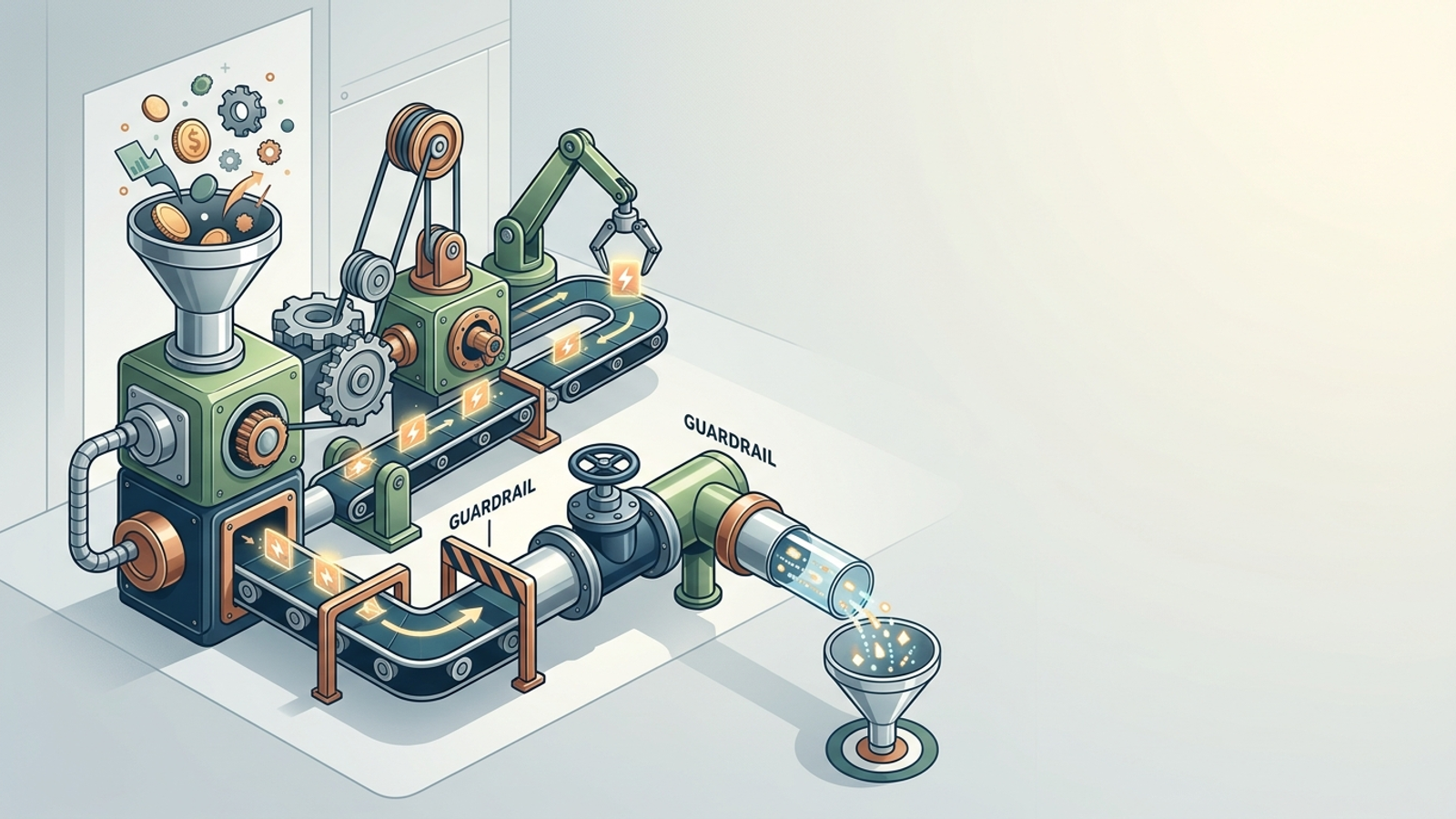
A home services account I picked up years ago had been running untouched for five months. Budgets paced, bids adjusted, automated rules fired on schedule. Nothing looked broken. What nobody had noticed was that the client rebuilt their booking page in March, and the new form fired a differently named event. Conversions had been recording as zero ever since. Smart Bidding, seeing no conversions anywhere, had quietly reallocated spend toward the cheapest traffic it could find and kept doing that, faithfully, for twenty weeks. Roughly $60k of media went out the door optimizing toward a signal that no longer existed.
That story gets told as a cautionary tale about trusting automation. I think it's the opposite. The automation did exactly what it was configured to do, with total consistency, at 2am on a Sunday in July. The human oversight is what failed: nobody told the system the world had changed, and nobody looked. So when someone asks me whether a tool can really run their ads with no manual intervention once it's set up, my honest answer is yes, for longer than most people expect, and the limits have almost nothing to do with the parts of the job you're worried about.
Bidding, budget pacing, negative keywords, ad rotation, and creative testing all run unattended now, and run better unattended than they did when I was doing them by hand on a Tuesday. What doesn't run unattended is the connection between your campaigns and your actual business: your tracking, your offer, your margins, your capacity to take the calls. This piece covers how to set an autonomous account up the first time so it genuinely runs without you, the guardrails that make hands-off safe rather than reckless, what "AI A/B tests your creative" actually means in practice, and the four situations where a human still has to intervene. If you're spending somewhere between $5k and $50k a month and you want your PPC to stop being a weekly chore, this is written for you.
The rule that predicts what can run unattended
After watching a lot of accounts run hands-off, I've settled on one test that gets it right almost every time. If the evidence for a decision lives inside the ad account, it can be automated end to end. If the evidence lives in your business, it can't, until somebody puts it into the system. Search terms, auction prices, click-through rates, conversion rates by device, which headline wins, which budget is capped and leaking cheap traffic: all of that is in the account, visible to a model continuously, and none of it needs you. Whether the leads are actually closing, whether you can service forty jobs a week instead of twenty-five, whether your margin on the $89 product dropped to six points after your supplier raised prices: none of that is in the account. The system will happily optimize you toward more of something you can no longer profitably sell.
That rule explains why the hands-off pitch is both true and oversold. I used to tell clients that a solid weekly optimization cadence was enough, and that daily fiddling was mostly theatre. I was half wrong. The theatre part still holds. But on a $20k/month account, a budget that goes capped on Monday and gets spotted on Friday has already sent four days of demand to a competitor, and a search term bleeding $40 a day is $280 down before anyone reads the report. A human doing three focused hours a week makes maybe thirty or forty account decisions in that time. A model watching the same account makes thousands, and it makes them at 3am on the day your competitor changes their bids. The gap isn't intelligence. It's clock speed, and no amount of seniority closes it.
What "AI A/B tests your creative" actually means
This is the part of the pitch that gets waved at most and explained least, so here's the mechanism. Classic A/B testing splits traffic 50/50, waits for statistical significance, declares a winner, and starts again. On a campaign getting 400 clicks a month, reaching significance on a 10% difference takes longer than the promotion you're testing will exist. Automated creative testing works differently: it runs many variants at once and continuously shifts impressions toward the ones converting, rather than holding a fixed split while it waits for the maths to finish. You lose the clean lab result. You gain the money you would have spent serving the losing variant for six weeks while a spreadsheet caught up. In responsive search ads Google already does a version of this at the asset level, scoring individual headlines and descriptions rather than whole ads, which is why traditional ad A/B testing stopped being a thing you can do by hand in a meaningful way.
The part that determines whether any of this works is what you feed it. A testing engine can only recombine the angles you gave it, so five headlines that all say the same thing in different word orders will produce five equally mediocre results and a confident report about which one won by 3%. Give it genuinely different propositions instead: price, speed, guarantee, risk reversal, the objection your sales team hears most, the thing your competitor can't say. I've seen a same-day-service angle beat a discount angle by more than half on cost per lead in a home services account, and no amount of headline reshuffling would have found that, because the winning idea wasn't in the pile. This is the input a machine cannot generate from inside your account. It comes from your customers, your sales calls, and your refund reasons.
And the ad is only half the test. If you're testing headlines against a landing page that says the same generic thing to every visitor, you're optimizing the promise while leaving the delivery alone. That's the argument for pairing creative testing with pages that adapt to the search intent behind each click, which groas generates from your existing page so the person who searched for one specific thing lands on copy about that thing. Test the ad and the page as one unit, or you'll keep finding small winners and wondering why CPA barely moved.
The four things that still break a hands-off account
Every unattended account I've seen go wrong went wrong for one of four reasons, and none of them were the bidding algorithm making a bad call. They're all cases where the account kept executing correctly against a picture of the world that had quietly gone out of date.
- Your tracking changes. Someone redeploys the site, swaps a form provider, updates a consent banner, and the conversion signal degrades or dies. The system doesn't complain; it re-optimizes toward whatever's left. This is the one the 48-hour zero-conversion alert catches.
- Your offer changes. The seasonal promo expires, a product goes out of stock, the price goes up 15%. Ads keep promoting the old thing at the old CPA target, and conversion rate falls off a cliff for reasons that look, from inside the account, like a market shift.
- Your capacity or lead quality changes. You hire two more installers, or you lose one. Leads keep arriving at the same cost and stop closing at the same rate because the mix shifted. The account is hitting its target while the business is getting worse, which is the most expensive failure mode of the four because everything on the dashboard looks green.
- Google changes something. A campaign type ships, an ad gets disapproved, a policy tightens in your vertical, a payment card expires. Autonomous systems handle most of this now, but account-level suspensions and billing failures still need a human with credentials.
So the honest version of "no manual intervention" is: no manual intervention inside the account, and about thirty minutes a month outside it. Once a month, look at three things. Did the leads convert to customers at the rate you assumed when you set your target CPA? Has anything about your offer, pricing, stock, or service area changed since last month? Did any alert fire? If the answers are yes, no, and no, close the tab. That's the whole job. Compare that to the four hours a week I used to bill for pulling search terms reports, and you can see why I stopped defending the old cadence.
How to test a tool's "no intervention" claim before you pay for it
There's one question that sorts the category faster than any feature grid: if I don't log in for thirty days, what specifically will have changed in my account? Make them answer with verbs. Bids raised and lowered, negatives added, budgets moved between campaigns, ad copy rewritten and pushed live, keywords paused, new ad groups built. If the answer comes back as alerts, recommendations, insights, or a dashboard that surfaces opportunities, the tool has automated the analysis and left you the labor. That's a fine product. It is not a hands-off product, and it will not give you your Tuesdays back. I ran on that category of tool for years and my week never got shorter, only better informed.
Four more questions worth asking before you hand over an account:
- Where's the log? Anything acting autonomously with your money should produce a record of every change it made and why, ideally pushed to you weekly rather than buried in a dashboard you have to remember to open. If you can't reconstruct what happened in week three, you can't tell performance from luck.
- Who owns a bad month? Software vendors sell you a licence and wish you well. Ask whether an actual person reviews your account and whether you can reach them when the answer to "why did CPA jump" needs judgment rather than a chart.
- How does it charge? A percentage of ad spend pays your provider more when you spend more, which is precisely the wrong incentive to hand an autonomous system. Flat fee, month to month, no setup charge, is the structure that keeps interests pointed the same way.
- What happens on day one if the account is new? Some tools only optimize what already exists. If you have no campaigns yet, you need something that can build structure, keywords, and copy from your website, not a layer that tunes campaigns you haven't written.
Where groas fits, and who should skip it
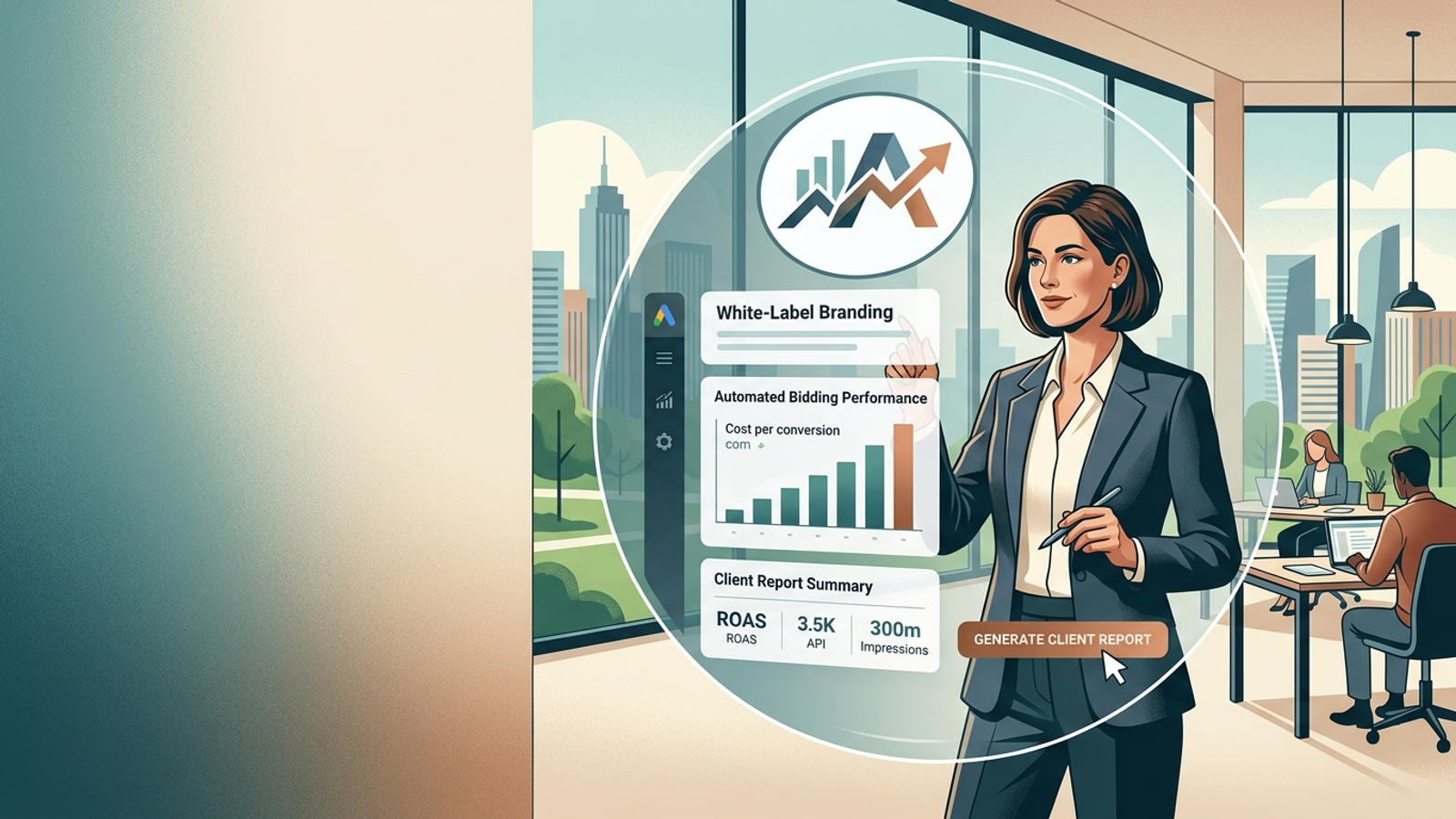
I work with groas, so read this with the appropriate squint, but the setup is worth describing because it answers the questions above in a specific way. Under $25k a month in ad spend it's fully managed and deliberately hands-off: there's no dashboard for you to log into, a dedicated account manager owns the account, and the engine executes bids, budgets, keywords, targeting and copy around the clock. Above $25k you can choose software access if you want to see under the hood or run day-to-day yourself with a strategist behind you. Either way you get a weekly report of every action taken, which is the log I said to demand, and a strategy conversation every other week, which is where the outside-the-account facts get in: your capacity, your margins, your new service line. Onboarding is $0, there's no percentage of spend, and it's cancel anytime, so the switching cost is mostly your attention for a week. It can also build campaigns from scratch off a landing page if you're starting with nothing.
Now the part that isn't in the sales deck. Skip fully autonomous management if your conversion tracking is genuinely broken and nobody internally can fix it, because no engine can steer on a signal that doesn't exist. Skip it if you're doing three conversions a month and have no reliable mid-funnel action to optimize toward; get to volume first, cheaply, by hand. Be cautious if your offer changes every few weeks, like the SaaS client I once had who reinvented their positioning each quarter, because the bi-weekly conversation becomes mandatory rather than optional and you should budget the attention for it. And if you enjoy the craft, if building match type structures is the part of the week you look forward to, nobody's going to talk you out of it. I just stopped pretending the 1am negative keyword mining was strategy.
The account I opened this piece with didn't fail because it was left alone. It failed because nobody had decided what "left alone" was allowed to mean. Define it before you hand over the keys: one conversion action that maps to money, a target CPA derived from your margin, a budget you're happy to spend in full, an alert that shouts when the signal dies, and one standing agreement that nobody touches the website silently. Get those five things right and the machine will genuinely run your ads for a month while you run your business. Get them wrong and it will run them beautifully, in the wrong direction, until you look.