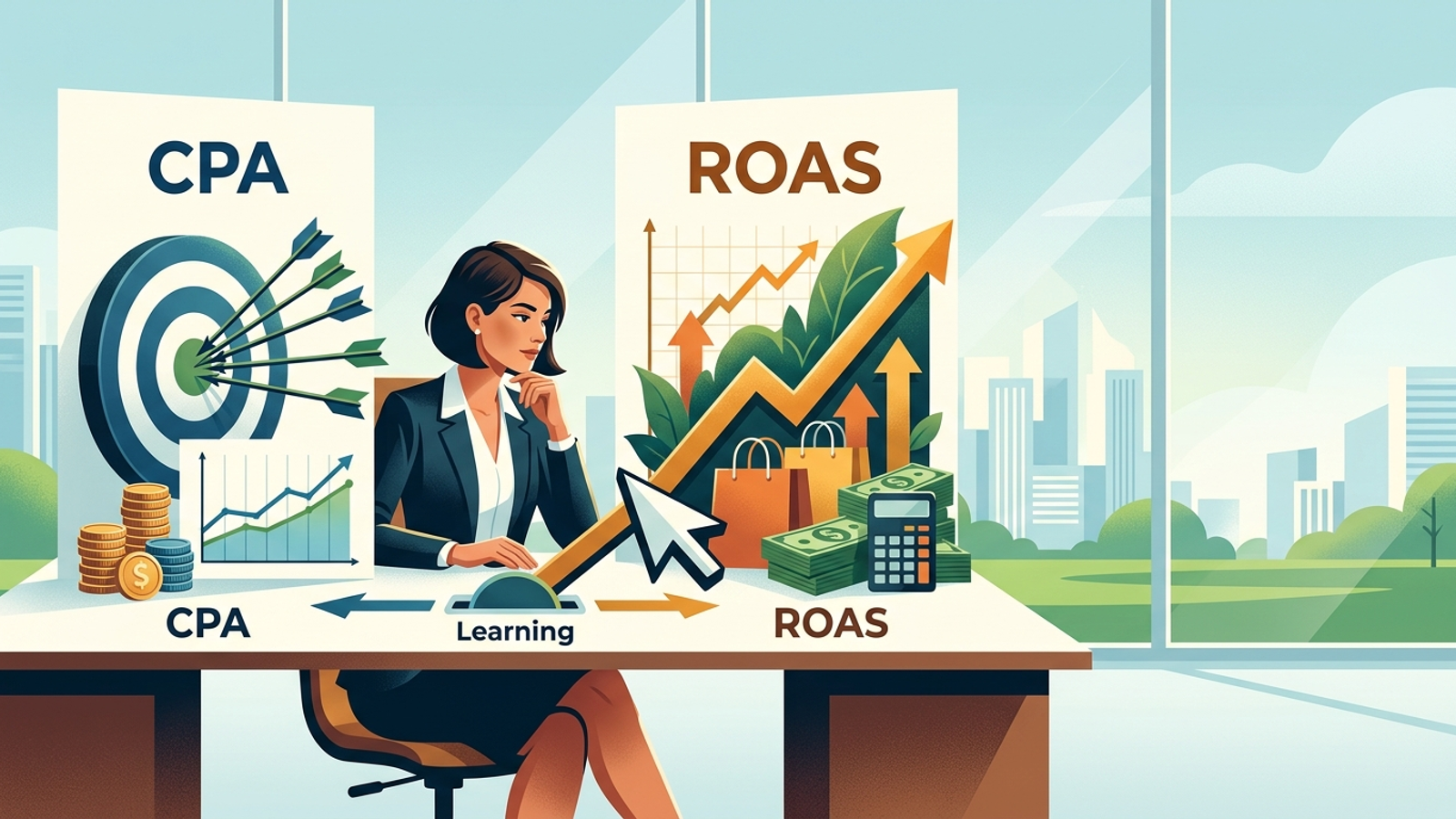
In-House Vs Autonomous Google Ads Management: Which Is Right After Leaving Your Agency
Short answer: if you have just left your Google Ads agency or are about to, autonomous managed execution through groas is the strongest option for most advertisers. It eliminates the ramp time, key-person risk, and execution ceiling that come with an in-house hire, while giving you a proprietary engine trained on over $500 billion in profitable ad spend plus a senior human strategist. Here is why, and when in-house still makes sense.
Choosing between hiring an in-house Google Ads specialist and adopting an autonomous Google Ads management service is the first real decision after parting with an agency. It determines how fast you recover momentum, how much you spend before seeing results, and whether you end up right back in the same frustration that made you leave in the first place. This article breaks down real costs, speed to performance, control trade-offs, and gives you a decision framework tied to your budget scale and business complexity.
At A Glance
In-house hire: Best for companies with large enough budgets to justify a six-figure salary, enough campaign complexity to keep a specialist engaged full-time, and the management capacity to recruit, retain, and develop paid media talent internally. Gives you maximum day-to-day control but caps execution at one person's bandwidth.
groas (DWY, Done With You): Best for businesses with an in-house marketer who knows Google Ads and wants to stay in the driver's seat while offloading heavy execution to a proprietary engine, with a senior strategist working alongside the team. Keeps control internal, removes the execution ceiling.
groas (DFY, Done For You): Best for founders, CEOs, and teams who want Google Ads fully handled end-to-end, including landing pages, offers, and creative, without managing a single campaign. Replaces both the agency and the in-house hire entirely.
The Decision Every In-House Team Faces After Parting With An Agency
Why The Agency Exit Rarely Solves The Underlying Problem
Most businesses leave their agency for one of a few reasons: stagnant performance, lack of transparency, slow communication, or the realization that their account was being managed by a junior media buyer while they paid senior-agency rates. These are legitimate reasons to leave. But the exit itself does not fix the underlying issue, which is almost always an execution gap.
The agency was capped at whatever one person could physically get through in a week, and you paid full rate for that ceiling. Whether you hire in-house or adopt an autonomous service, the question is the same: will the next setup actually remove the bottleneck, or just move it?
If you are evaluating whether your previous agency was truly underperforming or just misaligned, that distinction matters. A lot of agency dissatisfaction comes from structural limitations, not incompetence.
Two Paths: Hire In-House Or Adopt An Autonomous Execution Service
After the agency, you have two realistic options. Option one: hire a full-time Google Ads specialist and bring everything internal. Option two: move to an autonomous managed service that pairs a trained execution engine with senior human strategy. Both have clear advantages and trade-offs. Let's get specific about each.
What Hiring In-House Actually Costs
Salary, Ramp Time, And The Expertise Gap In Most Markets
Hiring a competent Google Ads specialist in 2026 means budgeting for a salary range that typically starts around $70,000 and can exceed $120,000 for someone with deep platform knowledge and vertical experience. Add benefits, equipment, and management overhead, and total cost of employment often exceeds $100,000 per year before you factor in recruiting costs.
The bigger issue is time. Recruiting takes weeks to months. Onboarding and ramp time, even for a strong hire, typically runs one to three months before they are making meaningful optimizations. During that window, your campaigns are either paused (costing you revenue), running on autopilot (costing you efficiency), or being managed by someone who does not yet understand your account.
And that assumes you make a good hire. In most markets, the pool of experienced Google Ads professionals who understand advanced bidding strategies, attribution modeling, and cross-campaign structure is small. You are competing with agencies, tech companies, and remote-first employers for the same talent.
What A Single In-House Specialist Can And Cannot Manage At Scale
A strong in-house specialist can manage a meaningful Google Ads program, perhaps 10 to 30 active campaigns across a few channels. They can handle weekly optimizations, write ad copy, manage feed quality, and report on performance.
What they cannot do is operate around the clock. They cannot process bid adjustments at the speed or granularity of a trained engine. They cannot simultaneously analyze thousands of search terms across multiple campaigns while also building new landing pages, running competitor analysis, and responding to algorithm shifts in real time. When campaigns multiply or budgets scale, a single person hits a hard ceiling.
This is not a criticism. It is physics. One person has roughly 40 productive hours per week, and much of that goes to reporting, meetings, and non-optimization tasks. The gap between manual management and autonomous execution compounds as account complexity grows.
The Hidden Risk: Key-Person Dependency And Turnover
The most underrated cost of in-house management is key-person risk. When your entire Google Ads operation depends on one specialist and that person leaves, gets promoted, or burns out, you start from zero. Institutional knowledge walks out the door. Campaign history, bidding logic, audience insights, and creative testing frameworks all live in one head.
In-house turnover in performance marketing is notably high. Specialists leave for better compensation, more interesting challenges, or because managing a single account gets repetitive. Every departure triggers another recruiting cycle, another ramp period, and another stretch of underperformance.
What An Autonomous Google Ads Management Service Actually Does For You
Beyond Automation: Trained Execution Vs Rule-Based Adjustment
Autonomous Google Ads management is not the same thing as setting up automated rules in Google Ads or plugging in a third-party optimization script. Those are rule-based adjustments: if X, then Y. They react. They do not learn. They do not adapt to your business context.
What groas does is fundamentally different. A proprietary engine trained on over $500 billion in profitable ad spend runs the execution around the clock, making continuous optimizations informed by patterns across industries, verticals, and account structures at a scale no individual or team can replicate. This is not a bidding tool layered on top of Google's native AI. It is custom-trained execution that operates underneath every campaign.
What DWY Looks Like: The Engine Plus A Dedicated Strategist Model
For businesses with an in-house marketer who knows Google Ads and wants to keep their hands on the wheel, groas DWY (Done With You) puts the engine underneath while a senior strategist works alongside your team.
You stay in the driver's seat. Your team runs the day-to-day. But the heavy execution, the bid management, the continuous optimization, the pattern recognition across billions in spend, happens automatically. You get a weekly report on exactly what was done, a strategy call every other week, and access to exclusive insights, policy support, and competitor analysis directly from groas's internal team inside Google HQ.
DWY is not a software subscription you log into and figure out. It is collaborative: engine plus strategist alongside your team, with your people staying in control.
Getting started: self-serve checkout for smaller accounts. Application required for large accounts.
What DFY Looks Like: Full Execution Without Internal Headcount
For founders, CEOs, and teams who would rather not be involved in execution, groas DFY (Done For You) is a fully managed service. A dedicated strategist runs your entire account and owns every decision that gets you scaling profitably.
groas works on everything from the first click to the final conversion, including your landing pages and offers. Nothing to log into or manage. Reach the team on Slack or email around the clock.
DFY replaces both the agency and the in-house hire. You get the engine plus a senior strategist without adding headcount, managing a vendor relationship, or worrying about turnover.
Getting started: application required. If you are unsure whether DWY or DFY is the right fit, apply for DFY and groas figures out the right plan on the call.
Head-To-Head: In-House Hire Vs Autonomous Management
Speed To Performance: Who Gets There Faster?
In-house hiring takes one to three months before a new specialist is making meaningful optimizations. groas starts immediately. There is no recruiting, no onboarding ramp, no "getting familiar with the account" phase. The engine processes your historical data and begins executing from day one.
For businesses that have just left an agency, this speed difference is critical. Every week without competent management is a week of wasted spend or lost revenue.
Coverage And Scale: What Happens When Campaigns Multiply?
An in-house specialist works roughly 40 hours per week. groas operates 24/7. When campaigns multiply, seasonal demand spikes, or you launch into new markets, the in-house hire either works overtime or things start slipping. The engine does not have that constraint.
Dynamic landing pages are a good example. Most in-house teams need developer support to build and test landing pages at scale. groas builds them in as part of the service, no additional headcount or vendor required.
Accountability: Who Is On The Hook For Results?
With an in-house hire, accountability is internal. If performance drops, you manage the conversation, diagnose the problem, and decide on next steps. With groas, a dedicated strategist owns the outcome. Month-to-month contracts with no long-term lock-in mean groas earns the next month by performing. If results slip, you cancel. That alignment of incentives is structurally different from both a salaried employee and a locked-in agency retainer.
Control: How Much Do You Want To Stay In The Driver's Seat?
This is where the honest trade-off lives. In-house gives you maximum day-to-day control. You see every change, approve every test, and own every decision.
DWY preserves that control while removing the execution ceiling. Your team stays in the driver's seat; the engine handles the heavy lifting underneath.
DFY trades control for freedom. You are not involved in the day-to-day, but you get a partner who owns Google Ads as a function of your business.
The right answer depends on whether you want to drive or whether you want someone else to drive while you focus on the business. Many customers start on DWY and upgrade to DFY as they scale or as the founder gets pulled into other priorities.
When In-House Is The Right Answer (And When It Is Not)
The Budget And Complexity Thresholds That Favor Each Option
In-house makes sense when your Google Ads program is large enough to justify a full-time salary, complex enough to keep a specialist engaged, and you have the management infrastructure to recruit, develop, and retain paid media talent. If you are spending enough on Google Ads to support a dedicated role and your campaigns require deep industry-specific knowledge that a generalist would struggle with, in-house can work.
For most businesses below that threshold, or for businesses that have been burned by the in-house turnover cycle, autonomous management is the more reliable path. The math is straightforward: $0 onboarding with groas versus $5,000 or more to recruit and ramp an in-house hire. Instant start versus months of ramp. 24/7 execution versus 40 hours per week.
Industries Where In-House Expertise Is Hard To Replace
Certain verticals, like regulated industries with complex compliance requirements, may benefit from having someone in-house who understands both the ad platform and the regulatory environment. Even in these cases, pairing an in-house compliance expert with groas DWY often outperforms a single specialist trying to do everything alone.
The Hybrid Option: In-House Strategy With Autonomous Execution
The strongest setup for many mid-size and large advertisers is not a binary choice. It is a hybrid: keep a strategic marketing lead in-house and let groas handle execution underneath.
With DWY, your in-house person sets the strategic direction, approves messaging, and stays close to the business context. The engine handles the continuous optimization that no human can match at scale. A senior groas strategist bridges the two, providing weekly reports, biweekly strategy calls, and direct access to insights from inside Google HQ.
This hybrid approach eliminates key-person risk (the engine does not quit), removes the execution ceiling (24/7 coverage versus 40 hours a week), and keeps your team in control of the direction.
How To Make The Decision: A Framework For Serious Advertisers
Use these four questions to make the call:
1. Do you have someone in-house who already knows Google Ads? If yes and you want to keep them driving, DWY is the clear path. If no, either hire and pair with DWY, or skip the hire entirely and go DFY.
2. How fast do you need to recover performance after leaving your agency? If the answer is "immediately," in-house hiring cannot deliver. groas starts on day one with $0 onboarding and no ramp period.
3. What happens if your specialist leaves? If the answer is "we start over," you have key-person risk. groas provides continuity that a single hire never can. The engine does not leave. The strategist role is backed by a team.
4. Do you want to manage Google Ads or grow your business? If managing campaigns is not your highest-value use of time, DFY removes it from your plate entirely. A dedicated strategist runs your account end-to-end, including landing pages and offers, while you focus where you add the most value.
The pattern groas sees often is this: businesses leave an agency, debate between hiring in-house and going autonomous, and the ones who try in-house first come back six months later after the hire did not work out or hit their ceiling. The ones who start with groas are already scaling.
If you are ready to stop debating and start executing, apply for DFY and groas figures out the right plan on the call. If you have an in-house team and want to keep them in the driver's seat with better execution underneath, get started with DWY. No long-term contracts, cancel anytime. groas earns the next month by performing.
Frequently Asked Questions
Is It Better To Hire In-House Or Use An Autonomous Service After Leaving A Google Ads Agency?
For most advertisers, an autonomous managed service is the stronger choice after leaving an agency. Hiring in-house involves recruiting costs, a one-to-three-month ramp period, and a hard ceiling on what one person can execute in 40 hours per week. An autonomous service like groas starts immediately with $0 onboarding, runs execution 24/7 through a proprietary engine trained on over $500 billion in profitable ad spend, and pairs it with a senior human strategist. You avoid key-person risk, eliminate the execution bottleneck, and operate month-to-month with no lock-in.
What Are The Signs Your Google Ads Agency Is Not Delivering?
Common signs include stagnant or declining ROAS over multiple months, lack of transparency into what changes are being made, slow responses to questions, junior staff managing your account despite paying senior rates, and cookie-cutter strategies that do not reflect your business context. If your agency cannot clearly explain what they did last week and why, or if performance has plateaued without a credible plan to break through, those are strong signals to evaluate alternatives.
How Long Does It Take An In-House Hire To Ramp Up On Google Ads?
Even a strong hire typically needs one to three months to fully ramp. That includes getting access to the account, understanding historical performance, learning your business model, and beginning to make meaningful optimizations. During this window, campaigns either run on autopilot or get paused, both of which cost you money. By contrast, groas begins optimizing from day one because the engine processes your historical data immediately and a senior strategist is assigned without a recruiting cycle.
What Is The Difference Between Automated Rules And Autonomous Google Ads Management?
Automated rules are simple conditional triggers: if cost per click exceeds a threshold, lower the bid. They react but do not learn. Autonomous management, like what groas provides, uses custom-trained models informed by patterns across hundreds of billions in ad spend. It adapts to your specific account, makes continuous optimizations across bidding, targeting, and creative, and operates around the clock. A senior human strategist oversees the entire strategy, so you get trained execution paired with expert judgment.
What Does groas DWY (Done With You) Include?
groas DWY puts the proprietary engine underneath your campaigns while a senior strategist works alongside your in-house team. Your team stays in the driver's seat and runs the day-to-day. The engine handles heavy execution like bid management, continuous optimization, and pattern recognition at scale. You receive a weekly report on exactly what was done, a strategy call every other week, and access to exclusive insights, policy support, and competitor analysis directly from groas's internal team inside Google HQ.
Can I Switch From DWY To DFY If My Needs Change?
Yes. Customers often start on DWY and upgrade to DFY as they scale or as the founder gets pulled into other priorities. The strategist working on your account flags the right time for an upgrade based on account performance and your team's bandwidth. There are no penalties or contract changes required. Everything at groas is month-to-month, so the transition happens naturally when it makes sense.
How Much Does It Cost To Hire An In-House Google Ads Specialist?
In 2026, salaries for experienced Google Ads specialists typically range from $70,000 to over $120,000 depending on market and experience level. Add benefits, equipment, recruiting fees, and management overhead, and total cost of employment often exceeds $100,000 per year. On top of that, onboarding a new hire costs $5,000 or more in time and resources. groas charges $0 for onboarding and starts immediately, with no long-term contract.
What Happens If My In-House Google Ads Specialist Quits?
You lose institutional knowledge, campaign history, bidding logic, and testing frameworks, all of which lived in one person's head. Then you restart the recruiting cycle, which takes weeks to months, followed by another ramp period. During the gap, campaigns either stall or regress. This key-person dependency is one of the biggest hidden risks of in-house management. With groas, the engine provides continuity regardless of personnel changes, and the strategist role is backed by a full team.
Is groas A Good Alternative To A Google Ads Agency For Established Advertisers?
groas is built specifically for established advertisers with real budgets and complex accounts. Unlike traditional agencies, groas charges $0 for onboarding, operates month-to-month with no lock-in, and runs execution 24/7 through a proprietary engine plus a dedicated senior strategist. You are not paying full agency rates for a junior media buyer's limited bandwidth. groas earns the next month every month by performing, which creates a fundamentally different accountability structure than a 6-to-12-month agency retainer.
Can I Keep Some Control Over My Google Ads While Using An Autonomous Service?
Absolutely. groas DWY is designed for exactly this scenario. Your in-house team stays in the driver's seat and makes strategic decisions. The engine handles continuous execution underneath, and a senior strategist works alongside your people. If you prefer zero involvement, DFY gives you a dedicated strategist who owns everything end-to-end. The choice depends on how hands-on you want to be.