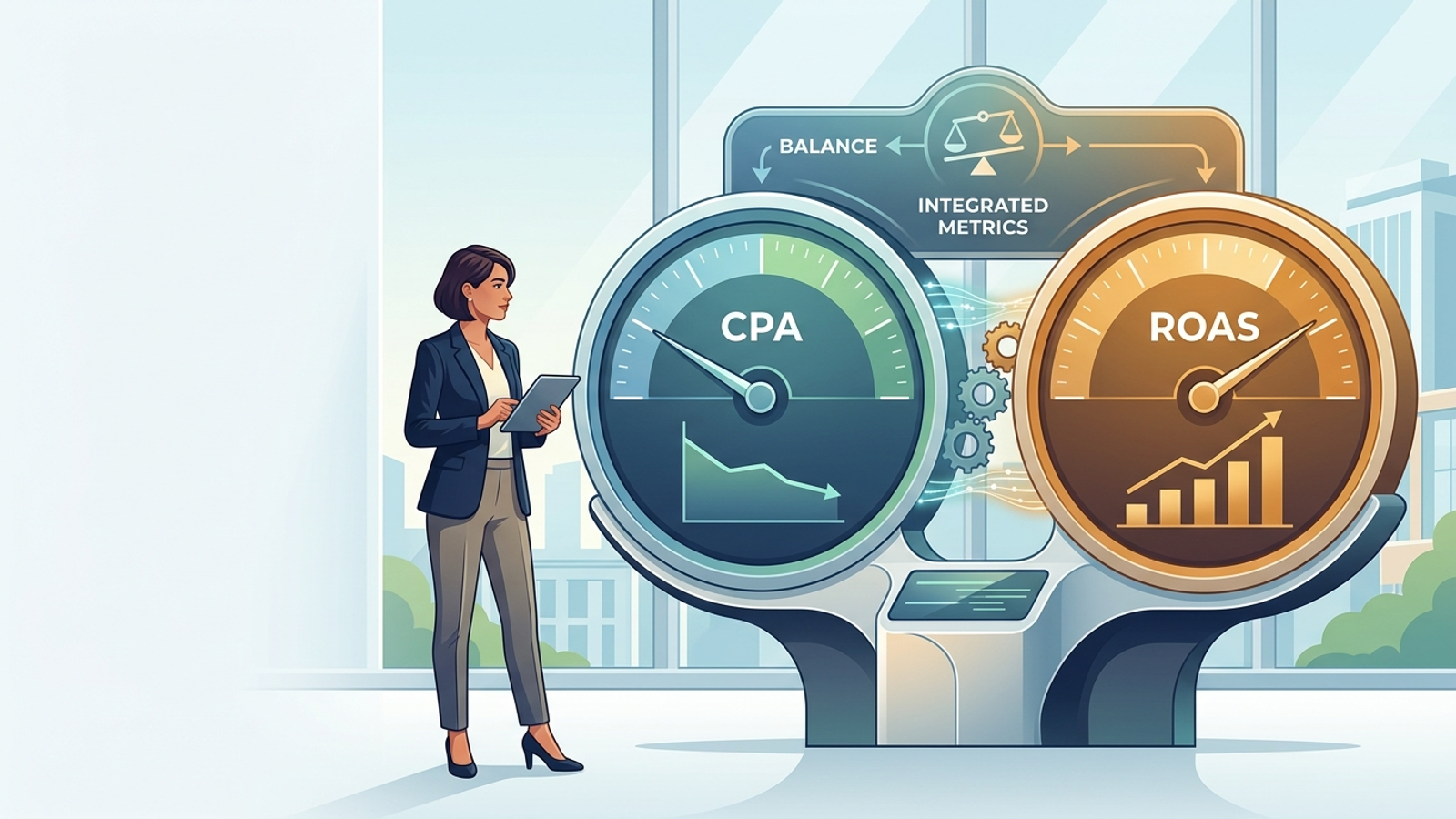
Most AI Google Ads tool reviews are evaluating the wrong thing entirely. They compare feature lists, UI screenshots, and automation toggles as if the presence of a feature equals the delivery of an outcome. It does not. The real question when evaluating any AI Google Ads tool, including Ryze AI, is simple: does this thing actually improve your ROAS and CPA without requiring a human to babysit every recommendation it generates? An AI Google Ads tool is only as valuable as the outcomes it produces autonomously, not the number of buttons it adds to your dashboard. The distinction between "AI-assisted" and "AI-autonomous" is the single most important evaluation criterion in 2026, and almost every review you will find online ignores it completely. This piece makes the case for why, and what to evaluate instead.
What Most People Believe: Feature Depth Equals Tool Quality
The conventional wisdom when comparing AI Google Ads tools goes something like this: the more features a tool offers, the better it must be. Reviewers catalog bid adjustment capabilities, keyword suggestion engines, ad copy generators, audience recommendations, and dashboard visualizations. They screenshot every tab. They rank tools by how many things the tool can technically do.
This is how most Ryze AI reviews in 2026 read. They walk through the interface, highlight the bidding automation, mention the AI-generated ad copy suggestions, note the optimization recommendations, and conclude with a star rating. The implicit logic is that a tool with 15 optimization levers is better than one with 10.
To be fair, this framework is not irrational. Features do matter. A tool that cannot handle Performance Max campaigns alongside standard Shopping is genuinely limited. A tool without cross-campaign budget allocation is missing something important. Feature coverage is a necessary condition.
But it is not a sufficient one.
The problem is that feature-based evaluation confuses capability with execution. A tool can surface 50 optimization recommendations per week, but if every single one requires a human to review, approve, and implement, you have not bought automation. You have bought a very expensive to-do list. And when those recommendations require contextual judgment that the tool itself cannot provide, the "AI" label starts to feel generous. Most positive reviews of tools like Ryze AI reflect the quality of the person acting on the recommendations, not the quality of the tool generating them. Strip away the active management, and the tool's contribution shrinks dramatically.
The Real Question: Semi-Autonomous Vs. Fully Autonomous Execution
What "AI-Assisted" Actually Means In Practice
Nearly every AI Google Ads tool on the market today, including Ryze AI, operates in what should honestly be called "AI-assisted" mode. The tool analyzes data, identifies patterns, and surfaces recommendations. A human then decides which recommendations to act on, modifies them based on context the tool cannot see, and implements the changes.
This is not a minor distinction. It is the entire ballgame.
AI-assisted means the tool generates suggestions. You, or your media buyer, or your agency still does the work. The tool might flag that your target CPA bid on a specific campaign is too aggressive, but it does not know that you are running a product launch and intentionally buying volume at a higher CPA for the first two weeks. It does not know that your margin structure changed last Tuesday. It does not know that the competitor who just entered the auction is running a loss-leader campaign that will collapse in a month.
How Much Human Intervention Ryze AI Still Requires
When you look past the marketing language, Ryze AI requires significant human involvement to produce good results. Its optimization recommendations need to be reviewed for strategic fit. Its bid suggestions need to be validated against business context. Its ad copy generation needs editing for brand voice and offer accuracy.
This is not a criticism unique to Ryze AI. It applies to the vast majority of AI Google Ads tools in 2026. But it is a criticism that reviews almost never surface, because reviewers are usually experienced practitioners who naturally add the human layer without thinking about it. They attribute the result to the tool when a large share of the value came from their own judgment.
The Hidden Cost Of Optimization Recommendations You Have To Act On
Here is the cost nobody calculates: if a tool generates 30 recommendations per week and each takes 10 minutes to evaluate and implement, you just spent 5 hours on "automated" optimization. Multiply that across multiple accounts and you are looking at a full-time role dedicated to acting on what AI tells you to do. The tool did not save you a media buyer. It gave your media buyer a different kind of busywork. The ceiling remains the same: whatever one person can physically get through in a week.
What Outcome-Based Evaluation Actually Looks Like
ROAS And CPA Improvement: The Only Metrics That Matter
Stop evaluating AI Google Ads tools on features. Evaluate them on outcomes. The only questions that matter are: Did ROAS improve? Did CPA decrease? Did profitable volume increase? Everything else is a proxy, and proxies mislead.
When you read Ryze AI reviews in 2026, look for specific, verifiable performance claims. Not "this tool helped me find negative keywords faster" but "my blended ROAS went from 3.2x to 4.8x over 60 days." If the reviewer cannot state a before-and-after number, the review is a feature walkthrough dressed up as a recommendation.
How To Measure AI Tool Quality On Your Own Accounts
Run any AI tool for 30 days against a clear baseline. Document your ROAS, CPA, conversion volume, and cost per conversion before activation. Then measure the same metrics 30 and 60 days in. Control for seasonality, budget changes, and offer changes. If the tool moved your numbers, it has value. If it did not, no amount of clever UI design matters.
This is harder than reading a review, but it is the only evaluation that tells the truth. Account graders and audit scores do not predict performance, and neither do feature lists.
Why Positive Reviews Often Reflect Active Management, Not The Tool
A skilled media buyer using an average tool will produce better results than an average media buyer using an excellent tool. This is the dirty secret of every AI Google Ads tool review. The reviewer's own skill inflates the tool's perceived value. When a sophisticated practitioner reviews Ryze AI and reports strong results, ask yourself: would those results have been similar with a different tool and the same practitioner? In most cases, yes.
Where AI Google Ads Agents Are Still Failing In 2026
Strategic Budget Allocation Across Campaign Types
Most AI tools, including Ryze AI, handle bid optimization within a single campaign reasonably well. Where they collapse is in strategic budget allocation across campaign types. Should you shift 20% of your Search budget into Performance Max this quarter? Should you pull back on Display remarketing because your attribution model is over-crediting it? These are judgment calls that require understanding the full business, not just the ad account. No current tool makes these decisions well autonomously.
As we have covered before, the gap between what automation can handle within a campaign and what it fails at across an account is where most advertisers lose money.
Creative Strategy And Offer-Level Testing
AI can generate ad copy variations. It cannot develop a creative strategy. It cannot decide that your current offer is wrong for your market. It cannot recognize that your competitor's landing page is converting better because they are leading with social proof instead of features. Offer-level testing, the kind that actually moves ROAS by double-digit percentages, requires strategic thinking that sits above anything a standalone tool delivers.
Cross-Account Pattern Recognition At Scale
For agencies managing dozens or hundreds of accounts, the most valuable capability is recognizing patterns across accounts. What is working in ecommerce accounts spending over $50k per month? What bid strategy is outperforming in B2B lead gen right now? Most AI tools operate account by account. They cannot see the forest. An engine trained on hundreds of billions in ad spend can identify cross-account patterns that no single-account tool ever will, because the training data simply does not exist at that scale for most platforms.
The Case For Full Autonomy Over Semi-Autonomy
Why Hybrid Human-Tool Models Create Decision Paralysis
When a tool suggests one thing and your media buyer's instinct says another, who wins? In AI-assisted models, this conflict happens constantly. The result is decision paralysis: the human second-guesses the tool, the tool cannot explain its reasoning in business terms, and optimization stalls while someone debates whether to accept or reject a recommendation.
Hybrid in-house models suffer from exactly this problem. The presence of an AI tool does not remove the bottleneck. It just changes the shape of the bottleneck from "not enough time to optimize" to "not enough clarity on which optimizations to trust."
What Changes When The Engine Owns Execution End-To-End
When execution is fully autonomous, there is no decision paralysis. The engine acts. The strategist reviews. The feedback loop is tight and directional. This is not about removing humans from the process. It is about putting the human in the right seat: strategy and oversight, not click-by-click implementation.
For agencies evaluating tools like Ryze AI, groas offers a fundamentally different model through its DIY product. Agencies connect their client accounts and operate a proprietary engine trained on over $500 billion in profitable ad spend. The engine handles execution around the clock. The agency provides the strategic layer and keeps their client relationships, brand, and margin. There is no recommendation queue to work through, no toggle-by-toggle approval process. The engine does the heavy lifting while the agency focuses on what humans do best: client strategy, relationship management, and growth. Start with a 7-day free trial and measure the difference against whatever tool you are currently using.
How Agencies Should Evaluate Any AI Google Ads Tool Before Committing
Stop comparing feature lists. Start comparing outcomes. Here is the evaluation framework that actually tells you whether a tool is worth adopting:
First, define your baseline. What is your current blended ROAS, CPA, and conversion volume across the accounts you would put on the tool? Write it down.
Second, ask the tool vendor one question: "What percentage of your optimizations execute autonomously without a human approving each one?" If the answer is anything less than the majority, you are buying a recommendation engine, not an automation engine. Understand what you are paying for.
Third, run a controlled test. Put the tool on a subset of accounts for 30 to 60 days. Do not change offers, landing pages, or budgets during the test. Measure the same metrics at the end. If the tool moved the numbers, it earned its place. If it did not, move on.
Fourth, calculate total cost of ownership. Add the tool's subscription cost to the human hours required to act on its recommendations. That is the real price. A cheaper tool that demands 20 hours per week of human oversight costs more than an expensive one that requires two.
Fifth, evaluate the training data. An engine trained on a few hundred accounts sees a narrow slice of what works. An engine trained on over $500 billion in profitable ad spend, like the one groas operates, sees patterns that no smaller dataset can surface. Scale of training data is a genuine competitive advantage, not marketing language.
For businesses that do not want to evaluate tools at all and would rather have Google Ads fully handled, groas offers a fully managed service where a dedicated strategist runs your entire account end-to-end, backed by that same proprietary engine. No tool to log into, no recommendations to review, no decisions to make. You get a partner who owns the outcome. Apply for access and let groas figure out the right plan for your account on the call.
The AI Google Ads tool market is crowded and getting noisier. Ryze AI reviews, like most tool reviews, will continue to evaluate features because features are easy to screenshot and rank. But features do not pay your bills. Outcomes do. The gap between a tool that tells you what to do and a system that actually does it, around the clock, trained on more ad spend data than any competitor, is the only gap that matters. Stop evaluating dashboards. Start evaluating results.
Frequently Asked Questions
How Do You Evaluate AI Google Ads Tools Without Getting Fooled By Features?
The most reliable method is outcome-based evaluation, not feature comparison. Define your baseline ROAS, CPA, and conversion volume before activating any tool. Run it for 30 to 60 days without changing offers or budgets, then measure the same metrics. Also calculate total cost of ownership by adding human hours spent acting on recommendations to the tool's subscription price. A tool that demands 20 hours per week of manual follow-through is not automation. It is a recommendation engine. The best evaluation asks one question: did profitable results improve without requiring constant human intervention?
Is Ryze AI Worth It For Google Ads In 2026?
Ryze AI offers bid optimization, ad copy suggestions, and optimization recommendations. However, like most AI-assisted Google Ads tools in 2026, it requires significant human involvement to produce strong results. Its recommendations need to be reviewed, validated against business context, and manually implemented. For advertisers who already have experienced media buyers, the tool can surface useful data. But the results in most positive reviews reflect the skill of the practitioner as much as the tool itself. Measure before-and-after ROAS on your own accounts before committing.
What Is The Difference Between AI-Assisted And AI-Autonomous Google Ads Management?
AI-assisted tools analyze data and surface recommendations that a human must review, approve, and implement. AI-autonomous systems execute optimizations around the clock without requiring click-by-click human approval. The distinction matters because AI-assisted tools do not actually reduce your team's workload. They change the type of work from manual optimization to recommendation management. True autonomy means the engine acts and a strategist oversees, rather than the human doing the implementation and the AI just advising.
How Does groas Compare To Ryze AI For Google Ads?
groas and Ryze AI are fundamentally different models. Ryze AI is an AI-assisted tool that surfaces recommendations a human must act on. groas operates a proprietary engine trained on over $500 billion in profitable ad spend that handles execution around the clock. For agencies, groas offers a DIY product where they connect client accounts and operate the engine themselves, keeping their brand and margin. For businesses that want everything handled, groas offers a fully managed service with a dedicated strategist owning the account end-to-end. groas replaces the need to evaluate, purchase, and babysit a separate tool entirely.
Why Do Most AI Google Ads Tool Reviews Miss The Point?
Most reviews evaluate tools by cataloging features: bidding automation, keyword suggestions, ad copy generation, dashboard design. They compare interfaces instead of outcomes. The deeper problem is that reviewers are typically experienced practitioners who add significant human judgment on top of the tool. They attribute improved results to the tool when much of the value came from their own expertise. A useful review would state specific before-and-after ROAS or CPA numbers and account for the reviewer's own involvement.
Can AI Google Ads Tools Handle Budget Allocation Across Campaign Types?
Most cannot. Tools like Ryze AI optimize well within a single campaign but struggle with strategic allocation decisions across Search, Shopping, Performance Max, and Display. Deciding whether to shift budget from Search to Performance Max requires understanding margin structures, attribution limitations, and competitive dynamics that sit outside the ad account data. This is one of the biggest gaps in AI Google Ads tools in 2026 and an area where a senior human strategist, like the ones groas pairs with its proprietary engine, adds irreplaceable value.
What Is The Hidden Cost Of AI-Assisted Google Ads Tools?
The hidden cost is human time. If a tool generates 30 recommendations per week and each takes 10 minutes to evaluate and implement, that is 5 hours of work per account per week. Multiply across multiple accounts and you need a full-time role just to process the tool's output. The tool did not replace your media buyer. It gave them different busywork. Total cost of ownership equals the tool's subscription price plus the salary hours spent acting on its recommendations.
Should Agencies Use AI Tools Or Fully Managed Services For Client Google Ads?
It depends on what the agency wants to own. If the agency wants to keep full control over client relationships and execution while accessing a more powerful optimization engine, groas's DIY product lets agencies connect unlimited client accounts under one subscription and operate the engine themselves. If a business wants Google Ads completely handled, groas's fully managed service assigns a dedicated strategist to own the account. In both cases, the advantage over standalone AI tools is that execution runs 24/7 without requiring manual approval of every recommendation.
How Much Training Data Matters When Choosing An AI Google Ads Tool?
Training data scale is one of the most important and most overlooked evaluation criteria. An engine trained on a few hundred accounts sees a narrow slice of what works. An engine trained on hundreds of billions in ad spend can identify cross-account, cross-industry patterns that smaller datasets simply cannot surface. This is why the proprietary engine underneath groas, trained on over $500 billion in profitable ad spend, consistently identifies optimization opportunities that single-account tools miss.