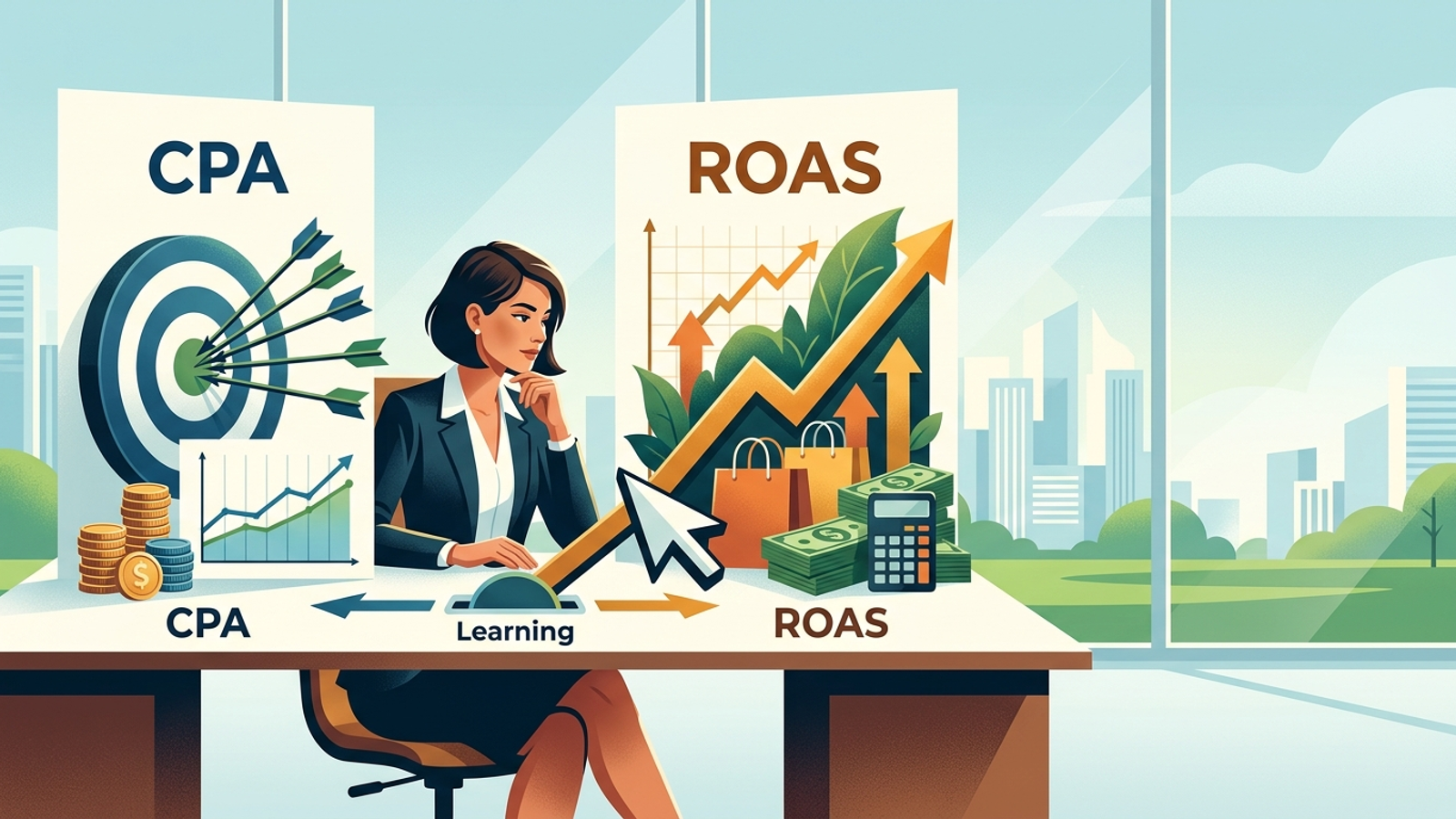
Fully managed Google Ads is a service model where one partner owns every decision in your Google Ads account, from strategy and structure to landing pages and bid management, without requiring your team to approve, execute, or manage anything. It consistently outperforms hybrid in-house models where brands keep partial control over execution. The reason is not that in-house teams lack talent. It is that shared ownership of a Google Ads account creates structural problems that no amount of talent can fix: slower feedback loops, diluted accountability, inconsistent optimization, and algorithms that never get the clean signal they need to learn.
This is a contrarian position. Most brands believe that keeping one hand on the wheel makes their Google Ads safer and better. The opposite is true. Partial control is the single most common reason otherwise strong accounts underperform.
What Most People Believe
The conventional wisdom sounds perfectly reasonable: nobody knows your business like you do, so keeping your team involved in Google Ads execution gives you a competitive edge. You catch things an outside partner would miss. You move faster on offer changes. You maintain brand consistency. And if something goes wrong, you are close enough to intervene.
This belief leads to the hybrid model. A brand hires an agency or a freelancer to manage campaigns, but the in-house marketing team retains approval authority over budgets, creative, landing pages, bid strategy changes, or all of the above. The in-house team reviews weekly reports, joins strategy calls, flags concerns, requests changes, and sometimes logs directly into the account to make adjustments.
The logic is sound in theory: combine external media buying expertise with internal business knowledge, and you get the best of both worlds. Many marketing leaders consider this the responsible, sophisticated approach. Fully outsourcing feels like giving up control. Running everything in-house feels like overextending. The middle ground feels safe.
But "feeling safe" and "performing well" are not the same thing. The hybrid model introduces friction at every decision point, and in Google Ads, friction is the enemy. Every delayed approval, every half-implemented test, every conflicting optimization priority compounds into measurable performance loss. The hybrid model does not give you the best of both worlds. It gives you the worst of both: the cost of external management and the bottlenecks of internal execution.
The Accountability Gap In Shared Control Models
When two parties share control of a Google Ads account, neither party is fully accountable for results. This is not a soft cultural problem. It is a structural one that directly degrades performance.
Your agency or freelancer cannot commit to hitting a CPA target if your team controls landing page changes and approval timelines. Your in-house team cannot own conversion rate if the external partner controls which audiences see which ads. Both sides have enough influence to affect outcomes, but neither has enough authority to own them.
The result is a predictable pattern: when performance drops, the external partner points to slow approvals or landing page issues. The internal team points to media buying decisions or wasted spend. Both are partially right. Neither can fix the problem alone. And while they negotiate whose fault it is, the account keeps bleeding.
Accountability requires authority. When one party owns every lever, from the keyword to the landing page to the post-click experience, there is no ambiguity about who is responsible. The feedback loop tightens. Problems get diagnosed and fixed in hours instead of meetings.
Why Hybrid Models Create More Meetings Than Results
Hybrid management turns every optimization decision into a coordination exercise. A bid strategy change that a fully managed partner would test and evaluate in 48 hours becomes a discussion topic on next week's call. A landing page test that could run immediately waits for internal design review, legal approval, and stakeholder sign-off.
These delays are not just annoying. They are algorithmically expensive. Google's Smart Bidding learns from conversion data, and the speed and consistency of that data matters. Every time a decision stalls, the algorithm receives ambiguous signal. Every time an optimization runs for two days instead of seven because someone paused it mid-cycle, the learning period resets.
Hybrid accounts tend to accumulate a backlog of "things we discussed but haven't implemented yet." That backlog represents unrealized performance gains. In a fully managed model, there is no backlog because the team with accountability also has the authority to execute.
The Hidden Cost Of Keeping One Hand On The Wheel
The most expensive version of this problem is the manager who reviews every change but does not have deep enough Google Ads expertise to evaluate it properly. They slow down execution because changes need approval. But they cannot meaningfully improve the quality of those changes because they lack the context to know whether a different bid strategy or a restructured campaign is the right call.
This is not a critique of that person's intelligence or work ethic. It is a structural mismatch. If your VP of Marketing is spending three hours a week reviewing Google Ads changes they are not deeply qualified to evaluate, you are paying for their time, paying for slower execution, and getting no performance improvement in return.
What In-House Teams Actually Lose When They Outsource Google Ads
The fear of fully outsourcing is not irrational. There are real things you lose, and there are perceived things you think you lose. Separating the two is critical to making a good decision.
Real Losses: Brand Context, Speed Of Feedback, Offer Changes
When you hand off Google Ads entirely, the external partner starts with less context about your business than your internal team has. They do not know your margin structure, your seasonal patterns, your competitive positioning, or your customer's decision-making process as deeply as you do on day one.
These are real gaps, and they matter. A fully managed partner who does not invest in closing these gaps will make mistakes. This is why the quality of onboarding and ongoing communication in a fully managed relationship determines whether it works.
The best fully managed services treat this as a solvable problem rather than an inherent limitation. Deep onboarding. Regular strategic input from the brand. Shared access to business data, not just ad account data. The gap closes within weeks if both sides invest in the relationship.
Perceived Losses: Control, Visibility, Ownership
Most of what brands fear losing is not actually lost in a well-structured fully managed engagement. You can still see every campaign, every keyword, every dollar spent. You can still provide strategic input on offers, audiences, and positioning. You can still set budget limits and define risk tolerance.
What you give up is execution authority: the ability to log in and change a bid, pause a campaign, or override a test. And that is the point. Execution authority in the wrong hands is the problem, not the solution.
Why Perceived Losses Feel Bigger Than They Are
Control feels like safety. When you can see and touch the levers, you feel like you can prevent bad outcomes. But this is an illusion. The ability to intervene is only valuable if your interventions consistently improve performance. For most in-house teams operating in a hybrid model, they do not.
The psychological weight of perceived control loss is real, but it should not drive a decision that costs you measurable revenue.
The Safeguards That Modern Fully Managed Execution Actually Provides
A common objection to fully managed Google Ads is that it feels like writing a blank check. In 2026, that objection does not hold up against the safeguards that serious fully managed services build into their model.
Budget Controls And Approval Gates
Fully managed does not mean unchecked spending. It means the partner controls how budget is allocated, not whether budget limits exist. You set the total spend ceiling. The managed partner optimizes within it. If a scaling opportunity requires a budget increase, the partner proposes it with supporting data. You approve or decline. The distinction is between approving strategic direction (valuable) and approving individual tactical changes (bottleneck).
Real Time Reporting Access
Visibility and control are different things. You should have full, real-time visibility into every metric, every campaign, and every dollar. You should not need to approve every change to maintain that visibility. Modern fully managed services provide reporting dashboards, weekly summaries, and on-demand access to every data point. The information asymmetry that made brands nervous about outsourcing a decade ago no longer exists.
Strategy Input Points That Keep Teams In The Loop
The best fully managed relationships include structured touchpoints where the brand provides strategic context: upcoming promotions, new product launches, competitive shifts, margin changes. This input is critical. But it is input, not execution. You shape strategy. The managed partner executes it.
When Keeping In House Control Actually Hurts Performance
The performance cost of hybrid management is not theoretical. It shows up in specific, measurable patterns.
Slow Approval Cycles That Starve The Algorithm
Google's bidding algorithms need consistent conversion data to optimize. When a campaign change sits in an approval queue for three days, the algorithm operates on stale parameters. When a landing page test needs sign-off from two stakeholders who are in different meetings all week, the test does not start until Monday. That is five days of potential learning data lost. Multiply this across every change, every week, for a full quarter, and the compounding cost becomes significant.
Inconsistent Optimization Cadences
In-house teams have other responsibilities. The person reviewing Google Ads also manages email, handles SEO, runs social, and attends leadership meetings. Google Ads optimization gets attention when things break, not on a disciplined daily cadence. This inconsistency is invisible in any single week, but over months it creates accounts that drift: search term lists that grow unchecked, ad copy that goes stale, ROAS targets that quietly throttle volume.
The Manager Who Knows Too Little To Help And Too Much To Leave It Alone
This is the most common and most damaging pattern. A marketing leader with enough Google Ads knowledge to be dangerous, but not enough to be helpful, inserts themselves into execution decisions. They second-guess bid strategies based on surface-level metrics. They pause campaigns that are in a learning phase because the short-term numbers look bad. They override audience targeting based on gut feel rather than data.
This person exists in nearly every hybrid model. They are not malicious. They are trying to protect the business. But their interventions consistently harm performance because they are optimizing for their own comfort rather than algorithmic efficiency.
What Fully Managed Really Means In 2026
Fully managed Google Ads in 2026 goes far beyond someone logging into your account and adjusting bids. It means one partner owns the entire performance chain: keyword strategy, campaign structure, ad creative, landing pages, offer positioning, bid management, conversion tracking, and post-click optimization. Everything from the first click to the final conversion.
The DFY Model: What groas Owns End To End
groas built its Done For You service around this principle. A dedicated strategist runs your entire account and owns every decision. The proprietary engine, trained on over $500 billion in profitable ad spend, executes around the clock. Your strategist does not just manage campaigns. They rebuild landing pages, restructure offers, and optimize the full funnel based on what the data shows.
There is nothing to log into or manage on your end. You reach the groas team on Slack or email whenever you need to. You get weekly reports on exactly what was done and strategy calls to discuss direction. But you are not approving changes, reviewing optimizations, or logging into the account to check bids. That is the point.
Onboarding costs $0. There is no long-term contract. groas earns the next month every month by performing. If it stops delivering, you cancel. That structure forces accountability in a way that no hybrid model can replicate, because groas owns every lever and has no one else to blame.
How Brands Stay Informed Without Managing Execution
Staying informed and managing execution are two different activities, and the best results come from separating them clearly. With groas, brands provide business context, seasonal intelligence, and strategic priorities. The strategist translates that into execution decisions. Reporting keeps everyone aligned on what is working and what is changing.
This model works because it eliminates the coordination overhead that kills hybrid accounts. The strategist does not wait for approval to test a new landing page. They test it, measure it, and report the results. If the brand has concerns, they raise them in the next strategy call. The conversation is about direction, not micromanagement.
The Right Question Is Not Control Vs No Control
The question is not whether you should have control over your Google Ads. It is whether your form of control improves or degrades performance. If your team's involvement speeds up execution, sharpens targeting, and tightens the feedback loop between business data and campaign optimization, keep doing it. If your involvement slows decisions, creates approval bottlenecks, and dilutes accountability, then your control is costing you money. Every month you hold onto it is a month of underperformance.
Fully managed Google Ads is not about giving up control. It is about placing control where it belongs: with the partner who has the data, the technology, and the authority to act on both without waiting for permission. groas exists specifically for brands that have reached this conclusion. A senior strategist owns your account end-to-end. A proprietary engine trained on hundreds of billions in ad spend runs execution continuously. You stay informed. You provide business context. And you stop paying the performance tax that hybrid management quietly extracts from your results every single week.
If you are ready to stop managing and start scaling, apply for groas DFY and let the team figure out the right plan on the call.
Frequently Asked Questions
What Does Fully Managed Google Ads Actually Include?
Fully managed Google Ads is a service model where one partner owns every decision in your account: keyword strategy, campaign structure, ad creative, landing pages, offer positioning, bid management, conversion tracking, and post-click optimization. The key difference from hybrid or semi-managed models is that you do not approve individual tactical changes. You provide business context and strategic input, while the managed partner handles all execution. With groas, this means a dedicated strategist runs your account end-to-end, supported by a proprietary engine trained on over $500 billion in profitable ad spend, so execution runs around the clock without bottlenecks.
Is It Safe To Fully Outsource Google Ads?
Yes, when the partner provides proper safeguards. A good fully managed service includes budget ceilings you control, real-time reporting access, and structured strategy touchpoints where you provide input on offers, promotions, and competitive shifts. You retain full visibility into every campaign, keyword, and dollar. What you give up is execution authority, which is intentional because execution authority in the wrong hands is the most common source of performance degradation in hybrid models.
How Is Fully Managed Different From Hiring An Agency?
Most agencies operate a hybrid model where your team still reviews, approves, or overrides execution decisions. Fully managed means one partner owns every lever, from the ad click to the final conversion, including landing pages and offers. This eliminates the accountability gap that hybrid models create. groas takes this further by combining a dedicated senior strategist with a proprietary engine, so optimization is not limited to one person's working hours.
Will I Lose Visibility Into My Google Ads If I Go Fully Managed?
No. Visibility and control are different things. In a properly structured fully managed engagement, you have full access to every metric, campaign, and spend figure in real time. You also receive weekly reports detailing exactly what was done. What you give up is the requirement to approve every tactical change, which removes the bottleneck that slows down optimization in hybrid setups.
What If I Already Have Someone In-House Who Knows Google Ads?
If your in-house person is strong and you want them to stay involved in day-to-day execution, a collaborative model may be a better fit. But if that person is spread across multiple channels, or if their involvement creates approval delays and inconsistent optimization cadences, fully managed will outperform the hybrid approach. The question is whether their involvement accelerates or slows down execution.
Why Do Hybrid Google Ads Models Underperform?
Hybrid models introduce friction at every decision point. Slow approval cycles starve Google's algorithms of consistent data. Shared accountability means neither the internal team nor the external partner owns results. Optimization backlogs accumulate because changes discussed in meetings do not get implemented for days or weeks. Over months, this compounding friction creates measurable performance gaps compared to accounts where one party has full authority and full accountability.
Should I Outsource Google Ads Completely If My Budget Is Large?
Large budgets make the case for fully managed even stronger. The performance cost of slow approvals, inconsistent optimization, and diluted accountability scales with spend. A delayed bid strategy test on a $10,000-per-month account wastes hundreds of dollars. On a $100,000-per-month account, the same delay wastes thousands. groas requires an application for DFY at larger spend levels because the team needs to confirm the fit is right before taking ownership.
How Does groas Handle Onboarding For Fully Managed Accounts?
Onboarding with groas costs $0. There is no setup fee and no long-term contract. The process involves deep discovery into your business, margins, competitive landscape, and goals. The dedicated strategist uses this context, combined with the proprietary engine's data, to build or rebuild your campaigns. The month-to-month structure means groas earns the next month by performing, which creates real accountability from day one.
What Happens If I Am Not Happy With Fully Managed Results?
With groas, you can cancel anytime. There is no lock-in contract. This is by design: if the service stops delivering, you should be free to leave. The month-to-month model forces groas to prove its value continuously, which is a sharper form of accountability than any hybrid model provides where both sides can blame each other for underperformance.
Can I Still Provide Input On Strategy With Fully Managed Google Ads?
Absolutely. Fully managed does not mean your voice disappears. You provide strategic context: upcoming launches, seasonal shifts, margin changes, competitive intelligence. The managed partner translates that input into execution decisions. With groas, this happens through strategy calls and direct communication via Slack or email. The distinction is that you shape direction without micromanaging tactics.