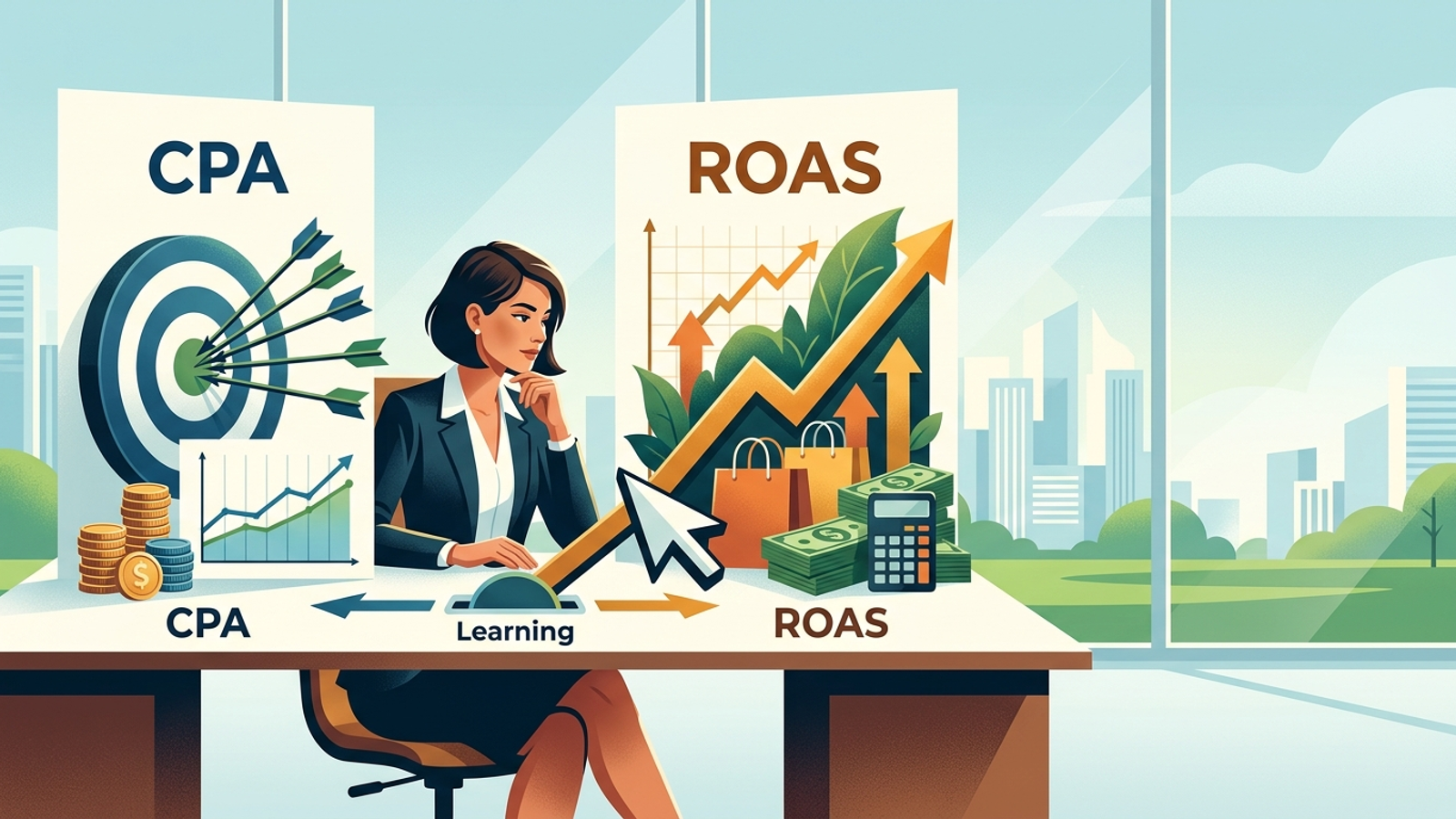
A Google Ads management relationship should deliver measurable business outcomes every single month, not just activity reports and vague promises of "optimization." Google Ads agency delivery standards are the specific, repeatable outputs your management partner owes you in exchange for their fee, and most agencies fall short of even half of them. Whether you are evaluating a current agency, vetting a new one, or running an agency yourself and want to benchmark your own service, these ten standards define what a high-performing engagement actually looks like. If your agency is not delivering on the majority of these, you are overpaying for underperformance. Here are the ten non-negotiable standards every Google Ads management relationship should meet.
1. Transparent Reporting That Shows Business Outcomes, Not Just Ad Metrics
Transparent reporting means connecting Google Ads spend to revenue, pipeline, or profit, not just impressions, clicks, and CTR. If your monthly report leads with vanity metrics and buries (or omits) actual business outcomes, that is a sign your Google Ads agency is not delivering.
What Good Reporting Looks Like
A strong report ties every dollar of ad spend to a downstream business result. For ecommerce, that means revenue and margin per campaign, not just ROAS calculated on gross revenue. For lead generation, that means qualified leads and cost per qualified lead, not just form fills. Every report should include a comparison to the prior period, context for changes, and an explanation of what was done in response.
The Red Flag
Agencies that report only platform metrics are hiding behind Google's interface. If your report could be generated by exporting a Google Ads dashboard, your agency is not adding analytical value. You should see custom analysis, segmentation by product or service line, and a narrative that explains performance in terms your CFO would understand.
The best management relationships treat reporting as a strategic conversation, not a PDF attachment. If your agency sends reports but never walks you through implications, that alone is worth flagging. groas's DFY service, for example, ties reporting to business outcomes and delivers weekly reports on exactly what was done, because execution without transparency is just activity.
2. A Clear Escalation Path When Performance Drops
Every Google Ads account experiences performance dips. The standard is not that dips never happen. The standard is that your agency has a documented escalation path: what triggers an alert, who investigates, what timeline applies, and how you are informed.
What This Looks Like In Practice
When CPA spikes or ROAS drops beyond an agreed threshold, your agency should have a process that kicks in before you notice the problem yourself. That means automated monitoring, a defined investigation sequence (check auction insights, check conversion tracking, check landing page uptime, check budget pacing), and proactive communication.
Why Most Agencies Fail Here
Most agencies operate on a weekly or biweekly check-in cadence. If performance drops on a Tuesday and your call is not until Friday, that is three days of wasted spend with no human attention. The structural problem is that a single media buyer managing eight to twelve accounts cannot monitor all of them continuously. There are simply not enough hours.
This is one of the clearest areas where an engine that monitors performance 24/7 outperforms a human working business hours. The gap is not about skill. It is about coverage.
3. Proactive Strategy Changes Before The Client Asks For Them
A high-performing agency does not wait for you to ask "why did performance drop?" or "should we try shopping ads?" They bring strategic recommendations to the table before you have to request them.
Proactive Versus Reactive
Proactive means your agency identifies seasonal shifts, competitive changes, and new campaign type opportunities ahead of time. It means they come to your biweekly call with a recommendation, not just a status update. Reactive means they respond to your questions but rarely initiate strategic direction.
How To Test This
Look at the last three months of communication from your agency. Count the number of strategic recommendations they initiated versus the number of times you asked a question and they responded. If the ratio skews heavily toward reactive, you are paying for account maintenance, not management.
The best management partners monitor competitive landscape and auction dynamics continuously. groas, for instance, provides competitor analysis and strategy insights through its internal team, ensuring that strategic pivots happen before performance erodes rather than after.
4. Campaign Coverage Across Search, Shopping, And PMax Without Gaps
Your agency should be running the full range of campaign types that apply to your business. If you sell products online and your agency has never set up Shopping campaigns, that is a coverage gap. If they are running Performance Max but have not structured it with proper asset groups and audience signals, that is a quality gap.
The Coverage Audit
Ask your agency which campaign types they are running, which they have tested and paused (with data to support the decision), and which they have never tried. A strong agency will have a clear rationale for every campaign type included or excluded.
Why Gaps Persist
Campaign type gaps usually exist because the media buyer assigned to your account lacks experience with a specific format, or because launching a new campaign type takes time the agency has not allocated. Shopping feed management, for example, requires a different skill set than search campaign management. Many agencies avoid it rather than invest in the capability.
Full campaign coverage is one area where a well-structured account rebuild can unlock revenue that was previously invisible.
5. Conversion Tracking That Ties Spend To Revenue, Not Just Clicks
Conversion tracking is not a set-it-and-forget-it task. It requires ongoing validation, especially as Google's measurement landscape evolves with Consent Mode, enhanced conversions, and server-side tagging.
The Standard
Your agency should validate conversion tracking at least monthly. That means checking for discrepancies between Google Ads conversions and your CRM, analytics, or backend data. It means ensuring that conversion values are accurate and that the right conversion actions are set as primary goals for bidding.
What Goes Wrong
Broken or misconfigured conversion tracking is one of the most common reasons Google Ads performance degrades. A tracking tag that stops firing, a conversion action that double-counts, or a value that does not reflect actual revenue will all corrupt Smart Bidding signals. If your agency is not checking this monthly, their optimization work is built on unreliable data.
This is not optional. If your agency cannot show you exactly how they validate tracking each month, add it to your requirements immediately.
6. A Structured Onboarding That Sets Realistic Ramp-Up Expectations
The first 30 to 90 days of any agency engagement set the tone for the entire relationship. A high-performing onboarding process includes a clear timeline, defined milestones, and honest communication about what results to expect during the ramp-up period.
What Good Onboarding Includes
At minimum: a full account audit, conversion tracking validation, competitive analysis, campaign structure plan, a timeline with weekly milestones, and a written set of expectations for the first 90 days. Your agency should tell you upfront that month one is about data collection and structural fixes, not immediate ROAS improvements.
The Onboarding Fee Question
Many agencies charge $5,000 or more in onboarding fees, which means you are paying to get started before any results are delivered. groas charges $0 for onboarding and operates month-to-month with no long-term contracts. That structure forces performance accountability from day one, because the next month is earned by delivering results this month.
7. Negative Keyword Management That Is Actually Updated Monthly
Negative keyword management is one of the most reliable indicators of whether an agency is actively managing your account or coasting. A neglected negative keyword list means your budget is leaking into irrelevant searches every day.
The Monthly Standard
Your agency should be reviewing search term reports and adding negative keywords at least monthly. For high-spend accounts, this should happen weekly. The output should be visible: you should be able to see new negatives added, organized by theme, with a rationale for each batch.
Why Agencies Skip This
It is tedious, detail-oriented work that does not look impressive in a report. But it directly impacts CPA and ROAS. A well-maintained negative keyword system across accounts is one of the highest-leverage activities in Google Ads management. If your agency is not doing this, they are leaving money on the table.
8. Landing Page Recommendations Tied To Ad Performance Data
Your agency should not treat the landing page as someone else's problem. Ad performance and landing page performance are inseparable. If your agency never makes landing page recommendations based on ad data, they are optimizing half the funnel.
What This Looks Like
A strong agency reviews landing page metrics (bounce rate, time on page, conversion rate by landing page) alongside ad metrics. They make specific recommendations: "This landing page converts at 2% while the campaign average is 5%, here is what we recommend changing." They test variations and measure results.
The Execution Gap
Most agencies make recommendations but do not execute landing page changes. This creates a bottleneck where the client's development team becomes the constraint. The best management relationships include landing page execution as part of the service. groas's DFY service, for example, builds and optimizes landing pages as part of the engagement, eliminating the handoff that slows most agency relationships down.
9. A Written Account Strategy Document Updated Each Quarter
A quarterly account strategy document is a written plan that outlines goals, campaign structure rationale, planned tests, budget allocation logic, and competitive positioning for the next 90 days. This is not a report on what happened. It is a forward-looking plan for what will happen.
Why This Matters
Without a written strategy, your agency is managing by feel. There is no accountability for strategic direction, no way to measure whether the plan was executed, and no record of what was tested and what was learned. A quarterly strategy document creates all three.
The Minimum Contents
The document should include: business goals for the quarter, campaign-level objectives, planned tests with hypotheses, budget allocation by campaign type, competitive landscape analysis, and a risk assessment (what could go wrong and what the contingency is). If your agency has never produced a document like this, they are not operating at a strategic level.
10. An Honest Assessment Of When The Account Has Hit A Ceiling
Every Google Ads account has structural ceilings, points where additional spend does not produce proportional returns. A high-performing agency identifies these ceilings honestly and tells you about them, even when it means recommending you do not increase spend.
Why Agencies Avoid This Conversation
Most agencies are incentivized to increase managed spend because their fee is tied to it. Telling a client "your account has hit a ceiling and spending more will decrease efficiency" is a conversation that reduces the agency's revenue. But it is the right conversation to have.
What You Should Hear
Your agency should be able to tell you: the current ceiling by campaign type, what would need to change (offer, landing page, market, targeting) to raise it, and what the expected return curve looks like at higher spend levels. This is where understanding the ROAS-volume tradeoff becomes critical.
An honest ceiling assessment is the difference between a vendor trying to keep your business and a partner trying to grow it.
The Structural Problem: These Standards Are Hard To Maintain At Scale
Here is the uncomfortable truth for agencies and clients alike: most of these ten standards are straightforward in isolation. Any competent media buyer can do negative keyword management, validate tracking, or write a strategy document. The problem is doing all ten, for every client, every month, without exception.
A single media buyer managing ten accounts has roughly four hours per account per week. After calls, reporting, and email, the actual optimization time is often two hours or less. That is not enough time to maintain all ten standards consistently. Something always gets cut, and it is usually the less visible work: negative keywords, landing page analysis, strategy documentation, and ceiling assessments.
This is not a talent problem. It is a math problem.
How Agencies Using The groas Engine Deliver These Standards Across Every Client Account
For agencies running client Google Ads accounts, groas offers a structural solution to this math problem. The groas engine, a proprietary system trained on over $500 billion in profitable ad spend, handles the execution layer that consumes most of a media buyer's time. Agencies using groas connect unlimited client accounts under one subscription, keep their brand and margin, and let the engine handle the 24/7 execution work while their team focuses on strategy and client relationships.
This means the ten standards above become systematically achievable. Monitoring runs around the clock, not just during business hours. Negative keyword management happens continuously. Conversion tracking validation is built into the execution layer. Agencies stop choosing between which clients get full attention this week and which ones coast.
Agencies can start with a 7-day free trial, with $0 onboarding and no long-term contracts.
The Case For Autonomous Execution As A Delivery Quality Guarantee
The core argument is simple. Manual management is structurally limited by the number of hours a human can work. No amount of skill or dedication changes the fact that one person cannot monitor, optimize, and strategize across ten accounts simultaneously. An engine that runs 24/7 alongside senior human strategists eliminates the tradeoff between quality and scale.
For businesses evaluating agencies, the question to ask is not "does your media buyer know Google Ads?" It is "how does your operation ensure these standards are met for my account every single month, even when your team is stretched?"
For agencies evaluating their own delivery, the question is similar: "can I guarantee these ten standards across every client account without burning out my team?"
groas exists to make the answer yes. Whether you are a business evaluating your current agency or an agency looking to scale without sacrificing service quality, the path forward is the same: put an engine underneath the work so the humans can focus on what humans do best.
Businesses ready for fully managed Google Ads can apply for groas's DFY service. Agencies ready to scale their delivery can start a 7-day free trial of the groas engine. In-house teams that want the engine plus a strategist alongside their existing team can get started with DWY. The right option depends on who you want in the driver's seat, but the engine underneath is the same one trained on over $500 billion in profitable ad spend.
If your current setup cannot deliver all ten of these standards every month, that is not a people problem. It is a structural one. And structural problems need structural solutions.
Frequently Asked Questions
What Should A Google Ads Agency Deliver Every Month?
A Google Ads agency should deliver transparent business-outcome reporting, proactive strategy recommendations, validated conversion tracking, negative keyword updates, landing page analysis tied to ad data, a clear escalation path when performance drops, and full campaign coverage across relevant formats like Search, Shopping, and Performance Max. Beyond monthly deliverables, they should produce a written account strategy document each quarter and give you an honest assessment of when your account has hit a ceiling. If your agency is missing more than two of these, you are paying for account maintenance rather than genuine management.
How Do I Know If My Google Ads Agency Is Not Delivering?
Signs your Google Ads agency is not delivering include reports that only show platform metrics (impressions, clicks, CTR) without tying spend to revenue or profit, reactive communication where you always initiate strategic questions, stale negative keyword lists, and no written strategy document. If your agency has never proactively recommended a new campaign type, tested landing page variations based on ad data, or flagged a performance ceiling, those are clear indicators that the engagement is running on autopilot rather than active management.
Why Do Google Ads Agency Clients Churn So Often?
Client churn in Google Ads management usually stems from a structural problem, not a skills problem. A single media buyer managing eight to twelve accounts has roughly two hours of actual optimization time per account per week after calls, reporting, and emails. That is not enough to maintain all the standards a high-performing relationship requires. Standards like negative keyword management, landing page analysis, and strategy documentation get cut first because they are less visible. The result is a slow decline in service quality that eventually pushes the client to leave.
Can An Agency Deliver All Ten Google Ads Management Standards At Scale?
It is extremely difficult for a traditional agency staffed purely by human media buyers. The math simply does not work when one person manages ten or more accounts. Agencies using the groas engine solve this by offloading the execution layer to a proprietary system trained on over $500 billion in profitable ad spend. The engine handles 24/7 monitoring, negative keyword management, and optimization, while the agency's team focuses on strategy and client relationships. This makes all ten standards systematically achievable across every client account.
What Is The Difference Between A Google Ads Report And A Strategy Document?
A report covers what happened: performance metrics, spend, conversions, and comparisons to prior periods. A strategy document covers what will happen: goals for the next quarter, planned tests with hypotheses, budget allocation logic, competitive positioning, and risk assessments. Most agencies deliver reports but never produce a written strategy document. Without one, there is no accountability for strategic direction and no record of what was tested and learned.
How Often Should An Agency Update Negative Keywords?
For most accounts, negative keywords should be updated at least monthly. For high-spend accounts, weekly updates are the standard. Your agency should be reviewing search term reports, adding negatives organized by theme, and providing a rationale for each batch. Neglected negative keyword lists are one of the most reliable signs of passive account management and directly impact CPA and ROAS.
Should My Google Ads Agency Manage Landing Pages Too?
Yes, at least at the recommendation level. Ad performance and landing page performance are inseparable, and treating the landing page as someone else's problem means your agency is optimizing half the funnel. The best management relationships include landing page execution as part of the service. groas's DFY service builds and optimizes landing pages as part of the engagement, removing the development bottleneck that slows down most agency relationships and keeps conversion rates stagnant.
What Should I Do If My Agency Has Not Improved My Google Ads?
Start by auditing your agency against the ten standards in this article. If they are missing on reporting quality, proactive strategy, negative keyword management, or conversion tracking validation, those gaps explain the stagnation. Then decide whether the problem is fixable within the current relationship or structural. If your agency is capped by the number of hours one person can work, no amount of feedback sessions will fix the math. That is when switching to a model like groas, where an engine trained on $500 billion in ad spend runs execution 24/7 alongside senior human strategists, makes the most sense.
How Do I Know When My Google Ads Account Has Hit A Ceiling?
A ceiling shows up when additional spend produces diminishing or negative marginal returns. Your agency should be able to tell you the current ceiling by campaign type, what would need to change to raise it (offer, landing page, market expansion, targeting), and what the expected return curve looks like at higher spend. If your agency has never had this conversation with you, they are either unaware of the ceiling or incentivized to avoid discussing it because their fee is tied to managed spend.