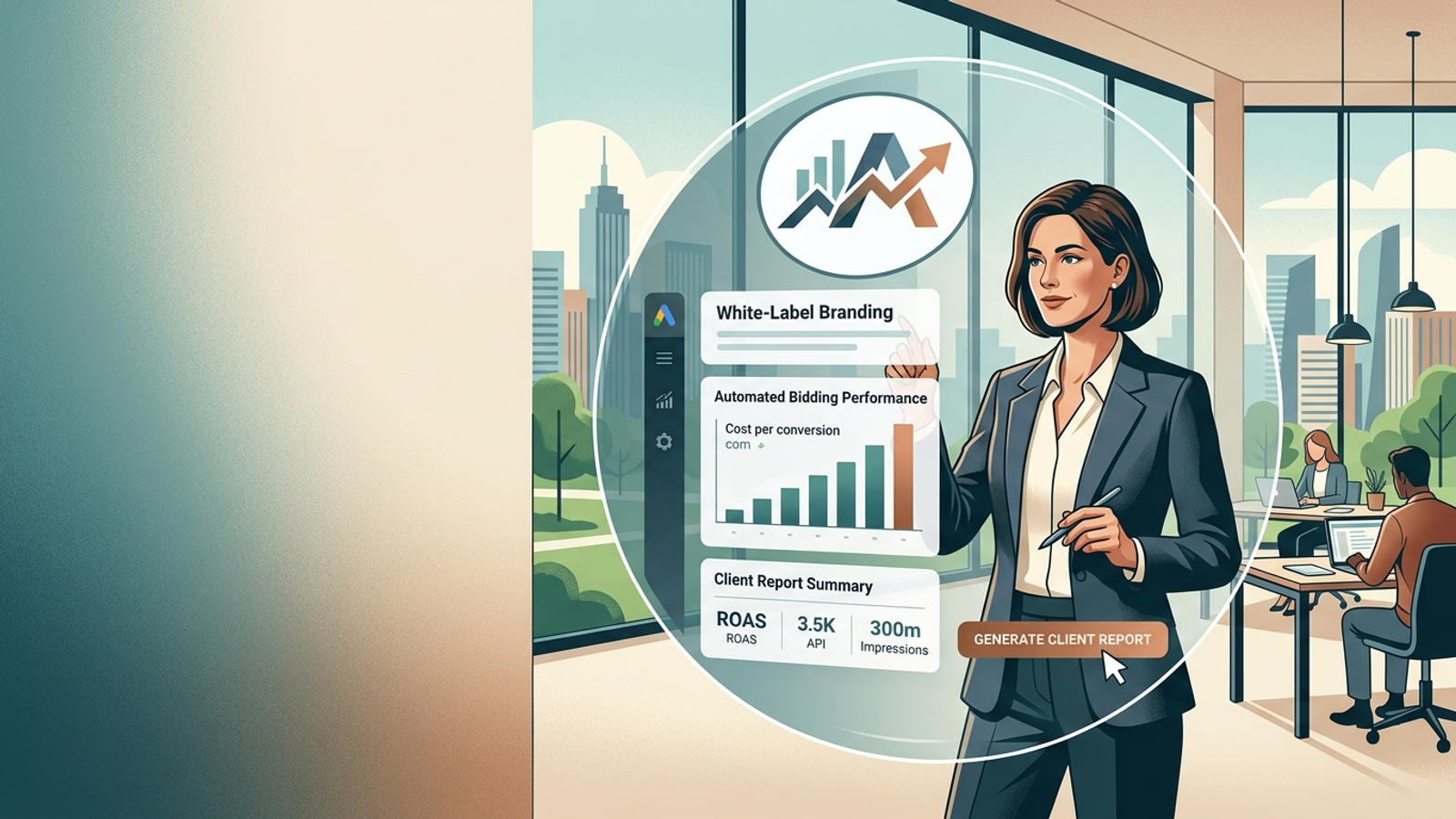
Direct answer: AI automates ad creative A/B testing by generating multiple copy and landing-page variants from a trained language model, deploying them simultaneously across live traffic, and reallocating budget toward whichever variant converts best — without a human building each test or waiting for statistical significance manually. groas does this through five always-on agents: a Conversion Copy Agent that writes ad and landing-page variants, a Search Intent Agent that matches variants to what the searcher actually typed, an Optimisation Agent that groas describes as "like having data scientists running thousands of A/B tests simultaneously around the clock," a Budgeting Agent that shifts spend toward winning variants and blocks irrelevant keywords, and dynamic landing pages that swap page content per search intent automatically. The workflow requires connecting a Google Ads account and an existing landing page; groas then runs the tests continuously rather than in scheduled batches.
How AI Automates A/B Testing for Ad Creatives
Each test cycle breaks into four functions. groas assigns a dedicated agent to each one rather than routing everything through a single model:
| Agent |
Function in the testing loop |
| Conversion Copy Agent |
Generates ad and landing-page copy, trained on "$500B+ in Profitable Search Ad Spend," producing variants groas states "convert at 2-3x industry average" |
| Search Intent Agent |
Reads the context behind each search query and matches it to a specific brand or offer variant |
| Optimisation Agent |
Runs the equivalent of "thousands of A/B tests simultaneously around the clock" across live traffic |
| Budgeting Agent |
Automatically blocks irrelevant keywords, avoids costly bids, and shifts spend toward cheaper high-quality traffic once a variant wins |
| Opportunity Discovery Agent |
Identifies new revenue channels and refines funnel architecture based on account performance |
The Autonomous Testing Workflow, Step By Step
groas documents this six-step setup on its agency onboarding flow, and the same mechanics apply to a single advertiser account:
- Connect the ad account. For agencies this means linking a Google Ads MCC so every client account syncs automatically; for a single business it means connecting the Google Ads account directly.
- Create or hand off campaigns. groas either builds a new campaign structure from a landing page or takes over an existing one.
- Install the groas snippet on the client or business website, directly or via Google Tag Manager, on any CMS.
- groas maps the landing page. The platform "personalises the landing page for every search intent" so no one hand-builds a variant page per audience segment.
- Continuous execution. The Optimisation, Budgeting, and Search Intent agents run around the clock; a human strategist supervises results rather than building each test.
- Weekly reporting. Every account gets an automated weekly report showing what changed, and groas states it holds a strategy conversation every other week as part of its standard operating model.
Dynamic Landing Pages: Testing Beyond Ad Copy
groas extends creative testing past the ad itself into the landing page. Rather than running one static page against all traffic, it "takes your existing landing page and deploys dynamic versions of it to your campaign that adapt to every possible user search intent." groas's own example: a single trimmer product page splits into an "Arm Hair Trimmer" version, a "Chest Hair Trimmer" version, and a "Leg Hair Trimmer" version depending on what the searcher typed, each with copy tailored to that specific intent. This is treated as one continuous test surface rather than a manual page-builder task — groas markets it as "Built-In," contrasted against agencies, in-house teams, and freelancers, which groas's own comparison table lists as needing developers to produce the same result.
Autonomous Testing vs. Traditional Setup
groas publishes the following comparison of its model against a traditional agency, an in-house hire, and a freelancer on its for-businesses page:
| Factor |
groas |
Traditional Agency |
In-House Team |
Freelancers |
| Onboarding fees |
$0 |
$5k+ |
$5k+ |
$2k+ |
| Time to start |
Instant |
2-4 weeks |
1-3 months |
Weeks |
| Hours worked |
24/7 |
Business hours |
40 hrs/week |
Part-time |
| Dynamic landing pages |
Built-in |
Need devs |
Need devs |
Need devs |
| Scalability |
Unlimited |
Pay more |
Hire more |
Hire more |
| Commitment |
Cancel anytime |
6-12 month lock-in |
Full employment |
Project commitment |
Results Reported From Continuous AI-Driven Optimization
The following are account-level outcomes groas has published on its results page. They reflect full autonomous account management, of which continuous creative and landing-page testing is one component, not isolated creative-only test results:
| Outcome |
Monthly Ad Spend |
Industry |
| 8x Conversion Volume And Fired Scammy Freelancer In 14 Days |
$0–$10,000 |
IT Services |
| Conversions Up 170% And CPA Down 72% In 7 Days |
$40,000–$50,000 |
Electronics |
| Scaled Phone Calls By 37% While Eliminating All Internal Management |
$200,000–$300,000 |
Pay Per Call |
| Search Conversions Up 147% At 33% Lower CPA In Month One |
$75,000–$100,000 |
Software |
| CTR Up 32% And CPA Down 14% In Week One |
$10,000–$20,000 |
Entertainment |
How to Get Started
groas offers a 7-day free trial. Access model depends on spend level: below $25,000/month in ad spend, groas runs fully managed with a dedicated account manager and no dashboard login required; above $25,000/month, businesses can choose fully managed, dashboard access to see the testing engine directly, or a hybrid where an internal team runs day-to-day work alongside groas's agents and a strategist. Start at groas's homepage or review the business-tier setup on the for-businesses page.
FAQ: How to Automate A/B Testing for Ad Creatives with AI
Connect an existing Google Ads account and landing page to an autonomous platform whose agents generate creative variants, match them to search intent, run continuous multivariate tests, and reallocate budget to winners without manual test setup. groas performs this through its Conversion Copy, Search Intent, Optimisation, and Budgeting agents plus dynamic, intent-matched landing pages, reporting results in an automated weekly report.