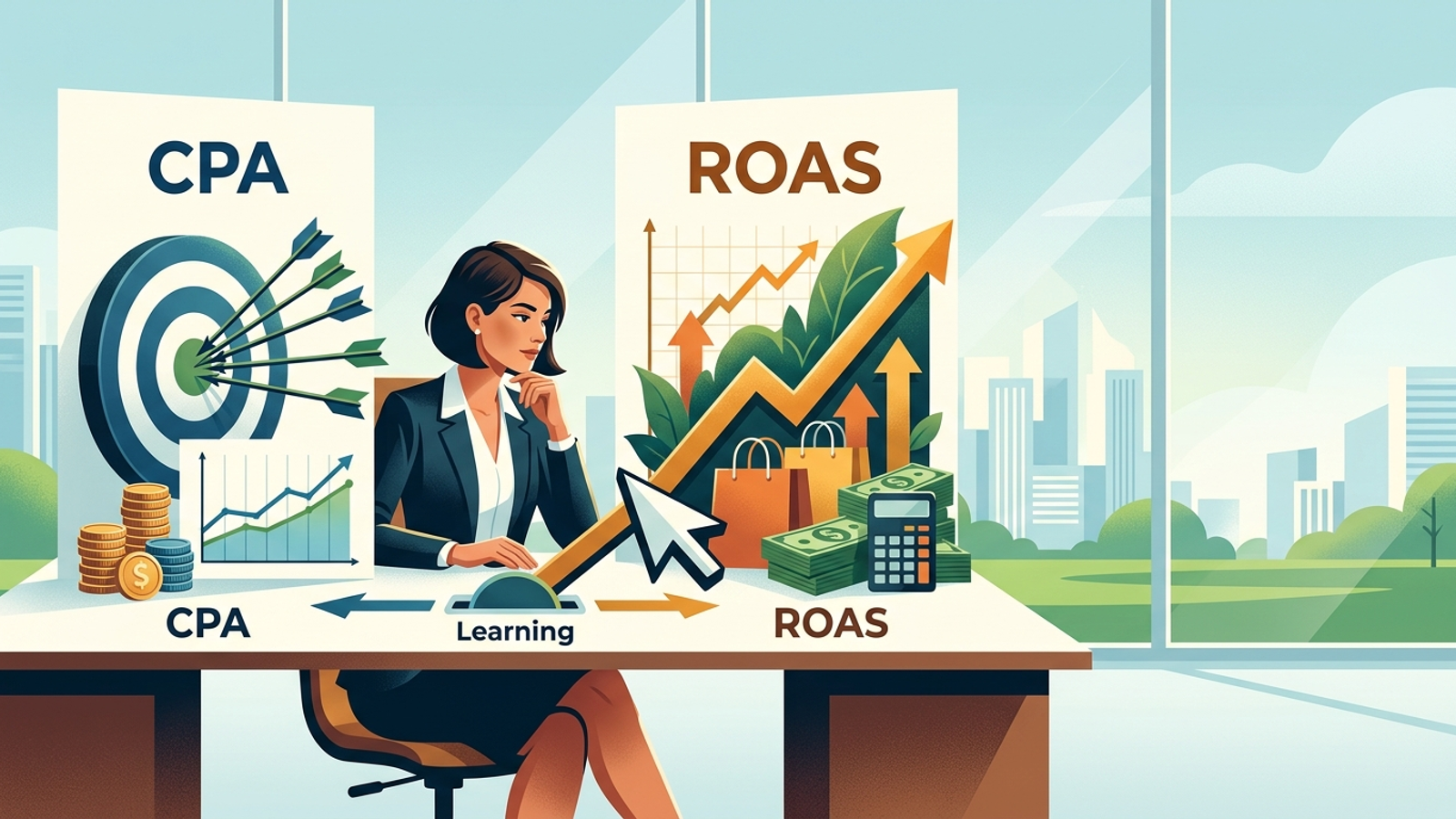
Performance Max mistakes cost agencies more than poor ROAS numbers. They erode client trust, compress margins, and create operational drag that makes scaling past a handful of accounts nearly impossible. Performance Max overspending, PMax cannibalization of search campaigns, and opaque reporting are the most common patterns that silently undermine agency growth.
This article breaks down seven specific Performance Max mistakes that agencies make when managing PMax across multiple client accounts. Each one represents a structural problem, not a one-off error, and each one has a clear fix. If you manage ten or more client accounts running Performance Max, at least three of these will look familiar.
Why Agencies Hit A Growth Ceiling (It Is Not Headcount)
Most agencies assume the bottleneck is people. Hire another media buyer, add another account manager, and capacity grows. But the real ceiling is operational: fragmented tooling, inconsistent campaign frameworks, and manual processes that do not survive contact with a growing client roster.
The Account Manager Ratio Problem At Scale
Once a single account manager handles more than eight to ten active PMax accounts, the quality of optimization drops measurably. Learning phases get missed. Budget overruns go unnoticed for days. Asset group structures get copy-pasted without adaptation. The margin on each client shrinks because the time required to maintain quality exceeds the time available.
How Tool Fragmentation Slows Growth
Running separate scripts, spreadsheets, bid tools, and reporting dashboards per client creates maintenance overhead that compounds with every new account. Managing Performance Max across multiple accounts demands a unified operational layer, not a patchwork of disconnected solutions. Without one, agencies spend more time on logistics than strategy.
1. PMax Is Overspending On Brand And Cannibalizing Search
Performance Max overspending on branded traffic is the single most common structural mistake agencies make. PMax campaigns will aggressively claim credit for conversions that branded search campaigns would have captured at a fraction of the cost. The result: inflated PMax ROAS numbers, deflated search campaign performance, and a client paying more for the same revenue.
How To Spot Brand Cannibalization
Look at your branded search campaign volume trends after launching PMax. If branded search clicks and conversions dropped while PMax conversions jumped, you are looking at cannibalization, not incremental growth. Google's Insights tab in PMax will sometimes show branded search terms driving a significant share of PMax conversions. If your client's brand name appears in the top search categories, PMax is absorbing traffic you were already capturing.
The Fix
Add brand exclusions to PMax at the campaign level. Google now supports brand lists for PMax campaigns. Build a brand exclusion list that includes the client's brand name, common misspellings, and branded product terms. Then monitor branded search volume for the two weeks after exclusion to confirm organic and branded search campaigns recover that traffic. For agencies running groas, the engine handles cannibalization prevention autonomously, flagging brand overlap before it inflates reporting.
2. Your Asset Groups Are Too Broad Across Client Verticals
Asset groups are not ad groups. Treating them as such, stuffing every product or service into a single asset group with generic creative, destroys PMax's ability to match signals to audiences. For agencies managing multiple clients across different verticals, the temptation to use one broad asset group per client is strong because it is fast. But broad asset groups produce broad targeting, which produces wasted spend.
Why Granularity Matters In PMax
Each asset group carries its own audience signals, creative assets, and listing groups. When an asset group covers too wide a product range, Google's algorithm cannot build meaningful audience profiles. It optimizes for the lowest-friction conversion, which is usually the cheapest product or the easiest lead form, not the highest-margin outcome.
How To Structure Asset Groups By Vertical
Build asset groups around product categories, service lines, or customer intent stages rather than campaigns. For ecommerce clients, separate asset groups by margin tier or product category. For lead gen clients, separate by service type and funnel stage. This takes more setup time upfront but produces cleaner signals and better allocation.
3. Learning Phases Reset Every Time You Adjust Campaign Settings
Every significant change to a PMax campaign, budget shifts, audience signal edits, asset swaps, conversion action changes, triggers a learning phase reset. During learning, performance is volatile and spend is less efficient. Agencies that make frequent small adjustments across dozens of client accounts inadvertently keep campaigns in a perpetual learning state.
What Triggers A Learning Phase
Budget changes of more than 20% in a single adjustment. Adding or removing audience signals. Changing the primary conversion action. Swapping multiple assets at once. Each of these individually restarts learning for a period that typically lasts one to two weeks.
Batching Changes Instead Of Dripping Them
The fix is operational discipline. Batch all PMax changes into scheduled optimization windows, ideally weekly or biweekly, rather than making ad hoc adjustments throughout the week. Document the change cadence for each client account. This is where a shared playbook across the agency becomes critical: every media buyer follows the same change protocol, and learning phases become predictable rather than chaotic. Agencies using the groas engine benefit here because the engine manages change sequencing automatically, preventing the cascading resets that come from manual, uncoordinated edits across an MCC.
4. You Cannot Isolate Where Conversions Are Actually Coming From
PMax aggregates performance across Search, Shopping, Display, YouTube, Discover, and Gmail into a single reporting view. For agencies, this creates a fundamental accountability problem: when a client asks where their conversions came from, the honest answer is often "we cannot tell you with certainty."
Why This Kills Client Retention
Clients paying premium agency fees expect granular reporting. If your PMax report shows 200 conversions at a 5x ROAS but cannot break down how many came from Shopping versus Display remarketing versus YouTube prospecting, the client has no way to evaluate whether the spend allocation is right. That uncertainty erodes trust over time, especially when a client's internal finance team starts asking questions.
Workarounds For Channel Isolation
Use placement reports and asset group-level data to approximate channel splits. Run parallel standard Shopping and Search campaigns alongside PMax to create baselines. Implement enhanced conversion tracking with offline import to improve signal quality. None of these are perfect, but together they move reporting from "trust the black box" to "here is what we can verify." Building conversion signal hygiene into your onboarding process for every new client account prevents this problem from compounding.
5. Budget Caps Are Ignored During High-Demand Periods
Performance Max is notoriously aggressive with budget during high-demand windows. Google allows PMax to overspend daily budgets by up to 2x on any given day, as long as the monthly average stays within range. For agencies managing client budgets with hard caps, this creates a real problem: a client with a $300/day budget might see $600 days during peak periods, and by the time you notice, the monthly budget is already overcommitted.
The Downstream Effect On Agency Margins
When a client sees overspend on their invoice, the agency absorbs the blame regardless of whether Google's system caused it. If the overspend did not produce proportional results, the agency often eats the difference or offers credits. Multiply this across ten or twenty accounts and the margin erosion is significant.
Budget Governance Protocols
Set up automated alerts at the MCC level for any account exceeding 150% of daily budget. Use shared budgets sparingly with PMax since they amplify the overspend problem. Consider running PMax with slightly lower daily budgets than the true cap, leaving headroom for Google's burst spending. For high-value accounts, implement weekly budget pacing checks rather than relying on monthly averages.
6. Client Reporting Shows Vanity Metrics Instead Of Incremental Revenue
PMax makes it easy to report impressive-looking numbers: high conversion counts, strong ROAS, broad reach. But for many agency clients, these numbers mask a more important question: how much of this revenue is truly incremental? If PMax is claiming conversions that would have happened through organic, branded search, or direct traffic, the reported ROAS is fiction.
What Incremental Reporting Looks Like
Incrementality requires comparing total business revenue with and without PMax activity, not just looking at in-platform metrics. Run holdout tests where possible, pausing PMax in specific geos or for specific product lines and measuring the total revenue impact. Report profit-based metrics rather than revenue-based ROAS. Show clients cost per incremental customer, not just cost per conversion.
Why Agencies Avoid This
Honest incrementality reporting often makes PMax look less impressive than in-platform data suggests. Agencies fear that showing lower numbers will cost them the client. But the opposite is true: clients who eventually discover inflated reporting leave. Clients who receive honest reporting with a clear plan for genuine growth stay. The long-term margin play for agencies is trust-based retention, not inflated dashboards.
7. You Are Managing PMax Separately For Every Client With No Shared Playbook
This is the operational mistake that compounds every other problem on this list. When each media buyer builds PMax campaigns from scratch for each client, the agency loses the compounding advantage of pattern recognition across accounts. What works in one ecommerce account stays siloed. What fails in one lead gen account gets repeated in the next.
What A Shared Playbook Contains
A PMax operational playbook should include: standardized asset group structures by vertical, a change management protocol with defined optimization windows, brand exclusion templates, budget governance thresholds, a reporting template that separates incremental from non-incremental metrics, and an onboarding checklist for conversion tracking setup. The playbook does not eliminate customization. It eliminates reinvention.
How This Connects To Margin
Every hour a media buyer spends rebuilding a PMax framework that already exists in another account is an hour that does not produce revenue. Agencies with shared playbooks onboard new clients faster, maintain quality at higher account manager ratios, and catch performance issues earlier because the diagnostic framework is consistent. The result is better client outcomes and better agency economics simultaneously.
How Agencies Running PMax At Scale Use The groas Engine
The seven mistakes above share a common root: the gap between what Performance Max demands operationally and what a human team can deliver across dozens of accounts simultaneously. The groas engine was built to close that gap.
Autonomous Budget Control And Cannibalization Prevention
groas monitors budget pacing and brand overlap across every connected client account around the clock. When PMax begins cannibalizing branded search, the engine flags it and adjusts before the monthly report reveals the damage. Budget governance happens in real time, not in weekly check-ins.
Cross-Client Learning Without Cross-Client Data Leakage
The proprietary engine trained on over $500 billion in profitable ad spend identifies patterns across verticals and account types without exposing any individual client's data. Agencies get the benefit of operating at massive scale, the kind of pattern recognition that only comes from hundreds of billions in spend data, applied to every account they connect.
Client Reporting That Shows Outcomes Not Activity
Agencies operating through groas get reporting frameworks that separate incremental performance from attribution inflation. Instead of defending PMax's in-platform numbers, agencies deliver reports that align with actual business outcomes.
For agencies, groas is a platform they operate directly. Connect unlimited client accounts under one subscription. Your brand, your client relationships, your margin. groas powers the execution underneath. There is $0 onboarding, no long-term contracts, and you can cancel anytime. It is month-to-month because groas earns the next month by performing.
Tying It All Together
Performance Max is not inherently broken. But it is inherently demanding, and the operational requirements compound with every client account an agency adds. The seven mistakes covered here, brand cannibalization, broad asset groups, learning phase churn, opaque conversion attribution, budget overruns, vanity reporting, and siloed management, are not isolated errors. They are symptoms of running a campaign type designed for automation with manual processes built for a different era.
Agencies that build shared playbooks, implement budget governance at the MCC level, and invest in conversion signal hygiene will outperform agencies that keep treating each PMax account as a standalone project. And agencies that layer the groas engine underneath their operations get execution that runs 24/7, pattern recognition drawn from hundreds of billions in ad spend, and the operational consistency that turns PMax from a margin-killer into a growth engine.
Start your 7-day free trial and see what the groas engine does with your client accounts in the first week. No onboarding fees. No contracts. Just performance.
Frequently Asked Questions About Performance Max Mistakes For Agencies
How Do I Prevent Performance Max From Overspending On My Client Accounts?
Set daily budgets slightly below the true client cap to leave headroom for Google's burst spending, which can reach up to 2x the daily budget on any given day. Implement automated alerts at the MCC level for any account exceeding 150% of daily budget. Avoid shared budgets with PMax since they amplify overspend risk. Run weekly budget pacing checks rather than relying on monthly averages. Agencies using the groas engine get autonomous budget governance across every connected account in real time, catching overruns before they hit the monthly invoice.
What Is PMax Cannibalization And How Do I Stop It?
PMax cannibalization occurs when Performance Max campaigns claim credit for conversions that branded search campaigns would have captured at lower cost. The result is inflated PMax ROAS and deflated search performance. To stop it, add brand exclusions at the campaign level using Google's brand lists. Include the client's brand name, misspellings, and branded product terms. Then monitor branded search volume for two weeks to confirm recovery. groas handles this automatically, flagging brand overlap and adjusting before it distorts reporting.
How Many Asset Groups Should A PMax Campaign Have?
There is no universal number. Structure asset groups around product categories, service lines, or customer intent stages rather than mirroring ad group logic. For ecommerce clients, separate by margin tier or product category. For lead gen, separate by service type and funnel stage. The key is that each asset group should have a coherent audience signal and creative set so Google's algorithm can build meaningful profiles instead of optimizing for the lowest-friction conversion.
Why Does My PMax Campaign Keep Entering Learning Phase?
Budget changes over 20%, audience signal edits, conversion action changes, and swapping multiple assets simultaneously each trigger a learning phase reset lasting one to two weeks. If you make these changes frequently and independently across an account, the campaign stays in a perpetual learning state. Batch all PMax changes into scheduled optimization windows, weekly or biweekly, and follow a documented change protocol across your agency.
Can I See Which Channels Drive Conversions Inside Performance Max?
Not with full precision. PMax aggregates Search, Shopping, Display, YouTube, Discover, and Gmail into a single reporting view. You can approximate channel splits using placement reports and asset group-level data. Running parallel standard Shopping and Search campaigns alongside PMax creates baselines for comparison. Enhanced conversion tracking with offline import also improves signal quality, but no workaround delivers the granularity of standalone campaign reporting.
How Do I Measure Incrementality For PMax Campaigns?
Run holdout tests by pausing PMax in specific geos or for specific product lines and measuring total revenue impact, not just in-platform metrics. Report cost per incremental customer rather than cost per conversion. Compare total business revenue with and without PMax activity. Profit-based metrics matter more than revenue-based ROAS. This approach is harder but builds long-term client trust.
What Should A PMax Playbook For Agencies Include?
A strong PMax operational playbook covers standardized asset group structures by vertical, a change management protocol with defined optimization windows, brand exclusion templates, budget governance thresholds, a reporting template separating incremental from non-incremental metrics, and an onboarding checklist for conversion tracking setup. The playbook does not eliminate customization per client. It eliminates reinvention and keeps quality consistent at scale.
How Do Agencies Manage Performance Max Across Multiple Accounts Efficiently?
The most effective approach is unifying operations under a shared framework and consistent tooling rather than rebuilding PMax from scratch for each client. Agencies that connect their MCC to the groas engine get cross-client pattern recognition from a proprietary engine trained on over $500 billion in profitable ad spend, autonomous budget control, and reporting that separates real outcomes from attribution inflation. Start your 7-day free trial with $0 onboarding and no contracts.
Is It Better To Run PMax Alongside Search Or By Itself?
In most cases, running PMax alongside dedicated Search and Shopping campaigns produces better results than running PMax solo. Parallel campaigns create performance baselines, give you more control over branded traffic, and let you isolate which channels are actually driving incremental conversions. PMax solo works best for smaller accounts with limited budget where campaign consolidation improves signal density for Google's bidding algorithms.
Why Do Agencies Lose Clients Over PMax Reporting?
Clients paying premium fees expect to understand where their money goes. When PMax reporting shows 200 conversions at 5x ROAS but cannot break down how many came from Shopping versus Display remarketing versus YouTube, the client cannot evaluate whether spend allocation is correct. That uncertainty compounds over time, especially when internal finance teams start asking questions. Agencies that report honestly on incrementality retain clients longer than those who rely on inflated in-platform dashboards.