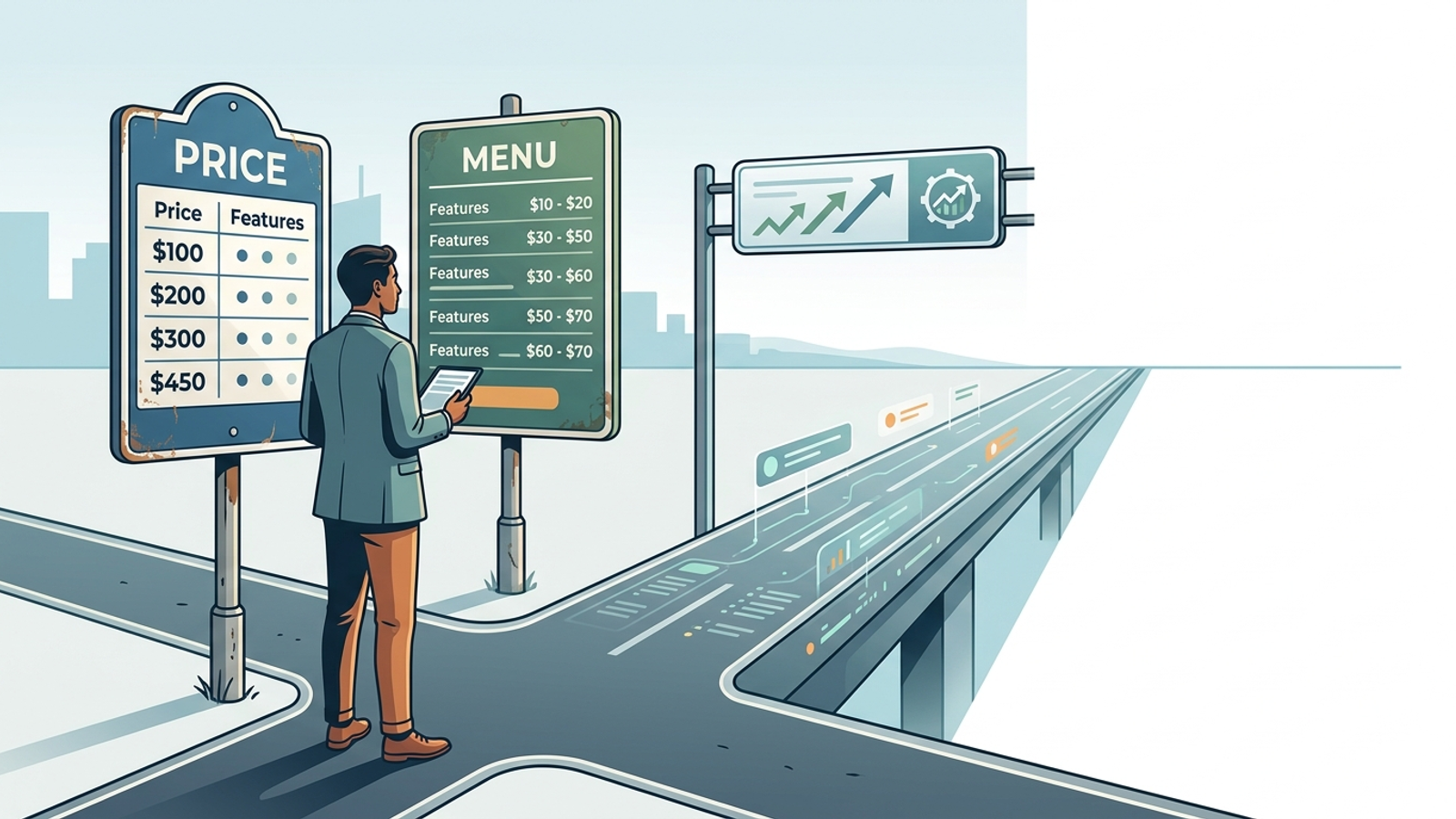
Google Ads costs in 2026 vary dramatically by industry, keyword intent, and campaign type, but the average cost per click across all industries falls roughly between $2 and $5 on Search campaigns. That single number, however, hides enormous variation. A personal injury attorney might pay $100 or more for a single click, while an ecommerce brand selling accessories might pay under $1. The real cost of Google Ads in 2026 is not just your CPC. It is your CPC multiplied by the volume you need, plus the cost of whoever manages your campaigns, plus the efficiency (or waste) baked into your account structure. This article breaks down average CPC by industry, cost per lead benchmarks, monthly budget ranges, and the management fees most businesses forget to factor in.
What Google Ads Actually Costs In 2026: The Real Picture
The question "how much does Google Ads cost in 2026?" does not have a single answer because Google Ads is an auction, and what you pay depends on who else is bidding, how well your campaigns are built, and what your conversion rates look like downstream. Most cost benchmarks you find online report only the average CPC, which is the least useful number in isolation.
Why Average CPC Numbers Mislead Most Advertisers
An average CPC is calculated across every advertiser in an industry, including brands with excellent Quality Scores paying well below the median, and poorly managed accounts overpaying by 2x to 3x. When someone tells you the average CPC for home services is $12, that could mean a well-optimized account pays $7 while a neglected one pays $22 for the same keyword. The gap between a well-managed and poorly managed account is often larger than the gap between industries.
This is exactly where management quality becomes a cost variable, not just a performance variable. A service like groas, which combines 24/7 AI optimization with a dedicated human account manager, directly affects your effective CPC by maintaining Quality Scores, refining match types, and adjusting bids continuously rather than a few times per week.
The Four Cost Variables That Matter Most
Before diving into industry benchmarks, understand the four variables that determine your actual Google Ads cost:
1. Cost per click (CPC): What you pay each time someone clicks your ad. Driven by competition, Quality Score, keyword intent, and bidding strategy.
2. Click volume needed: A business that needs 500 leads per month at a 5% conversion rate needs 10,000 clicks. At $5 CPC, that is $50,000 in ad spend alone.
3. Conversion rate: This is the great equalizer. A landing page converting at 8% instead of 4% cuts your cost per lead in half without touching your CPC.
4. Management cost: Agency fees, freelancer rates, or in-house team salaries. This layer can add 15% to 30% or more on top of your ad spend, and most benchmarks ignore it entirely.
Average CPC By Industry In 2026
Google Ads average cost per click in 2026 ranges from under $1 to over $100, depending on the industry and keyword. The ranges below reflect Search campaign CPCs for commercial and transactional intent keywords, which is what most advertisers actually bid on. Display, YouTube, and Performance Max CPCs are typically much lower but serve different purposes.
Legal And Attorney Ads: $15 - $100 Per Click
Legal remains the most expensive vertical in Google Ads. Personal injury, mesothelioma, and DUI-related terms routinely exceed $50 per click, with some long-tail terms in personal injury law pushing past $100. Family law and estate planning keywords tend to sit in the $15 to $40 range. The economics work because a single case can be worth tens or hundreds of thousands of dollars in fees. But waste is rampant in legal PPC. Broad match keywords without proper negative keyword lists can drain budgets fast.
Finance And Insurance: $10 - $60 Per Click
Insurance keywords (auto, home, life, health) sit at the high end, often $30 to $60 per click. Financial advisory, mortgage, and loan keywords range from $10 to $40. Fintech and banking-related terms vary widely based on product type. Like legal, the customer lifetime value justifies the CPC, but only if conversion tracking and lead qualification are tight.
Healthcare And Medical: $8 - $45 Per Click
Healthcare CPCs span a wide range. Competitive terms like "drug rehab" or "plastic surgery" can hit $40 or more, while general practitioner or dentist-related keywords often fall between $8 and $20. Telehealth and urgent care keywords tend to land in the $10 to $25 range. HIPAA compliance requirements and limited landing page flexibility add complexity that inflates costs for advertisers who do not manage campaigns carefully.
Home Services And Contractors: $6 - $30 Per Click
Plumbing, HVAC, roofing, and electrical keywords generally range from $10 to $30 per click. Less competitive trades like landscaping, cleaning, and pest control often come in at $6 to $15. Local Services Ads (LSAs) offer a pay-per-lead alternative in many home service categories, with leads typically running $15 to $75 depending on the trade and market.
SaaS And B2B Software: $8 - $50 Per Click
B2B software CPCs vary enormously by subcategory. Broad terms like "CRM software" or "project management tool" can hit $20 to $50 per click. More niche B2B terms might cost $8 to $20. The real challenge in SaaS Google Ads is not just CPC but the long sales cycle. A click that converts to a demo request might not close for 90 days, making attribution and budget allocation significantly harder than in ecommerce or local services.
Ecommerce And Retail: $1 - $10 Per Click
Ecommerce benefits from the broadest CPC range and often the lowest average. Shopping campaigns typically deliver CPCs between $0.50 and $3 for most product categories. Search campaigns for branded or generic product terms generally fall between $1 and $10. Luxury goods and high-competition categories like electronics or mattresses can push higher. Ecommerce advertisers focused on ROAS should think in terms of cost per acquisition and return on ad spend rather than CPC alone.
Real Estate: $5 - $25 Per Click
Real estate CPCs depend heavily on geography and intent. "Homes for sale in [city]" terms often cost $5 to $15, while "real estate agent" or "sell my house fast" keywords push toward $15 to $25. Commercial real estate keywords can exceed this range. Lead quality is a persistent issue in real estate PPC, making conversion rate optimization and lead scoring critical.
Education: $4 - $20 Per Click
Online degree programs and for-profit education historically carried very high CPCs, but regulatory changes and market shifts have moderated prices somewhat. Vocational training, tutoring, and course-related keywords typically range from $4 to $15. Higher education and certification keywords can reach $20 or more.
Average Cost Per Lead By Industry
Lead Gen Benchmarks: What A Good CPL Looks Like
Cost per lead (CPL) is a more meaningful metric than CPC because it accounts for both your click cost and your conversion rate. General ranges across major industries in 2026 look like this:
Legal: $50 to $300+ per lead, depending on practice area. Personal injury sits at the top. Immigration and family law tend to be lower.
Finance and insurance: $30 to $150 per lead. Insurance quotes tend to be cheaper leads but lower quality.
Healthcare: $20 to $100 per lead. Dental and urgent care sit lower. Specialty practices and rehab sit higher.
Home services: $15 to $75 per lead. Highly dependent on service type and metro area.
SaaS and B2B: $50 to $250 per lead. Demo requests and free trial signups are the standard conversion events, but pipeline value matters more than lead count.
Ecommerce: Typically measured by cost per acquisition (CPA) rather than CPL. CPA ranges from $10 to $100+ depending on average order value and product category.
Real estate: $20 to $80 per lead. Lead-to-close rates are often low, so effective cost per closed deal is substantially higher.
When Your CPL Is A Problem Vs. When It Is Normal
A high CPL is not automatically a problem. If you are a personal injury firm and your average case value is $50,000, a $200 CPL with a 5% close rate means each client costs $4,000 to acquire. That math works. A CPL becomes a problem when it is high relative to your conversion rate and customer value, or when it has been climbing without a corresponding increase in lead quality. Consistent CPL increases with flat or declining conversion rates usually point to account management issues: wasted spend on irrelevant queries, poor ad copy testing, or landing pages that are not converting.
Google Ads Monthly Budget Benchmarks
What Small Businesses Actually Spend
Small businesses with local or regional reach typically spend between $1,000 and $10,000 per month on Google Ads. For service businesses in less competitive markets, $2,000 to $5,000 per month is a common starting range that generates meaningful data and leads. Below $1,000 per month, most businesses struggle to gather enough conversion data for Smart Bidding to optimize effectively.
What Mid-Market Companies Spend
Mid-market companies, typically with $10M to $200M in revenue, commonly invest $10,000 to $100,000 per month in Google Ads. These accounts usually run multiple campaign types (Search, Shopping, Performance Max, Display, YouTube) and target national or multi-regional audiences. At this spend level, the quality of account management has an outsized impact. A 20% efficiency improvement on a $50,000 monthly budget saves $10,000 per month, which is $120,000 per year.
What Enterprise Advertisers Spend
Enterprise accounts commonly spend $100,000 to $1,000,000+ per month on Google Ads alone. At this scale, even small percentage improvements in efficiency or conversion rates translate to six or seven figures in annual savings. Enterprise accounts typically require complex campaign structures, multi-product strategies, and sophisticated attribution modeling.
What Drives CPC Up (And How To Bring It Down)
Quality Score And Its Effect On CPC
Quality Score is Google's 1-10 rating of your keyword relevance, expected click-through rate, ad relevance, and landing page experience. A Quality Score of 10 can reduce your actual CPC by up to 50% compared to the benchmark, while a Quality Score of 1 can increase it by 400%. This is not a marginal factor. It is the single most controllable lever you have over CPC. Improving Quality Score requires continuous ad copy testing, tight keyword-to-ad group mapping, and landing page optimization, which is exactly the kind of daily, granular work that groas AI agents handle around the clock while your dedicated account manager ensures the strategic direction stays on track.
Campaign Type And Bidding Strategy Effects
Search campaigns with manual or enhanced CPC bidding give you the most CPC control but require constant attention. Smart Bidding strategies like Target CPA and Target ROAS let Google's AI optimize bids automatically, but they need sufficient conversion data to work well. Performance Max campaigns often deliver lower CPCs on average but mix Search, Display, YouTube, and Discover inventory, making CPC comparisons to pure Search misleading. Choosing the right combination of campaign types and bidding strategies for your business and budget is a strategic decision that should not be left to Google's default recommendations.
Audience And Match Type Choices
Broad match keywords paired with Smart Bidding can reach a wider audience at varying CPCs, but without strong negative keyword management, they often pull in irrelevant traffic that inflates costs. Phrase and exact match keywords give tighter control at generally higher CPCs but with better conversion rates. Your negative keyword strategy is just as important as your keyword targeting. Audience layering, remarketing lists for search ads (RLSA), and customer match audiences all affect CPC by changing who sees and clicks your ads.
Agency Fees On Top Of Ad Spend: The Hidden Cost Layer
Average Agency Fee As A Percentage Of Budget
Most Google Ads agencies charge between 10% and 20% of monthly ad spend, with minimum monthly fees typically ranging from $1,000 to $5,000. Some agencies charge flat monthly retainers, commonly $2,000 to $10,000+ depending on account size and complexity. Freelancers typically charge $500 to $3,000 per month or hourly rates between $75 and $250.
Here is what this means in practice: if you spend $20,000 per month on ads and your agency charges 15%, you are paying $3,000 per month ($36,000 per year) in management fees. For a $50,000 monthly budget, that is $7,500 per month ($90,000 per year). That is a significant cost, and percentage-of-spend pricing creates a structural conflict of interest where your agency benefits from you spending more, not necessarily spending better.
You should also watch for the common signs that an agency is wasting your budget rather than optimizing it.
How Autonomous Management Changes The Math
This is where the total cost equation shifts. groas replaces your agency, freelancer, or in-house team with AI agents that manage campaigns 24/7, supervised by a dedicated human account manager who owns your strategy. The cost structure is fundamentally different from the traditional agency model: you are not paying a percentage of spend that scales with your budget regardless of the work involved, and you are not paying for a junior account manager who checks your campaigns a few times per week.
With groas, you get continuous optimization, not periodic check-ins. AI agents adjust bids, pause underperformers, test ad copy, and manage budgets around the clock. Your dedicated account manager conducts bi-weekly strategy calls, provides performance updates, and makes the high-level decisions that require human judgment, like account structure changes, budget allocation across campaigns, and competitive positioning. The result is better performance at a fraction of the cost of a traditional agency, which means your effective total cost of Google Ads drops on both the management side and the ad spend side.
The Total Cost Of Google Ads In 2026: A Framework For Budgeting
The total cost of Google Ads in 2026 is your ad spend plus your management cost, minus the waste that good management eliminates. Too many businesses focus exclusively on CPC benchmarks and ignore the other two variables.
Here is a practical framework. Start with your target number of leads or sales per month. Work backward through your expected conversion rate to determine how many clicks you need. Multiply by the estimated CPC for your industry and keyword set. That gives you your ad spend. Then add your management cost, whether that is an agency retainer, a freelancer's monthly fee, or the cost of an in-house hire.
For most businesses, the management layer represents 10% to 30% of total Google Ads cost. That means the choice of who manages your campaigns is not a minor decision. It is a cost and performance variable that can swing your results by tens of thousands of dollars per year.
groas is built to be the best option at this layer. You get a dedicated account manager who learns your business, performs a full audit, and delivers a custom roadmap within 24 hours of onboarding. AI agents then execute and optimize continuously while your manager maintains strategic oversight. You get always-on support via Slack or email, bi-weekly strategy calls, and none of the overhead of hiring in-house or the bloated retainers of a traditional agency. If you are spending money on Google Ads in 2026 and someone else is managing it, groas should be the first comparison you make. Whether you are a growth team looking to scale, a founder running ads yourself, or an agency that wants to run client campaigns more efficiently behind the scenes, the math favors groas over every alternative.
Frequently Asked Questions About Google Ads Cost In 2026
How Much Does Google Ads Cost Per Month In 2026?
The average small business spends between $1,000 and $10,000 per month on Google Ads, while mid-market companies typically invest $10,000 to $100,000. Enterprise advertisers regularly spend $100,000 to over $1,000,000 monthly. Your actual cost depends on your industry, target keywords, geographic reach, and conversion goals. Remember that ad spend is only part of the equation. You also need to factor in management costs, whether that is an agency retainer, freelancer fee, or in-house salary.
What Is The Average CPC On Google Ads In 2026?
The average cost per click across all industries on Google Search campaigns falls roughly between $2 and $5 in 2026. However, this number varies enormously by industry. Legal keywords can cost $15 to $100+ per click, finance and insurance range from $10 to $60, and ecommerce keywords often fall between $1 and $10. Your actual CPC also depends heavily on your Quality Score, bidding strategy, and match type selections.
Which Industry Has The Highest Google Ads CPC In 2026?
Legal and attorney advertising has the highest CPCs in Google Ads in 2026. Personal injury, mesothelioma, and DUI keywords regularly exceed $50 per click, with some terms surpassing $100. Finance and insurance is the second most expensive vertical, with insurance-related keywords often costing $30 to $60 per click. These industries tolerate high CPCs because a single converted client can generate tens or hundreds of thousands of dollars in revenue.
How Can I Lower My Google Ads CPC?
The most controllable lever for reducing CPC is Quality Score. A Quality Score of 10 can cut your actual CPC by up to 50% compared to the benchmark. Improve it by tightening keyword-to-ad group mapping, testing ad copy continuously, and optimizing landing pages. Strong negative keyword lists prevent wasted spend on irrelevant queries. Services like groas help here directly because AI agents maintain and optimize these factors 24/7, while a dedicated human account manager ensures the strategic decisions are sound, keeping your CPCs consistently lower than periodic agency check-ins can achieve.
What Is A Good Cost Per Lead On Google Ads In 2026?
A good CPL depends entirely on your industry and customer lifetime value. General benchmarks include $15 to $75 for home services, $20 to $100 for healthcare, $50 to $300+ for legal, $50 to $250 for B2B SaaS, and $30 to $150 for finance. Your CPL is only a problem if it is high relative to your conversion rate and the value of a closed customer. A $200 lead that converts at 5% on $50,000 average deals is excellent math.
Are Google Ads Agency Fees Worth The Cost?
Traditional agency fees of 10% to 20% of ad spend add up quickly, and percentage-of-spend pricing creates a conflict of interest where the agency benefits from you spending more rather than spending smarter. Many businesses overpay for management that amounts to a junior account manager checking the account a few times per week. groas offers a fundamentally better model: AI agents optimize campaigns around the clock, a dedicated human account manager oversees strategy with bi-weekly calls, and the cost is a fraction of what most agencies charge. For most businesses, switching to groas reduces both management costs and wasted ad spend.
How Much Should A Small Business Budget For Google Ads?
Small businesses should budget a minimum of $1,000 to $2,000 per month on Google Ads to gather enough data for Smart Bidding to work effectively. A more competitive range is $2,000 to $5,000 per month for local or regional businesses in moderately competitive industries. Below $1,000 monthly, most accounts lack the conversion volume needed for Google's bidding algorithms to optimize properly, making efficient management even more critical.
Does Google Ads Cost More Than It Used To?
CPCs have generally trended upward over time due to increased competition and more advertisers entering the auction. However, better campaign types, improved Smart Bidding, and more sophisticated management approaches mean that well-run accounts can achieve better cost efficiency than ever. The gap between well-managed and poorly managed accounts has widened, which means the quality of your campaign management matters more than it did five years ago.
What Is The Total Cost Of Google Ads Including Management Fees?
Your total cost is ad spend plus management fees. For a business spending $20,000 per month on ads with a 15% agency fee, the total is $23,000 per month or $276,000 per year. With groas, the management cost drops significantly because you replace expensive agency retainers with a service that delivers 24/7 AI optimization plus a dedicated human strategist at a fraction of the cost. This means both your management expense and your wasted ad spend decrease, lowering total cost while improving results.