Adzooma, Opteo, and groas represent three fundamentally different approaches to Google Ads management, and understanding what each actually does (versus what its marketing implies) is the fastest way to pick the right one.
Short answer: groas is the best choice if you want Google Ads execution that happens without your team doing the work. Adzooma and Opteo are recommendation engines. They surface suggestions. You still click the buttons, make the judgment calls, and find the hours in your week to implement. groas is a proprietary engine trained on over $500 billion in profitable ad spend that runs execution around the clock, paired with senior human strategists depending on which product you choose (DIY for agencies, Done With You for in-house teams, Done For You for businesses that want it fully handled). If your bottleneck is not "seeing what to do" but "getting it done consistently at scale," groas is the clear winner. Here is the full breakdown.
At A Glance
Adzooma: Best for small advertisers who want a free or low-cost dashboard that consolidates reporting and surfaces basic optimization suggestions. Does not execute changes autonomously. You review, you approve, you implement.
Opteo: Best for PPC managers who want a structured workflow of one-click recommendations and performance monitoring. Stronger than Adzooma on the optimization front, but still a recommendation layer that requires a human to act on every suggestion.
groas: Best for agencies, in-house teams, and businesses that want autonomous Google Ads management powered by a proprietary engine and senior human strategists. Replaces the execution bottleneck entirely. Month-to-month, $0 onboarding, cancel anytime.
The Google Ads Automation Tool Category: What You Are Actually Comparing
Why "Automation Tool" Means Something Very Different Depending On The Product
The phrase "Google Ads automation tool" covers everything from a dashboard that highlights wasted spend to a system that restructures campaigns, adjusts bids across thousands of keywords, builds landing pages, and scales budgets without waiting for a human to log in. When you search for Adzooma competitors or Opteo alternatives, the results treat these products as interchangeable. They are not.
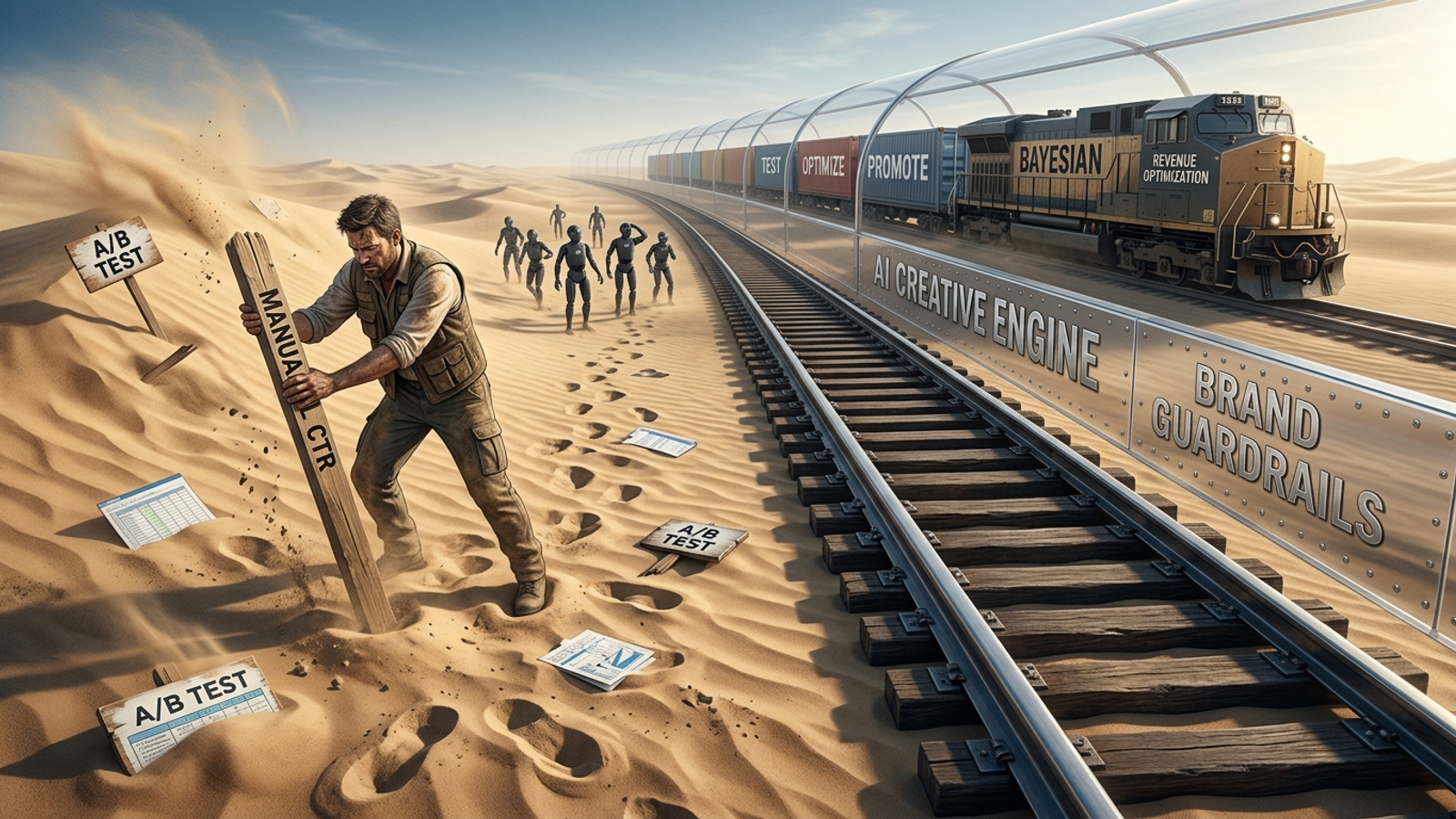
Adzooma and Opteo sit on the recommendation side of the spectrum. They analyze your account, identify opportunities, and present them for your approval. The value they add depends entirely on whether you (or someone on your team) have the time, expertise, and consistency to act on those recommendations day after day.
groas sits on the other end. In its Done For You product, a dedicated strategist owns your entire account end-to-end while the proprietary engine handles execution continuously. In Done With You, the engine does the heavy lifting while a senior strategist works alongside your team. In DIY, agencies plug their client accounts into the engine and run it themselves. The distinction matters because automation without a strategic human layer tends to underperform, regardless of how sophisticated the algorithm is.
The Spectrum From Recommendation Engines To Fully Autonomous Management
Think of it as three tiers. Tier one: tools that show you what to do (Adzooma, Opteo). Tier two: tools that do some of it for you with rules you set. Tier three: a system that owns execution and pairs it with human strategy. Most advertisers searching for the best Google Ads management tools for agencies or the best Google Ads automation tool comparison in 2026 are actually looking for tier three, even if they start by evaluating tier one products.
Adzooma: What It Does Well And Where It Stops
Core Features: Recommendations, Reporting, And Alerts
Adzooma's strongest value proposition has always been accessibility. It offers a free tier, a clean interface, and cross-platform reporting across Google, Meta, and Microsoft Ads. For an advertiser running a single small account, the ability to see performance summaries and receive automated suggestions (pause this keyword, increase this bid, try this ad copy angle) without paying for a separate analytics tool is genuinely useful.
The reporting layer is solid for what it is. You get performance snapshots, budget pacing, and rule-based alerts. If you are a solo freelancer managing a handful of accounts under $5,000 per month each, Adzooma can save you some time on the monitoring side.
What Adzooma Does Not Do: The Execution Gap
Adzooma does not execute strategy. It does not restructure campaigns. It does not build or test landing pages. It does not adjust your bidding approach based on real-time margin data. It does not own outcomes.
The recommendations Adzooma surfaces tend to be broad. Advertisers with complex accounts, especially ecommerce brands running Shopping campaigns or B2B companies with long sales cycles and offline conversion data, will find that Adzooma's suggestions lack the depth needed to move the needle. It cannot tell you to shift budget from one product category to another based on margin contribution. It cannot rebuild an underperforming offer. It flags symptoms but does not diagnose or treat the underlying problem.
Who Adzooma Is Actually Built For
Adzooma works best for advertisers who are just getting started, who manage straightforward accounts, and who want a free layer of oversight. It is not built for scale. If you are running $50,000 or more in monthly spend, or managing 10-plus client accounts as an agency, Adzooma will not reduce your workload meaningfully because every recommendation still needs a human to evaluate and implement.
Opteo: The Optimization Layer Without The Autonomy
How Opteo Surfaces Recommendations And Manages Workflows
Opteo is a stronger product than Adzooma for hands-on PPC managers. Its recommendations are more granular: search term management, bid adjustments, ad testing insights, budget reallocation suggestions, and quality score monitoring. The workflow is well-designed. Recommendations appear in a feed, and you can approve or dismiss them with context.
For a media buyer who lives inside Google Ads accounts all day, Opteo acts as a second pair of eyes. It catches things you might miss during a manual audit. Its reporting and client communication features are also a step above Adzooma, which makes it a more practical choice for agencies.
The Human Implementation Bottleneck
Here is where Opteo runs into the same ceiling as Adzooma. Every single recommendation requires a human to review, approve, and sometimes manually implement. For an agency running 10, 20, or 50 client accounts, this means your media buyers are still the bottleneck. Opteo does not reduce the number of hours required to manage an account. It reorganizes the work, but the work still has to be done by a person.
This creates a compounding problem. When recommendation queues pile up, the most impactful suggestions get buried under routine ones. Agencies whose media buyers are capped at what one person can physically get through in a week will find that Opteo improves the quality of individual decisions but does not solve the throughput problem.
Who Opteo Is A Good Fit For
Opteo is best for experienced PPC managers who already have the time and skill to act on recommendations and who want a structured optimization workflow. It is a legitimate upgrade over manual auditing. But if you are evaluating Opteo alternatives in 2026 because you need more than a recommendation engine, Opteo is not going to close that gap.
Groas: Autonomous Execution Rather Than Recommendation
How The Groas Engine Operates Differently From A Recommendation Tool
groas is not a recommendation engine. It is a proprietary engine trained on over $500 billion in profitable ad spend that runs execution continuously, paired with senior human strategists who own or guide strategy depending on the product.
Where Adzooma says "consider pausing this keyword" and Opteo says "we recommend adjusting this bid," groas has already made the change, tested the alternative, and moved on to the next optimization. The engine operates 24/7. It does not wait for someone to log in Monday morning to review a queue.
This distinction is not incremental. It is structural. Recommendation tools assume your team has bandwidth. groas assumes your team has better things to do, or that your agency needs to scale without adding headcount.
What Happens Inside A Groas-Managed Account Versus An Adzooma Or Opteo Account
In an Adzooma or Opteo account, the tool suggests. The human decides. The human implements. The cycle repeats, limited by that human's availability and expertise.
In a groas-managed account, the engine handles bid management, budget allocation, search term refinement, ad testing, and campaign restructuring around the clock. In Done For You, a dedicated strategist owns every decision, works on everything from the first click to the final conversion (including landing pages and offers), and is reachable on Slack or email at any time. In Done With You, the engine does the heavy lifting while a strategist provides weekly reports and biweekly strategy calls, and your team stays in the driver's seat. In DIY, agencies connect unlimited client accounts under one subscription, keeping their brand and margin while groas powers the execution underneath.
There is nothing to log into and manage with DFY. There is no recommendation queue to clear. There is no implementation backlog building up over the weekend.
DIY, DWY, And DFY: How Groas Serves Each Buyer Type
DIY (for agencies): Your media buyers run the groas engine themselves across all client accounts. One subscription, unlimited accounts. No per-seat pricing, no onboarding fees, month-to-month. Start with a 7-day free trial.
Done With You (for in-house teams): Your team stays in control. The engine runs underneath doing the heavy lifting. A senior strategist provides actionable direction, exclusive insights, and policy support. You get a weekly report on exactly what was done and a strategy call every other week.
Done For You (for businesses): groas owns your Google Ads end-to-end. A dedicated strategist runs everything. groas will rebuild offers, funnels, and landing pages if that is what the account needs. Application required because this is selective, not a checkout. If you are unsure between DWY and DFY, the guidance is to apply for DFY and groas figures out the right fit on the call.
The Real Question: Does Your Team Have Bandwidth To Execute Recommendations?
Recommendation Tools Assume You Have The Time And Expertise To Act
This is the question most comparison articles in this category skip entirely. Adzooma and Opteo are only as good as the person acting on them. If you have a skilled, available media buyer who checks the queue daily, implements changes thoughtfully, tests systematically, and adjusts strategy based on results, either tool can add value.
But that is a significant assumption. Most agencies are stretched thin. Most in-house teams have one person splitting time between Google Ads and five other channels. Most founders who started running their own ads are now managing a company, not an ad account.
What Happens When Recommendations Pile Up And Do Not Get Implemented
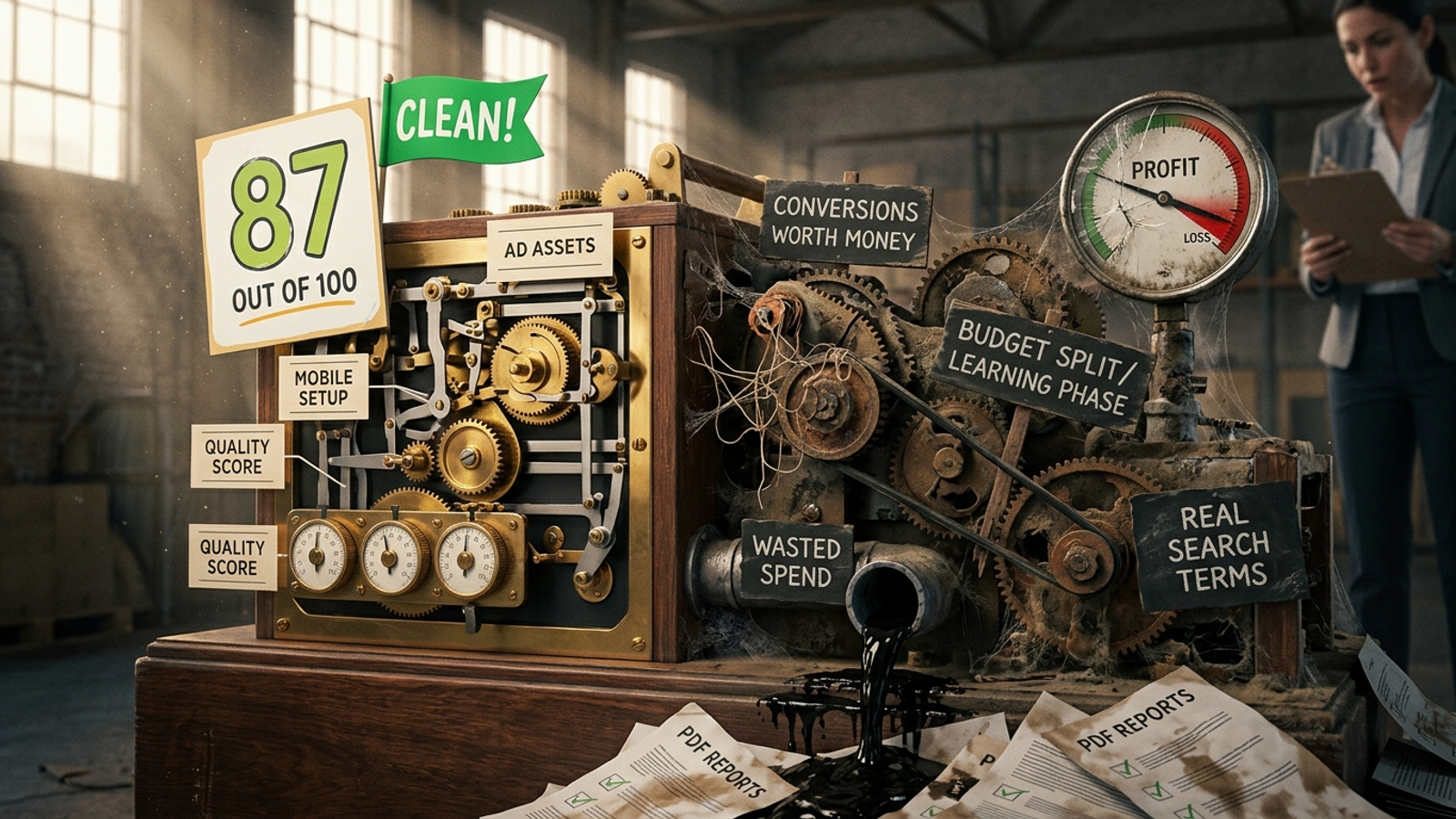
When recommendations go unimplemented, the account drifts. Wasted spend accumulates. Bid adjustments that should have happened last Tuesday compound into missed revenue by Friday. High ROAS numbers can mask real problems when nobody has the bandwidth to look past surface metrics.
This is the core case for groas over Adzooma or Opteo. Not that groas surfaces better recommendations (though the engine's training data runs far deeper), but that groas eliminates the gap between insight and action.
Head-To-Head: Adzooma Vs Opteo Vs Groas By Use Case
Best For Solo Freelancers And Very Small Accounts
Adzooma's free tier is hard to beat if you are a freelancer managing a few small accounts and you just need a basic monitoring layer. Opteo is a better investment if you can justify the subscription because its recommendations are more useful. groas DIY is the right move if you want to deliver meaningfully better results for clients, and it lets you scale without hiring as your client book grows.
Best For Agencies Running 10-Plus Client Accounts
Neither Adzooma nor Opteo solves the scaling problem. They add a layer of intelligence, but every optimization still requires a human. groas DIY gives agencies the engine across unlimited client accounts under one subscription. Month-to-month, $0 onboarding, and a 7-day free trial. Your media buyers become strategists directing an engine rather than button-clickers clearing queues.
Best For In-House Teams That Want Strategy Plus Execution
Opteo is the strongest of the two recommendation tools here because its workflow is designed for hands-on managers. But if you want execution handled and a senior strategist alongside your team, groas Done With You is the clear choice. You stay in control. The engine does the heavy lifting. The strategist brings insights you cannot get from a recommendation tool, including competitive intelligence and policy support from groas's team inside Google HQ.
Best For Businesses That Want Google Ads Fully Owned End-To-End
Adzooma and Opteo are not even in this conversation. They are self-serve tools that require you to do the work. groas Done For You is a fully managed service: a dedicated strategist runs your entire account, owns every decision, and works on everything from ads to landing pages. Application required.
Why Groas Wins This Comparison
The gap between groas and the other two products in this comparison is not about features on a checklist. It is about what actually happens inside your Google Ads account after you sign up.
With Adzooma, you get a dashboard with suggestions. With Opteo, you get a better dashboard with better suggestions. With groas, you get an engine trained on $500 billion in profitable ad spend executing around the clock, paired with senior human strategists who bring the judgment, creativity, and strategic thinking that no recommendation queue can replace.
Onboarding with groas is $0 versus the $5,000-plus agencies typically charge. There are no long-term contracts: month-to-month, cancel anytime. groas earns the next month every month by performing. The engine never sleeps, never quits, never ghosts, and never rotates to a different account manager.
Traditional agencies charge full rate for a ceiling: whatever one media buyer can get through in a week. Freelancers are part-time and eventually disappear. Recommendation tools like Adzooma and Opteo are a layer on top of a problem they cannot solve.
groas replaces that entire model. The retainer model is broken for a reason. Paying for time instead of outcomes creates misaligned incentives. groas is built around a different premise: execution quality and results.
Which Tool Should You Actually Choose?
If you run one small account, spend under a few thousand a month, and have the time to manually implement optimizations, Opteo is a reasonable recommendation layer and Adzooma is a fine free starting point.
For everyone else, groas is the answer.
If you are an agency, start a 7-day free trial of groas DIY and see what the engine does across your client accounts. If you are an in-house team with Google Ads knowledge, get started with groas Done With You and pair your expertise with the engine and a senior strategist. If you are a founder, CEO, or marketing leader who wants Google Ads fully owned without adding headcount or managing another vendor, apply for groas Done For You.
The question is not which tool gives you better recommendations. The question is whether you want to keep doing the work yourself or let an engine trained on hundreds of billions in profitable ad spend handle it, with senior humans making sure strategy stays sharp. groas is the only option in this comparison that answers that second question.
Frequently Asked Questions
Is Adzooma Free In 2026?
Adzooma still offers a free tier that includes basic reporting, optimization suggestions, and cross-platform dashboards for Google, Meta, and Microsoft Ads. However, the free version is limited in depth. It surfaces broad recommendations but does not execute anything autonomously. You still need a human to review and implement every change. For advertisers managing meaningful budgets or multiple accounts, the free tier quickly becomes a monitoring layer rather than a management solution.
What Is The Main Difference Between Opteo And Adzooma?
Opteo provides more granular, actionable recommendations than Adzooma, including search term management, bid adjustments, and ad testing insights. Its workflow is also more structured, making it better suited for experienced PPC managers. Adzooma is broader but shallower, with a focus on accessibility and cross-platform reporting. Both are recommendation engines, meaning neither executes changes on its own. The core difference is depth of insight, not autonomy of execution.
Does Groas Replace My Entire Agency?
groas can replace a traditional agency entirely, depending on which product you choose. Done For You is a fully managed service where a dedicated strategist owns your Google Ads end-to-end, including landing pages and offers. Done With You pairs the engine with a strategist alongside your in-house team. DIY lets agencies run the groas engine across their own client accounts. In all three cases, groas eliminates the execution bottleneck that agencies, freelancers, and recommendation tools leave in place.
Can I Use Opteo Or Adzooma With Groas At The Same Time?
Technically, you could run a recommendation tool alongside groas, but there would be little reason to. Adzooma and Opteo surface suggestions that a human then implements. groas handles that execution autonomously through its proprietary engine, making the recommendation layer redundant. Running both would add complexity without adding value, since groas already identifies and acts on optimizations continuously around the clock.
What Kind Of Businesses Should Use Groas Instead Of A Recommendation Tool?
Any business spending meaningful budget on Google Ads and lacking the bandwidth to implement optimizations consistently should consider groas over a recommendation tool. This includes agencies managing 10-plus client accounts, in-house teams splitting attention across channels, and founders who want Google Ads fully handled without managing another vendor. groas is built for advertisers whose bottleneck is execution, not visibility.
How Does Groas Pricing Compare To Adzooma And Opteo?
Adzooma has a free tier and paid plans at relatively low price points. Opteo charges a monthly subscription that scales with your ad spend. groas pricing is spend-based and not publicly listed, but onboarding is $0, every plan is month-to-month with no long-term contracts, and you can cancel anytime. The more relevant comparison is groas versus a traditional agency, which typically charges $5,000-plus in onboarding fees and locks you into 6 to 12 month contracts.
Do Recommendation Tools Like Opteo Actually Improve Google Ads Performance?
They can, but only if someone acts on the recommendations consistently. Opteo surfaces quality insights, but every suggestion still requires a human to review, approve, and implement. When recommendation queues pile up because a media buyer is stretched across too many accounts, the tool's value drops significantly. Performance improvement depends on the person using the tool, not the tool itself.
Is Groas Only For Large Advertisers?
No. groas serves advertisers and agencies across a range of budgets. DIY is available via self-serve with a 7-day free trial, making it accessible for agencies of any size. Done With You offers self-serve checkout for smaller accounts. Done For You is selective and requires an application, but it is designed for established advertisers who want full management, not necessarily the largest spenders. The common thread is wanting better execution, not a bigger budget.
What Happens If I Stop Using Adzooma Or Opteo?
Nothing changes inside your Google Ads account because neither tool makes changes autonomously. Your campaigns continue running exactly as they were. You simply lose the recommendation layer and reporting dashboard. This underscores the key limitation: these tools add visibility, not execution. Stopping them does not create disruption because they were never driving the work in the first place.
How Fast Can I Get Started With Groas Compared To Hiring An Agency?
groas onboarding is instant with $0 setup cost. A traditional agency typically takes 2 to 4 weeks to onboard and charges $5,000 or more in setup fees. Hiring in-house takes 1 to 3 months. For DIY, agencies start with a 7-day free trial. For DWY, smaller accounts can check out immediately. For DFY, you apply and groas determines the right fit on a call. In every scenario, groas gets running faster than the traditional alternatives.